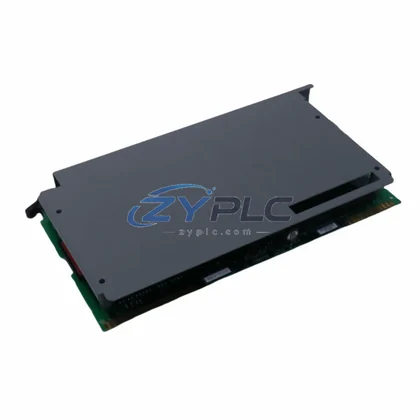
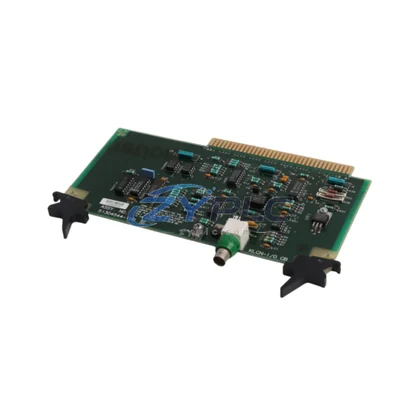
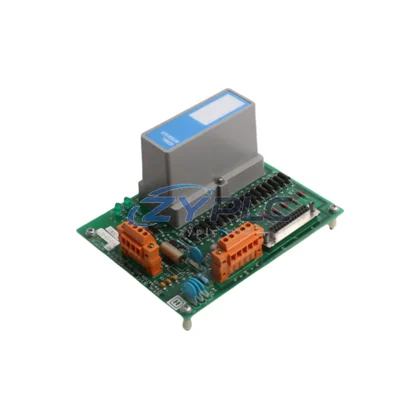
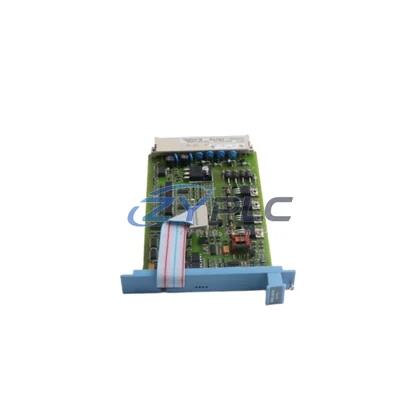
The Honeywell MC-TAMR04 is a 4-channel analog input module engineered for the Honeywell TDC 3000 Distributed Control System (DCS). In modern process industries — from petrochemical refining to power generation and pharmaceutical manufacturing — the ability to accurately capture real-time field signals is the foundation of every maintenance planning strategy. The MC-TAMR04 delivers exactly that: high-fidelity analog signal acquisition that feeds precise data into the control loop, enabling the system to respond dynamically to process variations and eliminate unplanned downtime risk at the source.
Unlike generic I/O modules, the MC-TAMR04 is purpose-built for the TDC 3000 architecture, ensuring seamless integration with the Honeywell PM I/O Link and the Universal Control Network (UCN). This native compatibility eliminates signal conversion overhead, reduces latency in the control loop, and ensures that every milliamp of 4–20 mA process signal is translated into actionable data without distortion. When paired with the Honeywell MC-PAIH03 High-Level Analog Input Module and the MC-TAIH04 Analog Input Module, the MC-TAMR04 forms a comprehensive analog acquisition layer that supports multi-variable condition monitoring across an entire production unit.
Unplanned downtime in industrial facilities rarely comes from a single source — it accumulates through thousands of micro-inefficiencies: a pump running at full speed when 70% capacity is sufficient, a heat exchanger operating outside its optimal temperature band, a compressor cycling unnecessarily due to delayed feedback. The MC-TAMR04 addresses these issues at the signal level. By providing the Honeywell TDC 3000 Application Module (AM) with accurate, low-drift analog readings, it enables the control strategy to implement tighter PID loops, reduce overshoot, and maintain process variables within their energy-optimal setpoints. The result is measurable reduction in utility consumption — steam, electricity, cooling water — without sacrificing throughput or product quality.
In drive-intensive applications, the MC-TAMR04 works in concert with variable frequency drive (VFD) feedback loops. When motor load signals from field transmitters are routed through the MC-TAMR04 into the DCS, the control system can dynamically adjust drive output via the Honeywell MC-TAOM02 Analog Output Module, matching motor speed precisely to process demand. This closed-loop approach to motor control — rather than fixed-speed operation — is one of the most impactful operational-efficiency measures available in continuous process environments, often yielding Actual operating results depend on the installed system, load profile, and commissioning parameters.
Production line rhythm (takt time) optimization also benefits directly from the MC-TAMR04’s signal integrity. In batch and continuous processes alike, the module’s 4-channel capacity allows simultaneous monitoring of multiple critical process variables — flow, pressure, temperature, and level — feeding the Honeywell TDC 3000 History Module (HM) with the time-series data needed for trend analysis and predictive maintenance scheduling. When the system detects gradual signal drift — a hallmark of sensor fouling, valve wear, or heat exchanger scaling — maintenance can be planned proactively, avoiding unplanned shutdowns that disrupt production rhythm and spike operating load during restart sequences.
The MC-TAMR04 also plays a key role in power monitoring architectures. When integrated alongside Honeywell MC-PDOY22 Digital Output Modules and MC-PDIY22 Digital Input Modules, the analog input layer provides the continuous variable data that digital I/O alone cannot capture. This combination supports comprehensive energy dashboards within the Honeywell Plant Supervisory Computer (PSC) environment, giving energy managers the visibility to identify high-consumption equipment, benchmark performance against baseline, and validate the impact of efficiency initiatives in real time.
Every MC-TAMR04 unit supplied by ZYPLC undergoes full functional testing prior to shipment, including channel-by-channel signal verification across the full 4–20 mA input range. This ensures that the module performs to Honeywell’s original specifications from the moment it is installed — no burn-in period, no calibration surprises. All units are backed by a warranty terms confirmed during quotation, providing procurement teams and plant engineers with the confidence to deploy refurbished TDC 3000 components without compromising system reliability or energy performance targets.
With global inventory maintained for rapid dispatch and a dedicated technical support team familiar with the full Honeywell TDC 3000 ecosystem — including the MC-TAMR03, MC-TAIH02, and MC-PAOY22 — ZYPLC is positioned as a reliable supply partner for both planned upgrades and emergency replacement scenarios. Whether you are extending the life of an existing TDC 3000 installation or building out a hybrid DCS architecture, the MC-TAMR04 delivers the signal quality and system compatibility that energy-conscious industrial operations demand.
Product Specification Table
| Parameter |
Specification / Value |
| SKU / Part Number |
MC-TAMR04 |
| Brand |
Honeywell |
| Series |
TDC 3000 DCS |
| Module Type |
4-Channel Analog Input Module |
| Signal Range |
4–20 mA (standard process signal) |
| Operating Efficiency |
High-fidelity, low-drift signal acquisition |
| Compatible Systems |
Honeywell TDC 3000, PM I/O Link, UCN |
| Application Environment |
Process industries: oil & gas, power, pharma, chemical |
| Maintenance Value |
Enables tight PID control, VFD feedback, predictive maintenance |
| Origin |
USA (Honeywell OEM) |
| Testing |
Full functional test, channel-by-channel signal verification |
| Warranty |
warranty terms confirmed during quotation |
System Compatibility and Application
The MC-TAMR04 operates at the heart of a layered industrial automation system. At the field level, process transmitters deliver 4–20 mA signals representing flow rates, temperatures, pressures, and levels — all critical variables for energy accounting. These signals enter the TDC 3000 system through the MC-TAMR04, where they are digitized and passed to the Honeywell Application Module (AM) for control execution. The AM implements PID algorithms that drive analog outputs via the MC-TAOM02 Analog Output Module, closing the loop on energy-intensive actuators such as control valves and variable speed drives.
At the network layer, the Honeywell UCN (Universal Control Network) carries process data between the MC-TAMR04’s host controller and the History Module (HM), which archives time-series energy data for trend analysis. The Honeywell MC-PDIY22 Digital Input Module and MC-PDOY22 Digital Output Module complement the analog layer by capturing discrete equipment states — motor run/stop, valve open/closed — providing the full picture of equipment utilization needed for energy KPI reporting. For operator visibility, the Honeywell GUS (Global User Station) presents real-time energy dashboards, allowing operators to identify and respond to efficiency deviations before they escalate into waste or downtime.
Maintenance and Replacement Notes
In a typical continuous process plant, the MC-TAMR04 contributes to operational stability across multiple dimensions. By providing the DCS with accurate, real-time analog inputs, it enables the control system to maintain process variables at their energy-optimal setpoints rather than conservative, energy-wasteful margins. Pump and compressor speeds can be modulated in response to actual demand signals rather than fixed schedules, reducing electricity consumption during low-load periods. Heat exchanger performance can be monitored continuously, with fouling detected early through signal trend analysis — allowing cleaning to be scheduled before efficiency losses become significant.
Unplanned shutdowns are among the most energy-intensive events in process manufacturing: restarting a cold process unit consumes disproportionate energy and disrupts production rhythm for hours or days. The MC-TAMR04’s reliable signal acquisition supports the predictive maintenance strategies that prevent such events, contributing to higher overall equipment effectiveness (OEE) and lower energy intensity per unit of production. Combined with ZYPLC’s tested inventory and warranty terms confirmed during quotation, the MC-TAMR04 ensures that replacement cycles do not introduce downtime risk into the maintenance planning program.
Product Sourcing FAQ
Q1: How does the MC-TAMR04 contribute to measurable operational stability?
By delivering accurate, low-drift analog signals to the TDC 3000 control system, the MC-TAMR04 enables tighter PID control loops that keep process variables at energy-optimal setpoints. This reduces over-consumption by pumps, compressors, and heating systems that would otherwise operate at conservative, energy-wasteful margins.
Q2: Is the MC-TAMR04 compatible with upgraded or hybrid TDC 3000 systems?
Yes. The MC-TAMR04 is designed for the Honeywell TDC 3000 PM I/O architecture and is compatible with both legacy and partially upgraded TDC 3000 installations. It integrates natively with the UCN and AM without requiring additional signal conditioning hardware.
Q3: What is the recommended replacement or upgrade path for aging MC-TAMR04 modules?
For direct replacement, the MC-TAMR04 is the recommended like-for-like substitute. For applications requiring expanded channel count or enhanced diagnostics, ZYPLC’s technical team can advise on compatible Honeywell analog input alternatives within the TDC 3000 ecosystem, including the MC-TAIH04 and MC-PAIH03.
Q4: What testing and warranty coverage does ZYPLC provide for the MC-TAMR04?
Every MC-TAMR04 unit undergoes full functional testing, including channel-by-channel verification across the complete 4–20 mA input range, prior to shipment. All units are covered by a warranty terms confirmed during quotation, ensuring reliable performance from installation through the warranty period with full technical support available.