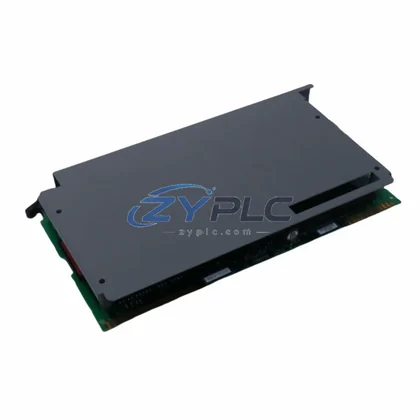
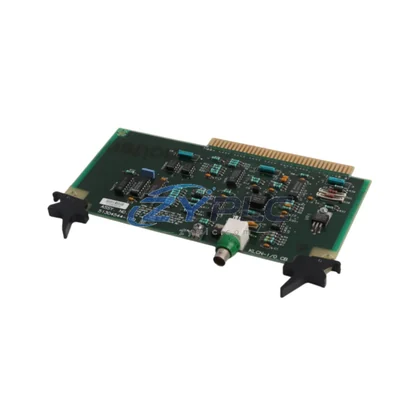
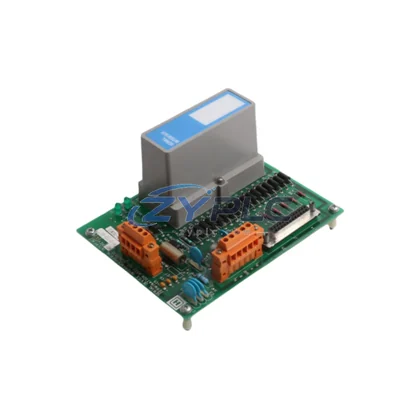
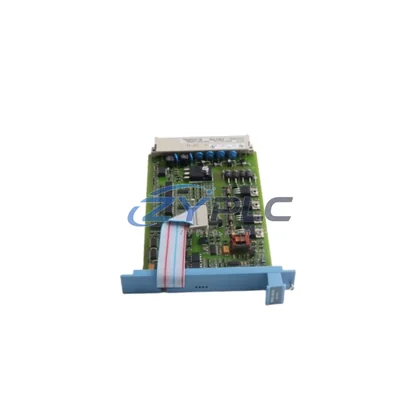
The Honeywell MU-PPIX02 is a high-performance Pulse Input IOP (Input/Output Processor) Module engineered for the TDC 3000 Distributed Control System (DCS). In modern industrial facilities where energy accountability is no longer optional, the MU-PPIX02 plays a pivotal role in capturing high-resolution pulse signals from flow meters, turbine meters, and energy transducers — translating raw field data into actionable control intelligence. By ensuring accurate pulse counting and signal conditioning at the I/O layer, this module directly supports condition monitoring loops, motor efficiency tracking, and production line throughput optimization.
Sourced from verified inventory, each MU-PPIX02 unit undergoes pre-shipment functional testing to confirm channel integrity, signal response accuracy, and backplane communication stability. All units are covered by a warranty terms confirmed during quotation, ensuring operational confidence for maintenance teams managing critical DCS infrastructure.
Product Specification Table
| Parameter |
Specification / Value |
| SKU / Part Number |
MU-PPIX02 |
| Module Type |
Pulse Input IOP Module |
| Compatible Platform |
Honeywell TDC 3000 DCS |
| Input Channels |
Dual-channel pulse input |
| Signal Type |
Pulse / Frequency (flow, energy, speed) |
| Power Consumption |
Low-draw IOP design, optimized for continuous operation |
| Operating Efficiency |
High-accuracy pulse counting, minimizes signal loss and retransmission overhead |
| Application Environment |
Process manufacturing, chemical, refining, power generation, utilities |
| Energy Monitoring Value |
Enables real-time flow and energy data acquisition for consumption analytics |
| Communication Interface |
TDC 3000 Local Control Network (LCN) / IOP backplane |
| Warranty |
warranty terms confirmed during quotation |
| Availability |
RFQ Available — Pre-shipment tested |
System Compatibility and Application
The MU-PPIX02 does not operate in isolation — it is a precision data acquisition node within a broader industrial automation system. In a typical TDC 3000 deployment, pulse signals from field instruments such as vortex flow meters or turbine meters are wired directly into the MU-PPIX02’s input channels. These signals are then processed and transmitted via the IOP backplane to the Honeywell HPM (High-Performance Process Manager), where control strategies execute in real time.
Within the HPM environment, the pulse data feeds into regulatory control blocks that govern pump speed, valve positioning, and compressor load — often in coordination with Honeywell MU-TAIX02 thermocouple input modules and MU-GAIX02 analog input modules that provide temperature and pressure context. Together, these I/O modules form a complete process variable acquisition layer that enables the DCS to make energy-informed control decisions.
On the drive side, variable frequency drives (VFDs) — such as those in the Honeywell SmartVFD HVAC series — receive setpoint commands derived from the flow and energy data captured by the MU-PPIX02. This closed-loop relationship between pulse input measurement and drive output adjustment is fundamental to reducing motor load: when actual flow exceeds demand, the VFD reduces motor speed, cutting power draw proportionally. The MU-PPIX02 is the sensor-side enabler of this efficiency loop.
For facilities running Honeywell Experion PKS alongside legacy TDC 3000 infrastructure, the MU-PPIX02 integrates through gateway bridges that preserve pulse data fidelity across the migration boundary. This allows energy KPIs captured at the field level to surface in Experion Station HMI displays and Honeywell PHD (Process Historian Data) trend archives, supporting long-term operating load analysis and regulatory reporting.
Communication integrity is maintained through the TDC 3000 Local Control Network (LCN), which connects the HPM, AM (Application Module), and HM (History Module) nodes. The LCN’s deterministic data transfer ensures that pulse counts from the MU-PPIX02 are never dropped or delayed — a critical requirement when pulse data is used to calculate cumulative operating load or batch totalization. Alongside MU-PLAM02 and other IOP communication modules, the MU-PPIX02 contributes to a robust, low-latency I/O fabric that underpins reliable maintenance planning.
Maintenance and Replacement Notes
In refinery and chemical plant environments, unplanned downtime often originates from inaccurate flow measurement — pumps running at full speed when process demand is lower, or compressors cycling unnecessarily due to stale sensor data. The MU-PPIX02 addresses this at the root by providing high-frequency, high-accuracy pulse input acquisition that keeps the DCS control strategy synchronized with actual process conditions.
Consider a cooling water circulation loop: without accurate flow pulse data, the control system cannot determine whether the circulation pump is delivering the required flow rate. With the MU-PPIX02 in place, the HPM receives real-time pulse counts from the flow meter, calculates actual flow, and adjusts the pump VFD setpoint accordingly. The result is a pump that runs only as fast as the process demands — reducing electricity consumption, extending motor bearing life, and decreasing heat generation in the motor windings.
In batch manufacturing lines, the MU-PPIX02 supports precise ingredient totalization. By counting pulses from dosing pump meters, the DCS can confirm that exact quantities of raw materials have been delivered, eliminating over-dosing that wastes both material and the energy used to process it. This contributes directly to improved Overall Equipment Effectiveness (OEE) and reduced per-unit energy intensity.
Predictive maintenance also benefits from the MU-PPIX02’s data stream. Gradual degradation in pump impellers or flow meter rotors manifests as drift in pulse frequency relative to expected values. By trending this data in the PHD historian, maintenance engineers can identify developing faults weeks before they cause unplanned downtime — avoiding the energy spikes and production losses associated with emergency shutdowns and rapid restart sequences.
Every MU-PPIX02 unit shipped from our inventory has been bench-tested for channel response, pulse counting accuracy, and backplane communication. Units are packaged to ESD-safe standards and dispatched with full documentation. The included warranty terms confirmed during quotation covers functional defects and ensures that your production line investment is protected from day one of installation.
Product Sourcing FAQ
Q1: How does the MU-PPIX02 contribute to operational stability in a TDC 3000 system?
The MU-PPIX02 captures pulse signals from flow and energy meters with high accuracy, providing the HPM with the real-time data needed to execute demand-responsive control strategies. This enables VFDs and control valves to operate at energy-optimal setpoints rather than fixed conservative values, directly reducing electricity consumption in pump, fan, and compressor applications.
Q2: Is the MU-PPIX02 compatible with Honeywell Experion PKS migration projects?
Yes. The MU-PPIX02 continues to function within TDC 3000 HPM cabinets during phased Experion PKS migrations. Data from the module can be surfaced in Experion via the TDC 3000 gateway, preserving condition monitoring continuity throughout the migration process without requiring immediate I/O hardware replacement.
Q3: What is the recommended replacement or upgrade path for aging MU-PPIX02 modules?
For direct replacement, a tested MU-PPIX02 from availability subject to RFQ confirmation is the lowest-risk option, maintaining full compatibility with existing HPM configuration and wiring. For facilities planning a broader I/O modernization, Honeywell’s LEAP (Lifecycle Extension and Automation Project) program offers a structured migration path to Series C I/O while preserving control strategy logic.
Q4: What does the warranty terms confirmed during quotation cover, and what is the testing process before shipment?
Each MU-PPIX02 unit undergoes functional testing covering pulse input channel response, signal conditioning accuracy, and IOP backplane communication before shipment. The warranty terms confirmed during quotation covers manufacturing defects and functional failures under normal operating conditions. Units are shipped in ESD-safe packaging with test documentation available upon request.