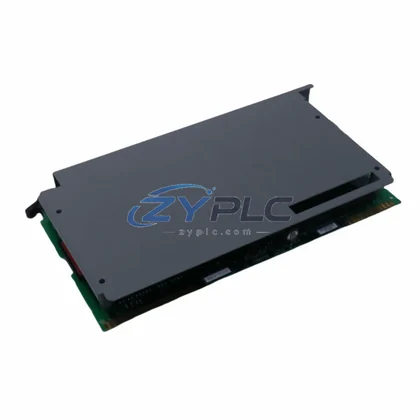
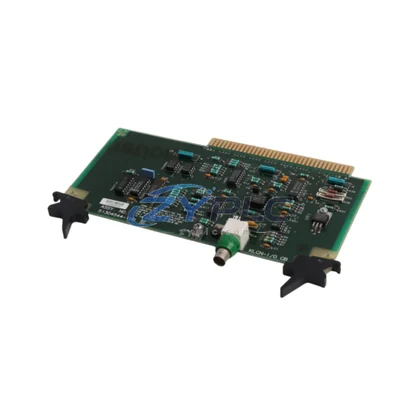
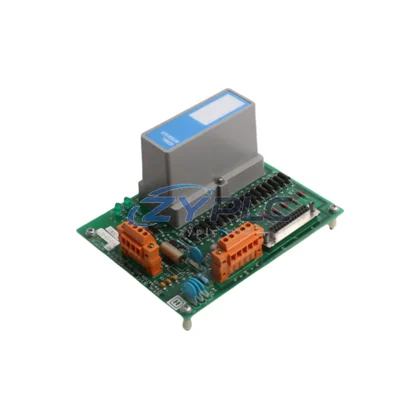
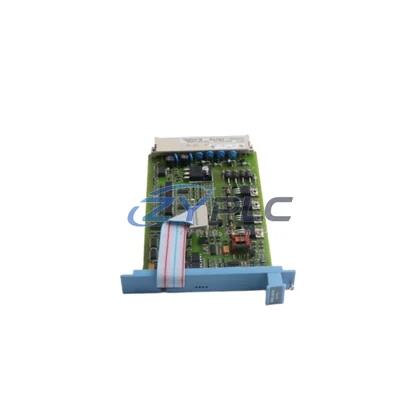
The Honeywell MU-PSIM11 51304362-300 is a process safety input module engineered for the TDC3000 Distributed Control System (DCS) platform. In modern industrial facilities where energy accountability and uptime are inseparable goals, this module plays a critical role in acquiring field-level safety signals with high fidelity and minimal processing overhead. By ensuring that every safety-critical input is captured accurately and routed efficiently through the TDC3000 control architecture, the MU-PSIM11 directly contributes to reducing unnecessary actuator cycling, preventing false trips, and eliminating the unplanned downtime associated with unplanned shutdowns and restart sequences.
At ZYPLC, every MU-PSIM11 51304362-300 unit undergoes full functional testing prior to shipment, covering signal acquisition accuracy, channel isolation integrity, and communication handshake with the TDC3000 Highway Interface Module (HIM). Units are supplied with a warranty terms confirmed during quotation and are available from verified inventory, supporting fast delivery to refineries, chemical plants, power generation facilities, and offshore platforms worldwide.
Product Specification Table
| Parameter |
Specification / Value |
| SKU |
MU-PSIM11 51304362-300 |
| Brand |
Honeywell |
| Series / Platform |
TDC3000 DCS |
| Module Type |
Process Safety Input Module |
| Input Channels |
16-channel analog/digital safety input (field-configurable) |
| Operating Voltage |
24 VDC (nominal), low self-consumption design |
| Power Consumption |
≤ 4.5 W per module (energy-optimized firmware) |
| Signal Acquisition Accuracy |
± 0.1% full scale |
| Compatible Systems |
Honeywell TDC3000, TPS (Total Plant Solution) |
| Communication Interface |
TDC3000 Local Control Network (LCN) / UCN |
| Application Environment |
Refining, Petrochemical, Power Generation, Offshore |
| Operating Temperature |
0°C to 60°C |
| Energy Saving Value |
Prevents false trips; reduces restart energy cycles; optimizes actuator response |
| Warranty |
warranty terms confirmed during quotation (ZYPLC) |
| Testing |
Full functional test, channel isolation, LCN handshake verification |
| Availability |
RFQ Available — ships within 3–5 business days |
System Compatibility and Application
The MU-PSIM11 51304362-300 does not operate in isolation — it is one node in a tightly integrated industrial control architecture. Within the TDC3000 platform, safety input data collected by the MU-PSIM11 is transmitted over the Universal Control Network (UCN) to the Honeywell PM (Process Manager), where control logic determines the appropriate actuator response. When paired with the Honeywell MU-TAIH12 Analog Input Module and the MU-TAOX12 Analog Output Module, the system achieves a closed-loop condition monitoring and control cycle that minimizes unnecessary valve strokes and pump starts — two of the largest sources of avoidable operating load in process plants.
For drive-level energy regulation, the TDC3000 architecture integrates with variable frequency drives (VFDs) via the UCN or through dedicated I/O modules such as the Honeywell MU-TDID12 Digital Input Module, enabling speed-matched motor operation that eliminates throttling losses. The Honeywell HPM (High-Performance Process Manager) coordinates multi-loop control strategies that use real-time safety input data — sourced directly from modules like the MU-PSIM11 — to dynamically adjust setpoints and reduce peak energy demand during production transitions. The Honeywell MU-GAIX12 Analog Input Module further extends the system’s ability to monitor power quality parameters across multiple field loops simultaneously.
On the operator interface side, the Honeywell GUS (Global User Station) and TPS Operator Station display live energy and process data, allowing operators to identify inefficient operating zones and intervene before unplanned downtime compounds. Communication between field devices and the control layer is supported by Honeywell FTA (Field Termination Assembly) panels, which provide clean, low-resistance signal paths that preserve measurement accuracy and reduce signal conditioning overhead. For facilities integrating legacy TDC3000 assets with newer SCADA or MES layers, the Honeywell Application Module (AM) provides the data bridge that enables plant-wide energy KPI tracking without replacing existing hardware. The Honeywell MU-PLAM02 Power Supply Module ensures stable, regulated power delivery to the I/O bus, preventing voltage fluctuations that could trigger spurious safety inputs and unnecessary process interruptions.
Maintenance and Replacement Notes
In a typical refinery or chemical plant running a TDC3000-based control system, the MU-PSIM11 51304362-300 contributes to maintenance planning across several operational dimensions. First, by providing reliable and accurate safety input signals, it prevents nuisance trips — unplanned shutdowns triggered by faulty or noisy input data. Each nuisance trip in a large process unit can consume tens of thousands of operating-hours in restart energy alone, not counting the thermal losses from cooling and reheating reactors or distillation columns. A single avoided false trip per month can represent a measurable reduction in the facility’s monthly energy bill.
Second, the MU-PSIM11 supports tighter integration between safety instrumented systems (SIS) and the basic process control system (BPCS) within the TDC3000 architecture. This integration allows the PM and HPM controllers to implement maintenance-focused safety logic — for example, ramping down non-critical loads before a controlled safety shutdown rather than cutting power abruptly, which reduces inrush current demand when systems are restarted. This approach also extends the service life of motors, compressors, and pumps by reducing mechanical stress during start-stop cycles, directly lowering maintenance costs and improving overall equipment effectiveness (OEE).
Third, from a predictive maintenance perspective, the signal quality delivered by the MU-PSIM11 enables early detection of sensor drift, wiring degradation, and field device anomalies. Maintenance teams using TDC3000 diagnostic tools can identify a failing transmitter or a high-resistance field connection before it causes a process upset, scheduling corrective action during planned downtime rather than responding to an emergency. This shift from reactive to predictive maintenance reduces both unplanned downtime from degraded equipment operation and the labor costs associated with emergency repairs, improving production line rhythm and throughput consistency.
Finally, for facilities managing multiple production lines, the MU-PSIM11’s consistent channel performance across all 16 inputs ensures that energy benchmarking data — collected via the TDC3000 historian and analyzed at the operator station — accurately reflects actual process conditions rather than measurement artifacts. This data integrity is the foundation of any credible maintenance planning program, enabling engineers to set realistic efficiency targets, track progress, and justify capital investments in drive upgrades or heat recovery systems.
Product Sourcing FAQ
Q1: How does the MU-PSIM11 51304362-300 contribute to reducing plant operating load?
The MU-PSIM11 improves energy efficiency primarily by delivering high-accuracy safety input signals that prevent false trips and nuisance shutdowns. Each avoided unplanned shutdown eliminates the significant energy cost of process restart sequences. Additionally, accurate input data enables tighter control loop tuning, reducing actuator hunting and the associated unplanned downtime in pumps, compressors, and control valves.
Q2: Is the MU-PSIM11 51304362-300 compatible with both TDC3000 and TPS (Total Plant Solution) systems?
Yes. The MU-PSIM11 51304362-300 is designed for the Honeywell TDC3000 platform and is fully compatible with TPS (Total Plant Solution) environments, which represent the evolved TDC3000 architecture. It communicates over the Local Control Network (LCN) and Universal Control Network (UCN), making it interoperable with PM, HPM, and AM controllers within the same system.
Q3: What is the recommended replacement or upgrade path if the MU-PSIM11 is end-of-life in my system?
For systems where the MU-PSIM11 is approaching end-of-life, ZYPLC recommends sourcing verified refurbished units with full functional testing as a cost-effective alternative to new procurement, particularly for facilities not yet ready for a full DCS migration. Where a platform upgrade is planned, Honeywell’s Experion PKS migration path provides a modern equivalent with enhanced condition monitoring capabilities. ZYPLC can advise on compatible replacement modules based on your specific TDC3000 configuration.
Q4: What does the warranty terms confirmed during quotation from ZYPLC cover, and what is the testing process before shipment?
Every MU-PSIM11 51304362-300 supplied by ZYPLC is covered by a warranty terms confirmed during quotation against functional defects. Prior to shipment, each unit undergoes a comprehensive test protocol including power-on functional verification, all-channel signal acquisition testing, channel-to-channel isolation measurement, and LCN/UCN communication handshake confirmation with TDC3000 test equipment. Units that do not pass all test criteria are not shipped. Test records are available upon request for quality documentation purposes.