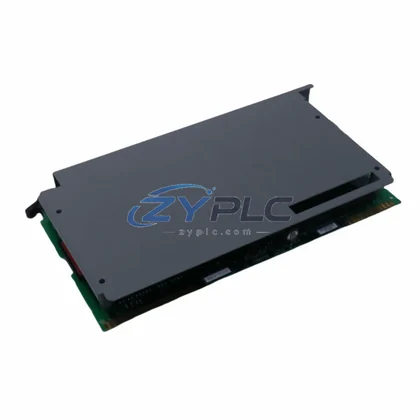
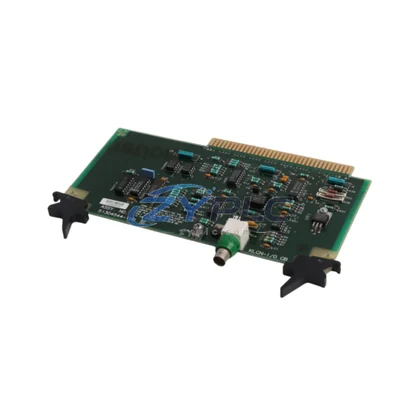
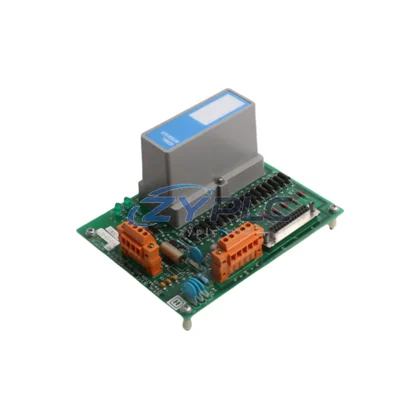
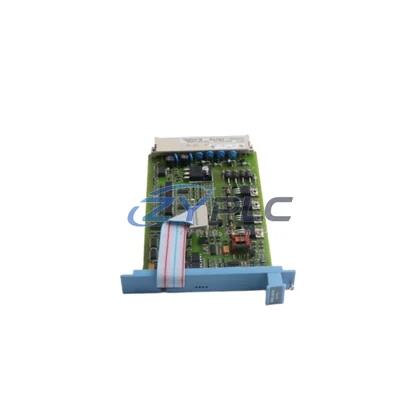
The Honeywell MU-TAMT02 (51401491-100) is a high-precision analog input module engineered for the TDC 3000 and TPS Distributed Control System (DCS) platform. In modern industrial facilities where energy accountability is no longer optional, this module plays a foundational role in capturing real-time process signals — temperature, pressure, flow, and level — with the accuracy and speed required to drive intelligent, maintenance-focused control decisions. By delivering clean, conditioned analog data to the TDC 3000 controller, the MU-TAMT02 enables the control system to respond dynamically to process deviations, reducing unnecessary actuator cycling, minimizing motor overrun, and eliminating the unplanned downtime associated with imprecise process feedback.
Industrial plants running legacy DCS architectures often overlook the analog input layer as a source of energy inefficiency. In reality, degraded or inaccurate signal acquisition leads to overcorrection in control loops, which translates directly into excess operating load at the drive and actuator level. The MU-TAMT02 addresses this by providing stable, low-drift signal conditioning that keeps PID loops tuned and responsive — reducing the frequency of large corrective actions that spike energy demand and accelerate mechanical wear.
Product Specification Table
| Parameter |
Specification / Value |
| SKU / Part Number |
MU-TAMT02 / 51401491-100 |
| Module Type |
Analog Input Module |
| Compatible Platform |
Honeywell TDC 3000 / TPS DCS |
| Signal Input Type |
Thermocouple / Analog Process Signals |
| Operating Efficiency |
High-accuracy signal conditioning, low drift |
| Power Consumption |
Low-power design optimized for continuous DCS operation |
| Application Environment |
Refinery, Chemical Plant, Power Generation, Pulp & Paper |
| Maintenance Value |
Reduces control loop overcorrection, lowers actuator unplanned downtime |
| Compatibility |
Direct replacement for TDC 3000 / TPS analog input slots |
| Warranty |
|
| Condition |
Tested, inspected, and verified before shipment |
| Availability |
RFQ Available — shipment arranged after confirmation |
System Compatibility and Application
The MU-TAMT02 does not operate in isolation — it is one node in a tightly integrated maintenance planning architecture built around the Honeywell TDC 3000 platform. Understanding how it interacts with adjacent system components reveals its true contribution to plant-wide energy efficiency.
At the controller level, the Honeywell MC-TDOY22 Digital Output Module and MC-TAIH04 Analog Input Module work alongside the MU-TAMT02 to form a complete I/O layer that feeds the Honeywell HPM (High-Performance Process Manager). The HPM processes the analog signals acquired by the MU-TAMT02 and executes control strategies that govern energy-intensive equipment such as compressors, heat exchangers, and large-scale pumping systems. When the MU-TAMT02 delivers accurate thermocouple readings from a furnace or reactor, the HPM can modulate fuel flow with precision — avoiding the excess fuel burn that results from sluggish or noisy signal inputs.
On the drive side, variable frequency drives (VFDs) such as the Honeywell SmartVFD HVAC series rely on accurate process feedback to adjust motor speed in real time. A correctly functioning MU-TAMT02 ensures that the temperature or pressure signal driving a VFD-controlled fan or pump is clean and representative of actual process conditions. This prevents the VFD from running motors at unnecessarily high speeds — one of the most common and costly sources of downtime in process plants.
For power monitoring and energy accountability, the MU-TAMT02 integrates naturally with Honeywell Experion PKS supervisory systems, where energy KPIs are tracked at the unit operation level. The Experion platform can correlate analog input data from the MU-TAMT02 with power consumption data from Honeywell PM-TSIM power monitoring modules, enabling engineers to identify which process units are consuming disproportionate energy relative to their output — a critical input for energy audits and ISO 50001 compliance programs.
Communication between the MU-TAMT02 and the TDC 3000 backplane uses the Local Control Network (LCN), Honeywell’s proprietary high-speed deterministic bus. This architecture ensures that analog data is delivered to the controller without the latency or packet loss that can occur on open-protocol networks, maintaining the tight control loop timing that maintenance-focused operation demands. For plants integrating TDC 3000 with modern SCADA or MES layers, Honeywell OPC Server and Uniformance PHD historian components can aggregate MU-TAMT02 signal data for long-term energy trend analysis and predictive maintenance scheduling.
At the field instrument level, the MU-TAMT02 accepts inputs from thermocouple transmitters and RTD-based sensors commonly used in conjunction with Honeywell STT850 Smart Temperature Transmitters. Pairing a calibrated STT850 with the MU-TAMT02 creates a measurement chain with end-to-end accuracy that supports both process optimization and energy reporting — ensuring that the data entering the DCS reflects true physical conditions rather than instrument drift or wiring noise.
Maintenance and Replacement Notes
In a typical continuous process plant — a refinery, a petrochemical complex, or a large-scale food processing facility — the TDC 3000 DCS may be managing hundreds of control loops simultaneously. Each loop depends on analog input modules like the MU-TAMT02 to provide the measurement data that drives control output decisions. When even a fraction of these modules are degraded, the downstream effect on operating load is significant.
Consider a crude distillation unit where column temperature profiles are monitored by a bank of thermocouple inputs routed through MU-TAMT02 modules. If one module begins to drift, the temperature reading it provides will be slightly off — perhaps reading 2–3°C lower than actual. The control system, interpreting this as a process that needs more heat, will increase fuel gas flow to the furnace. Over a 24-hour period, this single faulty module can result in thousands of additional cubic meters of fuel gas consumed unnecessarily. Replacing or restoring the MU-TAMT02 to specification eliminates this hidden energy cost immediately.
Beyond direct operational stability, a properly functioning MU-TAMT02 contributes to production line rhythm optimization. Stable, accurate analog inputs reduce the frequency of alarm activations caused by noisy or erratic signals. Fewer nuisance alarms mean operators spend less time investigating false positives and more time on value-added activities. Control loops remain in automatic mode longer, reducing the manual interventions that disrupt production cadence and introduce energy inefficiency through suboptimal setpoint management.
Predictive maintenance is another dimension where the MU-TAMT02 delivers energy value. By providing consistent, high-quality signal data to the Experion PKS or Uniformance PHD historian, the module enables condition monitoring algorithms to detect early signs of equipment degradation — rising bearing temperatures, increasing pump differential pressure, or declining heat exchanger efficiency. Catching these trends early allows maintenance teams to schedule interventions during planned shutdowns rather than responding to unplanned failures, which are almost always more energy-intensive and costly to recover from.
Every MU-TAMT02 unit supplied by ZYPLC undergoes full functional testing prior to shipment, including signal accuracy verification across the full input range. This ensures that the module you install performs to Honeywell’s original specification from day one — with no burn-in period or calibration surprises. All units are backed by a , and our inventory is maintained RFQ Available for fast dispatch to minimize your plant’s downtime exposure.
Product Sourcing FAQ
Q1: How does the MU-TAMT02 contribute to measurable operational stability in a TDC 3000 system?
The MU-TAMT02 improves energy efficiency by delivering accurate, low-noise analog signals to the TDC 3000 controller. Accurate process measurements allow PID control loops to operate with minimal overcorrection, reducing unnecessary actuator movement and preventing energy-intensive equipment such as furnaces, compressors, and VFD-driven motors from operating outside their optimal efficiency range. Plants that restore degraded analog input modules to specification typically observe measurable reductions in fuel consumption and utility costs within the first operating cycle.
Q2: Is the MU-TAMT02 (51401491-100) compatible with both TDC 3000 and TPS systems?
Yes. The MU-TAMT02 with part number 51401491-100 is designed for use within the Honeywell TDC 3000 and TPS (Total Plant Solution) DCS platforms. It is a direct slot-compatible replacement for existing analog input positions in the HPM I/O subsystem. No firmware modifications or additional interface hardware are required for standard replacement installations. If you are integrating into a hybrid architecture that includes Experion PKS components, please contact our technical team to confirm compatibility with your specific system revision.
Q3: What is the recommended replacement and testing process for the MU-TAMT02?
For planned replacements, we recommend a hot-swap procedure during a scheduled maintenance window to minimize process disruption. Prior to installation, verify that the replacement module has been tested against Honeywell’s signal accuracy specifications — all ZYPLC-supplied MU-TAMT02 units are pre-tested and include a test report. After installation, perform a loop check on all channels to confirm signal integrity before returning the control loop to automatic mode. For emergency replacements, our Availability confirmed by RFQ inventory supports same-day or next-day dispatch to minimize downtime.
Q4: What does the cover, and what is the support process?
The covers manufacturing defects and functional failures under normal operating conditions consistent with Honeywell’s published specifications for the TDC 3000 platform. If a module fails within the warranty period, ZYPLC will provide a replacement unit at no charge. To initiate a warranty claim, contact our team with the module serial number, installation date, and a description of the failure mode. Our technical support team is available to assist with troubleshooting prior to initiating a return, and we maintain replacement stock to ensure rapid turnaround for warranty exchanges.