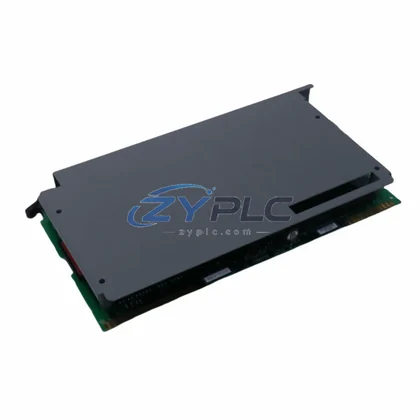
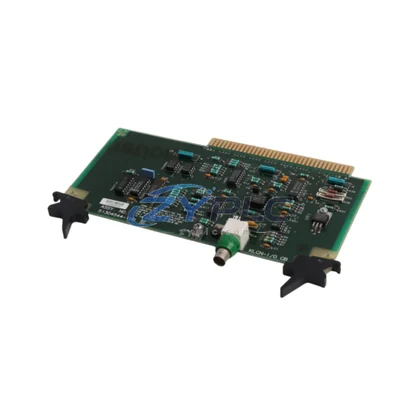
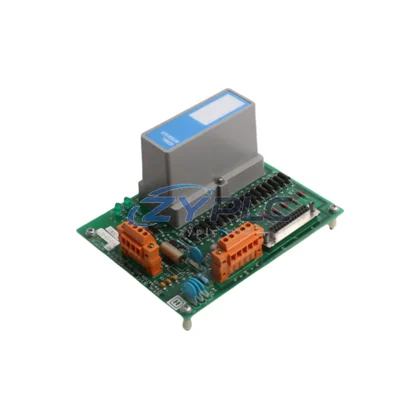
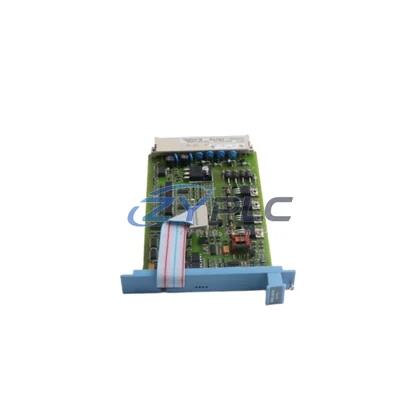
The Honeywell MU-TDID12 51304441-125 is a high-integrity digital input module engineered for deployment within Honeywell’s MU I/O subsystem, a field-proven I/O platform widely used across Experion PKS and legacy TDC 3000 distributed control environments. In modern industrial automation, no single module operates in isolation — every component must be evaluated in the context of the full control system architecture, from the controller layer down through the I/O layer, network infrastructure, power distribution, human-machine interface, and field execution devices. The MU-TDID12 51304441-125 is purpose-built to fulfill a precise role within this layered hierarchy, delivering reliable digital signal acquisition that underpins process visibility, interlock logic, and system-wide decision-making.
Within a complete Honeywell MU-based control architecture, the MU-TDID12 51304441-125 occupies the I/O layer, receiving discrete on/off signals from field instruments such as limit switches, proximity sensors, pushbuttons, relay contacts, and digital transmitters. These signals are conditioned, isolated, and transmitted upstream to the process controller — typically a Honeywell C200, C300, or equivalent Experion controller node — where they are processed as part of the control strategy. The module’s role is therefore foundational: without accurate, low-latency digital input acquisition, the controller cannot execute interlocks, sequence logic, or alarm management with confidence.
Product Specification Table
| Parameter |
Specification |
| Part Number |
MU-TDID12 / 51304441-125 |
| Manufacturer |
Honeywell Process Solutions |
| Module Type |
Digital Input (DI) Module |
| Platform Compatibility |
Honeywell MU I/O Subsystem (Experion PKS / TDC 3000) |
| System Role |
Field-level discrete signal acquisition, I/O layer |
| Input Channels |
12 digital input channels (typical for MU-TDID12 class) |
| Signal Type |
Discrete dry/wet contact, 24 VDC nominal field voltage |
| Electrical Isolation |
Optical isolation between field and system bus |
| Communication Interface |
MU I/O backplane bus (proprietary Honeywell MU protocol) |
| Mounting |
MU I/O carrier / backplane rack |
| Operating Temperature |
0°C to 60°C (standard industrial environment) |
| Relative Humidity |
5% to 95% non-condensing |
| Installation Environment |
Control room / marshalling cabinet, DIN rail or rack mount |
| system integration |
Supports system integration within Experion architecture |
| Warranty |
warranty terms confirmed during quotation from date of shipment |
| Condition |
New / Surplus / Tested Refurbished available |
System Compatibility Notes
The MU-TDID12 51304441-125 achieves its full value only when considered as part of a coordinated system design. In a typical Honeywell Experion MU architecture, the module is installed on an MU-TAIH02 or MU-TAIH04 I/O carrier, which provides the physical backplane connection and terminal wiring interface. Multiple I/O modules — including digital output modules such as the MU-TDOD16, analog input modules such as the MU-TAIM02, and analog output modules such as the MU-TAOM02 — are co-located on the same carrier assembly, forming a complete I/O node that serves a defined process area.
At the controller layer, the MU I/O node communicates with the process controller via the MU I/O link. In Experion PKS environments, this is typically managed through a C200 or C300 controller paired with an IOTA (I/O Termination Assembly) or equivalent interface module. The controller executes the control database, processes the digital inputs received from the MU-TDID12, and issues commands to output modules and field actuators accordingly. For high-availability applications, a redundant controller pair — such as dual C300 controllers with CPCN02 or CPCN04 communication modules — ensures that a single controller failure does not interrupt process control, with the MU I/O subsystem continuing to serve the standby controller seamlessly.
Network integrity is maintained through Honeywell’s FTE (Fault Tolerant Ethernet) infrastructure, which provides dual-path, self-healing network connectivity between controllers, I/O nodes, operator stations, and engineering workstations. The MU-TDID12 51304441-125, as part of the MU I/O subsystem, benefits from this network redundancy indirectly — any disruption at the network layer is transparent to the I/O module, which continues to acquire field signals and buffer data for the controller. This architecture is particularly important in continuous process industries such as refining, petrochemicals, and power generation, where even brief interruptions in signal acquisition can trigger spurious shutdowns or missed alarms.
Power distribution to the MU I/O subsystem is typically provided by a dedicated MU-PSIM01 or equivalent MU power supply module, which conditions incoming AC or DC power and distributes regulated voltage to the I/O carriers and modules. Redundant power supply configurations are common in critical applications, with automatic switchover ensuring uninterrupted module operation. The MU-TDID12 51304441-125 draws its operating power from the carrier backplane, simplifying field wiring and reducing the risk of power-related faults.
At the human-machine interface layer, operator stations running Honeywell Experion Station software display the digital input states acquired by the MU-TDID12 in real time, supporting alarm management, trend displays, and process graphics. Engineering workstations running Honeywell Control Builder are used to configure the module’s channel assignments, signal conditioning parameters, and alarm thresholds. The tight integration between the MU-TDID12 and the Experion software environment — enabled by system integration — means that module diagnostics, channel health, and communication status are all visible from the operator and engineering interfaces without requiring separate diagnostic tools.
Industrial Application Notes
The MU-TDID12 51304441-125 is deployed across a wide range of industrial sectors where Honeywell Experion PKS or TDC 3000 systems form the backbone of process control. In oil refining and petrochemical plants, the module acquires digital signals from motor control centers, valve position switches, and safety interlock devices, feeding the controller with the discrete state information needed to manage complex reaction sequences and emergency shutdown logic. In power generation facilities — including coal-fired, gas turbine, and combined-cycle plants — the module monitors turbine auxiliary systems, breaker status, and protection relay outputs, providing the controller with the real-time discrete data required for load management and fault response.
In water and wastewater treatment plants, the MU-TDID12 monitors pump run/stop status, valve open/closed feedback, and level switch states across distributed pump stations and treatment basins. The module’s optical isolation and robust signal conditioning ensure reliable operation even in environments with significant electrical noise from variable-frequency drives and submersible pump motors. In mining and mineral processing applications, the module is used to monitor conveyor belt status, crusher interlock signals, and emergency stop circuits, where the consequences of missed or false signals can be severe.
In pharmaceutical and food processing environments, the MU-TDID12 supports batch control architectures by acquiring digital signals from agitator drives, CIP valve position switches, and clean-room door interlocks. The module’s compatibility with the Experion Batch Manager and Recipe Manager applications — through system integration — allows batch sequences to respond dynamically to field conditions without manual operator intervention. In metallurgical and steel production facilities, the module monitors furnace door positions, cooling water flow switches, and rolling mill interlock circuits, supporting the high-speed discrete logic required for safe and efficient production.
Product Compatibility FAQ
Q1: Is the MU-TDID12 51304441-125 compatible with both Experion PKS and legacy TDC 3000 MU I/O architectures?
A: Yes. The MU-TDID12 51304441-125 is designed for the Honeywell MU I/O subsystem, which is used across both the Experion PKS platform and the legacy TDC 3000 environment. The module communicates via the MU I/O backplane bus and is compatible with MU I/O carriers and link controllers used in both platforms. When integrating into an existing system, engineers should verify the firmware revision of the link controller and the I/O carrier assembly to ensure full compatibility. Our technical team can assist with compatibility verification prior to shipment.
Q2: Can the MU-TDID12 51304441-125 be used in a redundant I/O architecture, and what additional components are required?
A: The MU I/O subsystem supports redundant I/O configurations in conjunction with redundant link controllers and carrier assemblies. In a redundant configuration, two MU-TDID12 modules are installed on redundant carriers, with the active module acquiring field signals and the standby module maintaining synchronization. Switchover is automatic and bumpless, ensuring continuous signal acquisition during module replacement or fault recovery. Required additional components typically include a redundant MU link controller, redundant carrier assemblies, and a redundant power supply module. Our team can provide a complete bill of materials for redundant MU I/O configurations based on your specific channel count and process requirements.
Q3: What does the warranty terms confirmed during quotation cover, and what support is available for installation and commissioning?
A: All MU-TDID12 51304441-125 modules supplied by ZYPLC are covered by a warranty terms confirmed during quotation from the date of shipment, covering manufacturing defects, component failures, and functional non-conformance under normal operating conditions. The warranty does not cover damage resulting from incorrect installation, overvoltage conditions, or unauthorized modification. In addition to the warranty, ZYPLC provides pre-shipment functional testing documentation, configuration guidance for Experion Control Builder, and post-installation technical support. For complex commissioning scenarios — including integration with existing MU I/O architectures, redundancy configuration, or migration from TDC 3000 — our engineering team is available for remote consultation.