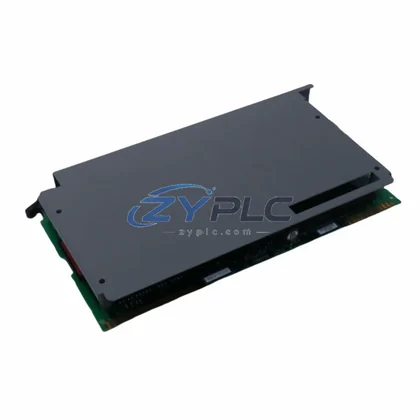
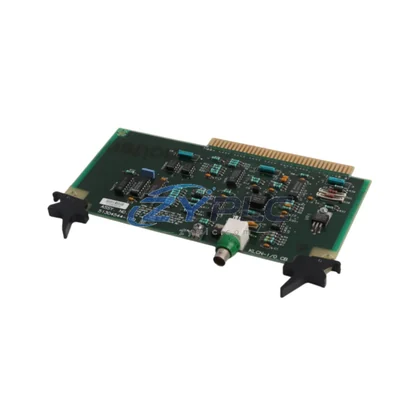
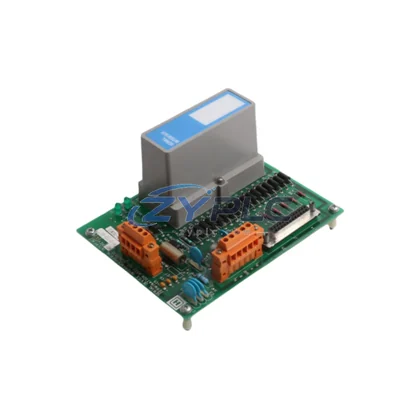
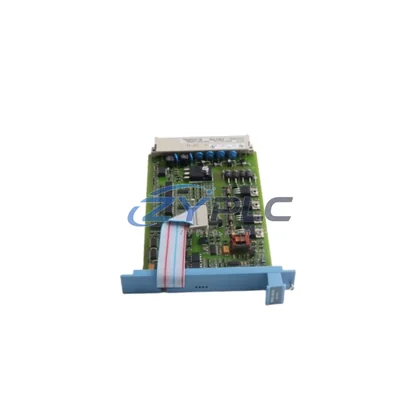
Honeywell MU-TDOR22 51309150-125 Digital Output for TDC 3000
The Honeywell MU-TDOR22 (Part No. 51309150-125) is a high-reliability digital output module engineered for seamless integration within the TDC 3000 Distributed Control System (DCS) architecture. Designed to operate within Honeywell’s proven process automation framework, this module serves as a critical execution-layer component, translating controller logic into discrete field-level switching actions across industrial processes. Whether deployed in continuous manufacturing, power generation, petrochemical refining, or water treatment facilities, the MU-TDOR22 delivers deterministic output performance that underpins system-wide operational integrity.
In a fully layered TDC 3000 control architecture, the MU-TDOR22 occupies the I/O layer, receiving digital commands from the Universal Control Network (UCN) and executing them through isolated output channels to field devices such as solenoid valves, motor starters, and relay-driven actuators. Its role is not isolated — it functions in coordinated harmony with upstream controllers, backplane infrastructure, communication gateways, and downstream execution hardware to ensure signal fidelity and response consistency across the entire control loop.
The module is rack-mounted within the standard TDC 3000 I/O Link chassis, sharing backplane resources with complementary modules including the MU-TDIY22 digital input module, MU-TAOY22 analog output module, and MU-TAIY22 analog input module. This modular co-location strategy reduces wiring complexity, simplifies cabinet layout, and enables rapid hot-swap maintenance without disrupting adjacent I/O channels — a critical advantage in continuous-process environments where unplanned downtime carries significant operational cost.
Product Specification Table
| Parameter |
Specification |
| Part Number |
MU-TDOR22 / 51309150-125 |
| Brand |
Honeywell |
| Series / Platform |
TDC 3000 DCS |
| Module Type |
Digital Output Module |
| System Role |
I/O Execution Layer — Field Device Switching |
| Output Channels |
16 discrete digital output channels (typical) |
| Output Voltage Range |
24 VDC nominal (field-side) |
| Isolation |
Optical isolation between logic and field circuits |
| Communication Interface |
TDC 3000 I/O Link Bus (backplane) |
| Mounting |
TDC 3000 standard I/O rack / chassis |
| Operating Temperature |
0°C to 60°C |
| Relative Humidity |
5% to 95% non-condensing |
| Certifications |
CE, UL (subject to revision — verify with datasheet) |
| Origin |
United States |
| Warranty |
warranty terms confirmed during quotation (ZYPLC) |
System Compatibility Notes
The MU-TDOR22 achieves its full value when considered within the broader TDC 3000 system topology. At the control layer, the Honeywell HPM (High-Performance Process Manager) or APM (Advanced Process Manager) generates the digital command signals that are routed through the UCN network to the I/O subsystem. The MU-TDOR22 receives these commands via the I/O Link backplane and executes them with millisecond-level response latency, ensuring that field-side switching events align precisely with the controller’s scan cycle.
Power integrity for the module is maintained by the Honeywell PS-0024 or equivalent TDC 3000 power supply unit, which provides regulated 24 VDC to the I/O rack. Redundant power configurations — using dual PSUs with automatic failover — are strongly recommended in safety-critical applications such as emergency shutdown systems or interlock-driven processes. The MU-TDOR22’s optical isolation architecture ensures that field-side transients do not propagate into the backplane, protecting adjacent modules including the MU-TDIY22 input module and MU-TAOY22 analog output module from electrical interference.
At the network layer, the TDC 3000 UCN (Universal Control Network) provides the high-speed, deterministic communication backbone that links the HPM/APM controllers to the I/O subsystem. The NIM (Network Interface Module) serves as the gateway between the UCN and the I/O Link bus, ensuring that digital output commands from the MU-TDOR22 are synchronized with the overall control strategy. For facilities requiring integration with higher-level SCADA or MES systems, the Honeywell HG (Hiway Gateway) or equivalent OPC-DA/UA server provides the necessary protocol translation without disrupting the real-time I/O loop.
Human-machine interface visibility into MU-TDOR22 channel states is provided through Honeywell’s Experion PKS HMI stations or legacy GUS (Global User Station) consoles, where operators can monitor discrete output status, acknowledge alarms, and initiate manual overrides within the defined control authority hierarchy. This HMI integration is essential for maintenance teams performing loop checks, commissioning new field devices, or diagnosing output channel faults during scheduled turnarounds.
For applications requiring output signal conditioning or terminal block interfacing, the MU-TDOR22 is typically paired with Honeywell’s FTA (Field Termination Assembly) panels, which provide screw-terminal access to individual output channels without requiring direct module manipulation. This FTA-based wiring architecture significantly reduces commissioning time and supports in-service cable replacement — a key advantage in high-density I/O cabinets where access space is constrained.
Industrial Application Notes
In petrochemical and refining facilities, the MU-TDOR22 is commonly deployed to control solenoid-operated block valves, pump motor starters, and compressor seal system actuators. Its deterministic switching behavior and optical isolation make it well-suited for environments where electrical noise from variable-frequency drives and large motor loads could otherwise compromise signal integrity.
In power generation plants — including coal-fired, gas turbine, and combined-cycle facilities — the module manages discrete outputs for burner management systems, turbine auxiliary controls, and cooling water pump sequencing. The TDC 3000 platform’s proven track record in power plant DCS applications means that the MU-TDOR22 benefits from decades of field validation in high-availability, continuous-operation environments.
In water and wastewater treatment systems, the MU-TDOR22 controls discrete outputs for pump station sequencing, chemical dosing valve actuation, and UV disinfection system enable/disable logic. Its compatibility with the TDC 3000 I/O Link architecture allows water utilities to expand existing control systems without replacing the core DCS infrastructure — a cost-effective strategy for aging plant modernization projects.
In mining and metallurgical processing, the module supports conveyor belt control, crusher interlock systems, and flotation cell reagent valve sequencing. The robust operating temperature range and vibration tolerance of TDC 3000 I/O modules make them appropriate for the demanding environmental conditions typical of mineral processing facilities.
In pharmaceutical and food-grade manufacturing, the MU-TDOR22 supports CIP (Clean-in-Place) valve sequencing, sterilization cycle control, and batch process interlock logic. Its integration within the validated TDC 3000 platform simplifies FDA 21 CFR Part 11 compliance documentation, as the control system’s audit trail and change management capabilities are well-established in regulated manufacturing environments.
Product Compatibility FAQ
Q1: Is the MU-TDOR22 (51309150-125) compatible with both HPM and APM controller configurations in a TDC 3000 system?
A: Yes. The MU-TDOR22 is designed for the TDC 3000 I/O Link bus architecture and is compatible with both the High-Performance Process Manager (HPM) and Advanced Process Manager (APM) controller types. The module communicates via the standard I/O Link backplane protocol, which is consistent across TDC 3000 controller variants. When integrating into an existing system, verify the I/O Link address configuration and ensure the controller’s I/O database includes the correct module type definition to avoid scan cycle conflicts.
Q2: Can the MU-TDOR22 be replaced in-service without shutting down the entire I/O rack?
A: The TDC 3000 I/O architecture supports module-level replacement procedures, but the specific hot-swap capability depends on the rack configuration and whether the system has been configured for redundant I/O. In non-redundant configurations, replacing the MU-TDOR22 will interrupt output signals on all 16 channels during the swap procedure. It is recommended to coordinate replacement during a planned maintenance window, pre-configure the replacement module’s address settings, and verify channel-by-channel output restoration using the HMI diagnostic display before returning the loop to automatic control.
Q3: What does the warranty terms confirmed during quotation cover, and how does ZYPLC support long-term spare parts availability for TDC 3000 modules?
A: ZYPLC’s warranty terms confirmed during quotation covers manufacturing defects and functional failures under normal operating conditions from the date of shipment. In the event of a warranty claim, ZYPLC provides advance replacement or repair service to minimize system downtime. For long-term spare parts planning, ZYPLC maintains inventory of legacy TDC 3000 I/O modules including the MU-TDOR22, MU-TDIY22, MU-TAOY22, and related FTA assemblies, supporting facilities that are extending the operational life of their existing DCS infrastructure beyond the original manufacturer’s support window. Contact our technical team to discuss multi-unit stocking agreements and lead time commitments for critical spare parts programs.