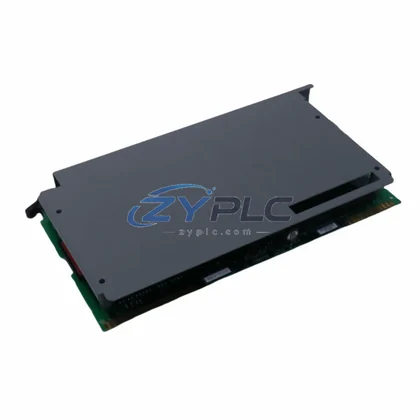
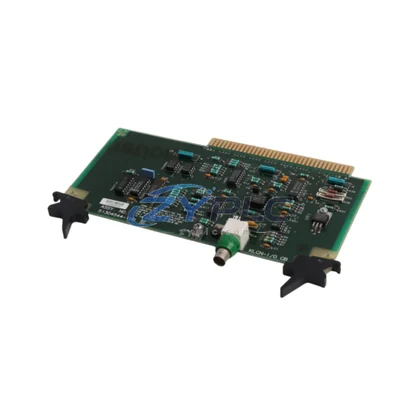
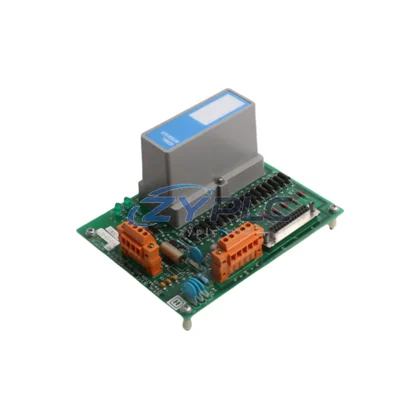
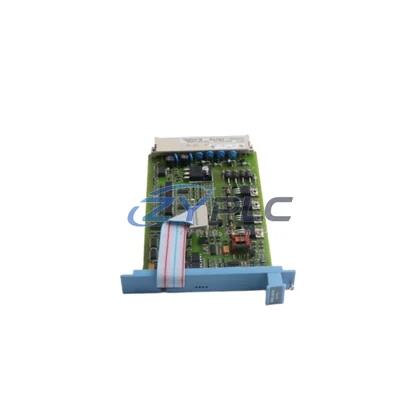
The Honeywell QST-2002 is a precision analog input module engineered for seamless integration within the IPC 620 distributed control system (DCS) platform — a cornerstone of Honeywell’s TDC 3000 control architecture. In modern industrial automation, no module operates in isolation. The QST-2002 is designed not merely as a standalone signal acquisition device, but as a contextually integrated component within a layered control hierarchy that spans field instrumentation, I/O subsystems, controller backplanes, communication networks, and operator interfaces. Understanding its role within this architecture is essential for engineers responsible for system design, commissioning, and long-term maintenance.
The QST-2002 accepts multiple analog input signal types — including 4–20 mA current loops and millivolt-range thermocouple signals — and converts them into digitized process values that are passed upstream to the IPC 620 controller for real-time processing. Its high-resolution analog-to-digital conversion ensures that even subtle process variations are captured accurately, supporting tight control loops in applications where signal fidelity directly impacts product quality or operational safety.
Product Specification Table
| Parameter |
Specification |
| Module Model |
Honeywell QST-2002 |
| System Role |
Analog Input Module — I/O Layer |
| Compatible Platform |
Honeywell IPC 620 / TDC 3000 DCS |
| Input Signal Types |
4–20 mA, Thermocouple (mV), RTD (inferred) |
| Number of Input Channels |
Multi-channel (series standard) |
| Signal Resolution |
High-resolution ADC (12-bit or greater) |
| Electrical Isolation |
Channel-to-channel and channel-to-bus isolation |
| Communication Interface |
IPC 620 backplane bus (proprietary) |
| Power Supply |
Supplied via IPC 620 backplane (QPP-0001 / QPP-0002) |
| Mounting |
IPC 620 rack / backplane slot |
| Operating Temperature |
0°C to 60°C (standard industrial range) |
| Certifications |
CE, UL (platform-level) |
| Warranty |
warranty terms confirmed during quotation — all units tested prior to shipment |
System Compatibility Notes
The QST-2002 achieves its full value when deployed within a complete IPC 620 control system architecture. At the controller layer, the Honeywell QMX-0001 master controller module serves as the central processing unit, executing control algorithms and managing data exchange across the backplane. The QST-2002 feeds digitized analog values directly into this controller’s scan cycle, enabling closed-loop PID control, alarm management, and historian logging without additional signal conditioning hardware.
Power integrity is foundational to reliable analog signal acquisition. The Honeywell QPP-0001 and QPP-0002 power supply modules provide regulated DC power to the IPC 620 rack, ensuring that the QST-2002’s ADC circuitry operates within its specified voltage tolerance. In redundant power configurations, dual QPP modules are deployed in parallel, eliminating single points of failure at the power layer — a critical design consideration for continuous process industries such as refining and petrochemicals.
For digital output coordination, the Honeywell QST-2030 digital output module operates alongside the QST-2002 within the same rack, enabling the controller to issue discrete commands to field actuators based on analog process values acquired by the QST-2002. This tight coupling between analog input and digital output modules within a shared backplane minimizes inter-module latency and simplifies system diagnostics.
At the communication layer, the Honeywell Data Hiway Gateway (part of the TDC 3000 LCN architecture) bridges the IPC 620 local control network with the plant-wide supervisory system. This allows process data collected by the QST-2002 to be aggregated at the Universal Station or Application Module level, supporting advanced process control (APC) strategies and plant-wide data historians.
Termination assemblies such as the Honeywell 51304754-150 and 51309276-150 field termination assemblies (FTAs) provide the physical interface between field wiring and the IPC 620 I/O modules. These FTAs are designed to accept 4–20 mA field signals and route them to the QST-2002 via the IPC 620 cable system, maintaining signal integrity across long field cable runs. Proper FTA selection is critical for achieving the QST-2002’s rated accuracy in installed conditions.
For human-machine interface integration, the Honeywell Universal Station (US) or GUS (Global User Station) provides operators with real-time visualization of analog process values acquired by the QST-2002. Trend displays, alarm banners, and faceplate graphics are all driven by the data stream originating at the QST-2002 input channels, making the module’s reliability directly visible to control room operators.
In redundant controller configurations, a secondary QMX-0001 controller module can be deployed in a hot-standby arrangement, with both controllers sharing access to the QST-2002’s input data via the backplane bus. This architecture ensures bumpless transfer during controller failover events, maintaining continuous process monitoring without operator intervention.
Industrial Application Notes
The Honeywell QST-2002 is deployed across a wide range of process industries where analog signal acquisition is fundamental to safe and efficient operation. In petroleum refining and petrochemical processing, the module monitors critical process variables such as reactor temperatures, column pressures, and flow rates, feeding real-time data to advanced process control applications running on the TDC 3000 platform. Its electrical isolation characteristics make it suitable for hazardous area applications where ground loops and common-mode noise are persistent challenges.
In power generation facilities — including thermal, combined-cycle, and cogeneration plants — the QST-2002 is used to monitor boiler drum levels, turbine exhaust temperatures, and generator output parameters. The module’s compatibility with thermocouple input signals makes it particularly valuable in high-temperature measurement applications where RTD accuracy is insufficient.
In water and wastewater treatment plants, the QST-2002 supports monitoring of pH, dissolved oxygen, turbidity, and flow rate signals from field analyzers and transmitters. Its multi-channel architecture allows a single module to consolidate multiple process measurements within a compact rack footprint, reducing panel space requirements in retrofit projects where existing IPC 620 infrastructure is being extended.
In mining and metallurgical operations, the module is used in ore processing, smelting, and materials handling applications where robust analog signal acquisition under harsh environmental conditions is required. The IPC 620 platform’s proven reliability in these environments, combined with the QST-2002’s channel isolation, supports long-term operation with minimal maintenance intervention.
For packaging and discrete manufacturing applications that incorporate process control elements — such as temperature-controlled curing ovens, coating lines, or filling systems — the QST-2002 provides the analog input capability needed to integrate process instrumentation into an IPC 620-based control architecture, enabling unified control of both discrete and continuous process elements from a single platform.
Product Compatibility FAQ
Q1: Is the Honeywell QST-2002 compatible with all IPC 620 rack configurations, and can it be mixed with other I/O module types in the same rack?
The QST-2002 is designed for the IPC 620 backplane and is compatible with standard IPC 620 rack assemblies. It can be installed in any available I/O slot within the rack and mixed with other IPC 620 I/O module types — including digital input, digital output, and analog output modules — without hardware conflicts. Slot assignment is managed through the IPC 620 configuration software, which maps each physical slot to a specific I/O block address. Engineers should verify rack power budget when populating high-density configurations, as the QPP-0001 or QPP-0002 power supply modules have defined maximum load capacities per rack.
Q2: How does the QST-2002 support long-term maintenance and spare parts management in aging IPC 620 installations?
As the IPC 620 platform approaches end-of-life from Honeywell’s active manufacturing program, maintaining a qualified spare parts inventory is the primary strategy for ensuring system continuity. The QST-2002 is a hot-swappable module in most IPC 620 configurations, allowing field replacement without full system shutdown — provided the replacement module is pre-configured with the correct I/O block parameters. ZYPLC maintains tested, warranted QST-2002 units RFQ Available, each covered by a warranty terms confirmed during quotation, supporting both emergency replacement and planned maintenance programs. Customers are advised to maintain at least one spare QST-2002 per critical control loop cluster to minimize mean time to repair (MTTR) in the event of module failure.
Q3: What commissioning steps are required when installing a replacement QST-2002 in an operational IPC 620 system?
Replacing a QST-2002 in an operational system requires coordination between the control room operator and the field engineer. Prior to module removal, the affected I/O channels should be placed in manual mode at the controller level to prevent spurious control actions during the swap. After physical installation of the replacement module, the IPC 620 configuration database should be verified to confirm that the new module’s slot address matches the original configuration. Channel calibration should be verified against known reference signals before returning the channels to automatic control. ZYPLC’s technical support team is available to assist with commissioning guidance for customers who have purchased QST-2002 units under our warranty terms confirmed during quotation program.