Honeywell RTP3019/00 Industrial Network Interface for SER 3000 Systems: Bridging the Industrial Data Link in Smart Factory Environments
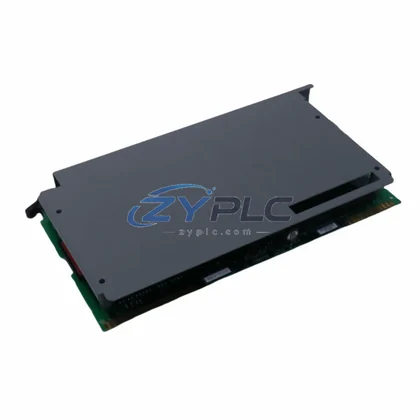
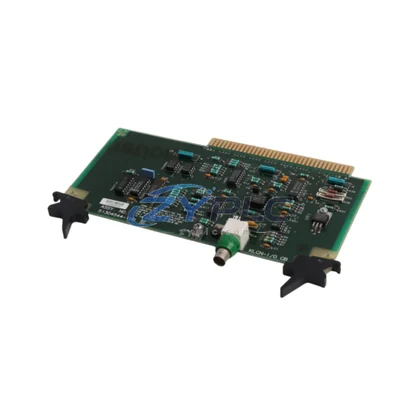
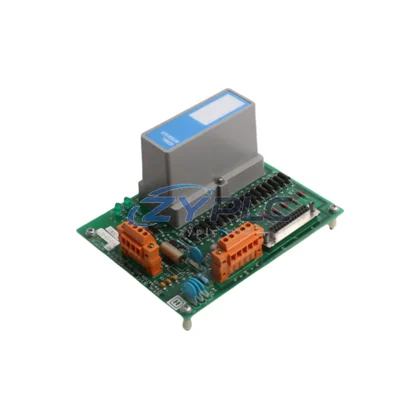
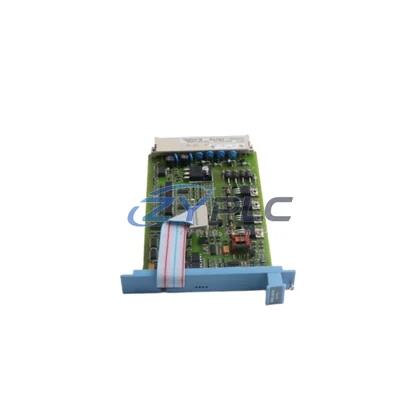
The Honeywell RTP3019/00 is a high-performance industrial I/O module engineered for the SER 3000 series within the RTP (Real-Time Processor) platform. Designed to serve as a critical network interface node, this module enables seamless data exchange between field-level devices and upper-level control and monitoring systems. Whether deployed in continuous process industries, discrete manufacturing, or hybrid automation environments, the RTP3019/00 delivers the signal integrity, protocol compatibility, and network stability that modern smart factories demand.
In today’s industrial landscape, the ability to move data reliably from sensors and actuators through PLCs, remote I/O racks, and up to SCADA and MES platforms is not optional — it is the backbone of operational intelligence. The RTP3019/00 is purpose-built to fulfill this role within Honeywell’s proven RTP architecture, ensuring that every data point captured at the field level reaches the control layer with minimal latency and maximum fidelity.
Compatibility & Integration Notes
| Attribute |
Specification |
| Product SKU |
RTP3019/00 SER 3000 I/O |
| Brand / Manufacturer |
Honeywell |
| Series |
RTP Series / SER 3000 |
| Module Type |
Industrial I/O Module – Network Interface |
| Protocol Support |
Modbus RTU / TCP, Honeywell Proprietary RTP Bus, OPC-compatible via gateway |
| Interface Type |
Backplane I/O Bus, Serial Communication Port |
| Transmission Capability |
Real-time deterministic data transfer, cyclic and acyclic communication |
| Network Compatibility |
Honeywell RTP Control System, SER 3000 Rack Architecture, SCADA/DCS Integration |
| System Application |
Process Control, Remote I/O, PLC Integration, HMI/SCADA Data Acquisition |
| Operating Environment |
Industrial-grade, suitable for harsh environments |
| Origin |
United States |
| Warranty |
warranty terms confirmed during quotation |
| Availability |
RFQ Available – shipment arranged after confirmation |
Connected Automation Data Flow
The Honeywell RTP3019/00 sits at the intersection of field instrumentation and supervisory control, acting as the data conduit that keeps the entire automation chain synchronized. In a typical smart factory deployment, the data flow begins at the sensor layer — pressure transmitters, flow meters, temperature sensors, and proximity switches — all feeding raw process signals into the field bus network. These signals are collected and conditioned before being passed through the RTP3019/00 I/O module, which interfaces directly with the SER 3000 rack system to ensure structured, time-stamped data delivery to the controller.
Within the Honeywell RTP control platform, the RTP3019/00 works in close coordination with the RTP3000 series processor modules, which handle the real-time execution of control logic. Alongside the processor, RTP3002 and RTP3004 communication modules manage the uplink to Ethernet-based supervisory networks, enabling the I/O data collected by the RTP3019/00 to be forwarded to Honeywell Experion PKS or third-party SCADA platforms via OPC-DA or OPC-UA gateways.
For remote I/O expansion, the RTP3019/00 integrates with RTP remote I/O drop assemblies, extending the reach of the control system to distributed field panels without requiring additional controller hardware. This architecture is particularly valuable in large-scale process plants where field devices may be located hundreds of meters from the main control room. The module’s deterministic communication cycle ensures that even in these extended topologies, data latency remains within the tight bounds required for closed-loop process control.
At the HMI layer, operators interact with live process data surfaced through Honeywell Experion Station or compatible third-party HMI software. The RTP3019/00 ensures that analog and digital I/O values are refreshed at the correct scan rate, supporting alarm management, trend logging, and operator guidance functions. When integrated with Honeywell Safety Manager or a Safety Instrumented System (SIS), the module’s I/O data also feeds into safety logic solvers, enabling coordinated emergency shutdown and process protection responses.
In edge computing scenarios, the RTP3019/00’s data can be aggregated by an industrial edge gateway — such as those based on the Honeywell Connected Plant architecture — where it is pre-processed and forwarded to cloud analytics platforms for predictive maintenance, maintenance planning, and OEE (Overall Equipment Effectiveness) analysis. Variable frequency drives (VFDs) and servo drives connected to the field network also report their status and fault codes through the I/O module, giving maintenance teams real-time visibility into motor health and drive performance without requiring physical inspection.
Solving Data Isolation in Industrial Sites
One of the most persistent challenges in industrial automation is the fragmentation of communication protocols across different generations of equipment. A plant may simultaneously operate legacy serial devices using Modbus RTU, newer Ethernet-based instruments using Modbus TCP or PROFINET, and proprietary controllers from multiple vendors — each speaking a different data language. The result is data isolation: critical process information trapped within individual subsystems, invisible to the broader control and monitoring infrastructure.
The Honeywell RTP3019/00 addresses this challenge by serving as a standardized I/O interface within the RTP platform, which is designed to aggregate diverse field signals into a unified data model. When paired with protocol conversion gateways — such as Anybus communicators or Moxa NPort serial device servers — the RTP3019/00 can bridge legacy serial instruments into the modern Ethernet backbone, eliminating data silos without requiring wholesale equipment replacement.
For remote monitoring and diagnostics, the RTP3019/00 supports integration with Honeywell’s remote asset management tools, allowing maintenance engineers to interrogate module status, review I/O channel diagnostics, and identify fault conditions from a central control room or even from off-site locations via secure VPN connections. This capability dramatically reduces the mean time to repair (MTTR) for I/O-related faults, as technicians can isolate the problem to a specific channel or module before dispatching field personnel.
Production line transparency is another key benefit. By ensuring that every field signal is accurately represented in the SCADA historian, the RTP3019/00 enables production managers to reconstruct process events, analyze batch quality, and identify the root causes of yield losses. This data-driven approach to continuous improvement is a cornerstone of Industry 4.0 and smart manufacturing initiatives, and the RTP3019/00 provides the reliable I/O foundation upon which these initiatives depend.
System scalability is also a critical consideration for growing operations. The modular architecture of the SER 3000 rack system allows additional RTP3019/00 modules to be added as I/O point counts increase, without disrupting existing control logic or network configurations. This plug-and-expand capability protects the initial capital investment while providing a clear upgrade path as production requirements evolve.
Industrial Connectivity FAQ
Q1: What communication protocols does the Honeywell RTP3019/00 support, and is it compatible with third-party SCADA systems?
The RTP3019/00 operates within the Honeywell RTP platform’s proprietary backplane bus and supports serial communication interfaces compatible with Modbus RTU. When integrated with appropriate communication modules such as the RTP3002 or RTP3004, the system can interface with OPC-compliant SCADA platforms, including third-party systems like Wonderware, Ignition, and Siemens WinCC, via OPC-DA or OPC-UA server configurations.
Q2: How does the RTP3019/00 ensure network stability and minimize communication latency in real-time control applications?
The RTP3019/00 is designed for deterministic, cyclic I/O scanning within the SER 3000 rack architecture. The backplane communication is synchronized with the RTP processor’s scan cycle, ensuring that I/O data is updated at consistent, predictable intervals. This deterministic behavior is essential for closed-loop control applications where communication jitter could compromise control performance or trigger nuisance alarms.
Q3: Can the RTP3019/00 be used in safety-critical applications, and does it support integration with Safety Instrumented Systems (SIS)?
While the RTP3019/00 is a standard (non-SIL-rated) I/O module, it can coexist within plant architectures that include dedicated safety systems such as the Honeywell Safety Manager. In such configurations, the standard I/O handled by the RTP3019/00 feeds into the basic process control layer, while safety-critical signals are routed through the certified SIS hardware. Proper segregation of safety and non-safety I/O is required per IEC 61511 guidelines.
Q4: What does the warranty terms confirmed during quotation cover, and what is the typical lead time for the RTP3019/00?
All RTP3019/00 modules supplied by ZYPLC are covered by a warranty terms confirmed during quotation against manufacturing defects and functional failures under normal operating conditions. Each unit undergoes pre-shipment functional testing to verify I/O channel integrity and communication performance before dispatch. Stock availability is maintained for rapid fulfillment, with typical lead times of 3–7 business days for availability confirmed by RFQ units. For urgent requirements, expedited shipping options are available upon request.
—