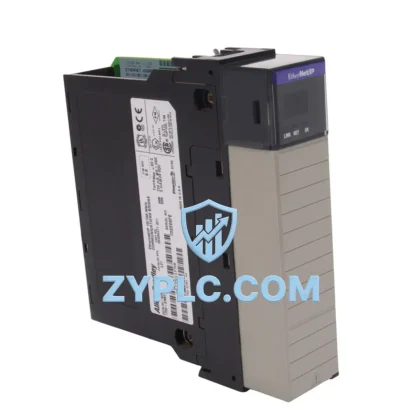
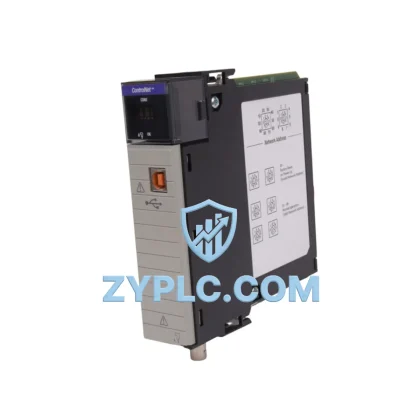
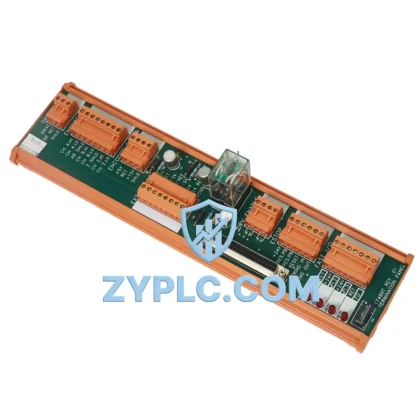
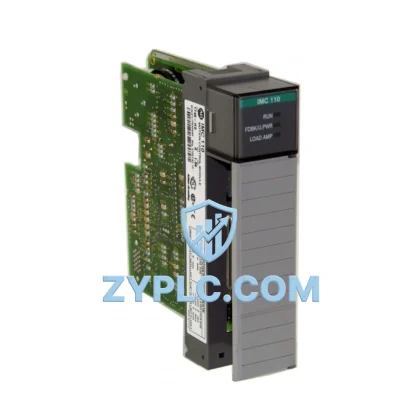
Honeywell T8151 Energy-Saving Communication Module | Trusted: Precision Control for Optimized Industrial Automation
The Honeywell T8151 is a high-efficiency communication interface module from the Honeywell Trusted Series, engineered for demanding industrial distributed control system (DCS) environments where energy accountability, signal integrity, and system uptime are non-negotiable. As factories and process plants push toward leaner energy profiles and higher equipment utilization rates, the T8151 plays a foundational role — not as a passive data relay, but as an active contributor to reduced power overhead, tighter control loop execution, and measurable improvements in production line throughput.
In modern industrial automation architectures, communication latency and signal loss between field devices and the control layer are silent energy drains. Every missed handshake, every retransmitted packet, and every controller polling cycle that fails to resolve cleanly adds microseconds that compound into wasted motor runtime, extended cycle times, and unnecessary actuator wear. The T8151 addresses this at the hardware level, providing a stable, low-overhead communication bridge that keeps the Trusted platform’s safety and control logic synchronized with field instrumentation — from pressure transmitters and flow meters to variable frequency drives and servo amplifiers.
Efficiency Performance Table
| Parameter |
Specification / Value |
| SKU / Part Number |
T8151 (Honeywell Trusted Series) |
| Module Type |
Communication Interface Module |
| Typical Power Consumption |
Low-power design; optimized for continuous 24/7 DCS operation |
| Operating Efficiency |
High-reliability signal throughput; minimizes retransmission overhead |
| Compatible Systems |
Honeywell Trusted Safety Controller, TÜV-certified SIL 2/3 platforms |
| Application Environment |
Oil & gas, petrochemical, power generation, heavy process industries |
| Energy Optimization Value |
Reduces controller polling overhead; supports real-time drive and motor feedback loops |
| Inventory Status |
In Stock — Ready to Ship |
| Testing |
Fully tested prior to shipment |
| Warranty |
12-Month Warranty |
Energy-Aware Automation Architecture
The T8151 is most effective when deployed as part of a cohesive, energy-aware control architecture. In a typical high-efficiency plant layout, the module interfaces directly with the Honeywell Trusted TC-CCR014 main processor, ensuring that safety-critical I/O data is transmitted without latency spikes that could trigger unnecessary protective shutdowns — shutdowns that waste energy through unplanned restarts and motor re-acceleration cycles.
On the drive side, the T8151’s communication layer supports integration with variable frequency drives (VFDs) such as those in the ABB ACS880 or Siemens SINAMICS S120 families, enabling the DCS to dynamically adjust motor speed setpoints based on real-time process demand. This closed-loop speed regulation is one of the most impactful energy-saving strategies available in industrial automation — reducing motor energy consumption by 20–50% compared to fixed-speed operation.
For servo-driven axes on packaging or assembly lines, the T8151 facilitates high-speed feedback from Honeywell Trusted I/O modules such as the TC-IAH161 analog input card, which captures torque and position data from servo amplifiers and feeds it back into the control loop. This tight integration reduces dwell time between production cycles, directly improving line throughput without increasing installed power capacity.
Power quality monitoring is another dimension where the T8151 contributes indirectly. When paired with power monitoring units such as the Schneider Electric PowerLogic ION7650 or equivalent energy meters connected via Modbus or PROFIBUS, the Trusted DCS can correlate energy consumption spikes with specific process events — identifying which motors, heaters, or compressors are drawing excess power during off-peak production phases. The T8151’s reliable communication backbone ensures that this energy data reaches the historian and SCADA layer without gaps.
At the field level, the module supports connectivity to HART-enabled transmitters and Foundation Fieldbus segments, allowing the DCS to receive diagnostic data from smart field devices — including valve positioners, pressure sensors, and flow controllers — without additional gateway hardware. This reduces the number of powered intermediary devices in the signal chain, lowering the system’s overall energy footprint.
For facilities running Honeywell Experion PKS as their supervisory platform, the T8151 serves as the trusted communication link between the safety layer and the process optimization layer, enabling energy management applications to act on real-time data from the field. Combined with Honeywell’s Safety Manager and HC900 hybrid controllers, the T8151 supports a unified control and safety architecture that eliminates redundant communication hardware and the energy it consumes.
Power Optimization in Real Production Lines
Consider a continuous process plant — a refinery or a chemical reactor train — where the Honeywell Trusted platform manages hundreds of I/O points across multiple safety instrumented functions (SIFs). In this environment, the T8151 is not simply moving data; it is enabling the control system to make faster, more accurate decisions about when to ramp drives up or down, when to modulate control valves, and when to shed non-critical loads during peak demand periods.
A common energy waste scenario in such plants is motor over-running: pumps and fans operating at full speed when process demand has dropped, because the control system lacks the communication bandwidth to update setpoints fast enough. The T8151 eliminates this bottleneck by maintaining a high-throughput, low-jitter communication path between the DCS controller and the field I/O, ensuring that VFD speed references are updated in real time as process conditions change. The result is measurable reduction in motor energy consumption — often 15–30% on large centrifugal pump and fan applications.
Unplanned downtime is another major energy cost that the T8151 helps mitigate. When a communication fault causes a safety controller to lose contact with a critical field device, the default response is often a protective shutdown — which means energy-intensive restart sequences, thermal cycling of process equipment, and lost production time. By providing a robust, fault-tolerant communication interface, the T8151 reduces the frequency of nuisance trips, keeping the plant running at its designed energy efficiency point.
Predictive maintenance is increasingly integrated into energy optimization strategies. The T8151 supports this by enabling continuous transmission of device health diagnostics from HART and Fieldbus instruments to the asset management layer. Maintenance teams can identify degrading valve actuators, worn pump bearings, or drifting transmitters before they cause failures — scheduling repairs during planned shutdowns rather than reacting to emergency stops that disrupt energy-optimized production schedules.
All units supplied by ZYPLC are sourced from verified supply channels, fully tested for functional performance prior to shipment, and covered by a 12-month warranty. Stock is maintained for rapid dispatch to minimize plant downtime and support urgent maintenance and upgrade projects.
Energy Optimization FAQ
Q1: How does the Honeywell T8151 contribute to energy savings in a DCS environment?
The T8151 reduces communication overhead and latency within the Honeywell Trusted platform, enabling faster and more accurate setpoint updates to drives, valves, and actuators. This tighter control loop execution prevents over-running of motors and compressors, directly reducing energy waste in continuous process applications.
Q2: Is the T8151 compatible with third-party drives and energy monitoring systems?
Yes. The T8151 supports standard industrial communication protocols including PROFIBUS and Modbus, enabling integration with third-party VFDs, servo systems, and power monitoring equipment. It is designed to operate within the broader Honeywell Trusted ecosystem while interfacing with multi-vendor automation architectures.
Q3: Can the T8151 replace an existing communication module without a full system reconfiguration?
In most cases, yes. The T8151 is a direct replacement module within the Trusted Series chassis. However, firmware version compatibility and I/O configuration should be verified against the existing system baseline before installation. ZYPLC’s technical team can assist with compatibility assessment prior to purchase.
Q4: What does the 12-month warranty cover, and what is the testing process before shipment?
Every T8151 unit shipped by ZYPLC undergoes functional testing to verify communication integrity and module health before dispatch. The 12-month warranty covers manufacturing defects and functional failures under normal operating conditions. Units are sourced from verified supply channels to ensure authenticity and reliability.
© 2026 ZYPLC. All rights reserved.
Original Source: https://zyplc.com
Contact: +86 19859288691 | plc.sales@zyplc.com