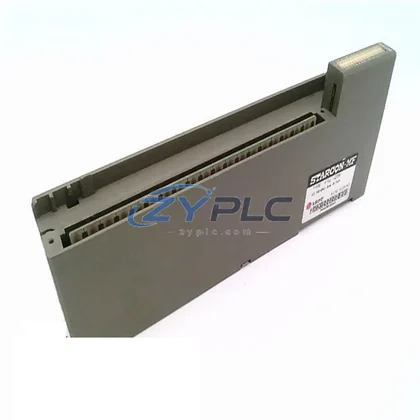
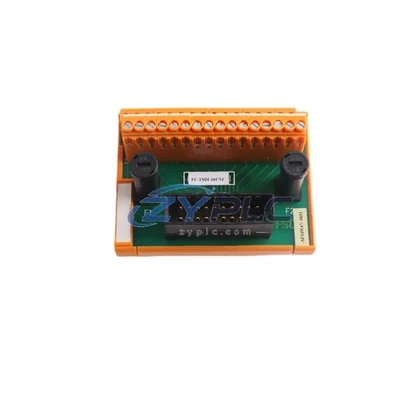
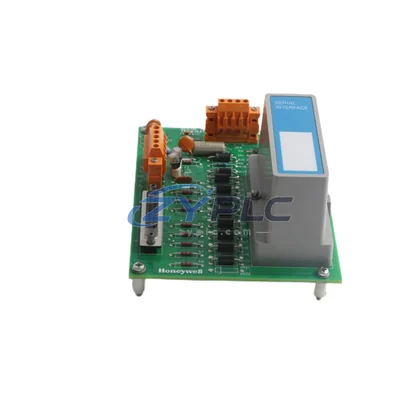
The Honeywell TK-IDD321 is a high-density digital input module engineered for the TotalPlant Solution (TPS) and TDC 3000 distributed control system platform. Designed to meet the rigorous demands of continuous process industries — including petrochemical, refining, power generation, and pulp & paper — the TK-IDD321 delivers reliable, low-latency signal acquisition that forms the backbone of industrial automation system. By ensuring accurate, real-time digital input scanning, this module directly contributes to reduced unplanned downtime, optimized equipment utilization, and lower total cost of ownership across the production line.
Every unit is sourced from verified supply channels, subjected to full functional testing prior to shipment, and backed by a , giving procurement and maintenance teams the confidence to deploy with minimal risk.
Product Specification Table
| Parameter |
Specification |
| Model / SKU |
TK-IDD321 |
| Brand / Platform |
Honeywell TotalPlant Solution (TPS) |
| Module Type |
Digital Input Module (32-channel) |
| Input Voltage Range |
24 VDC nominal |
| Power Consumption |
Low-draw design, optimized for cabinet thermal management |
| Signal Scan Rate |
High-speed cyclic scanning for real-time process feedback |
| Compatible Systems |
Honeywell TPS, TDC 3000, HPM, PM I/O subsystems |
| Application Environment |
Continuous process plants, energy facilities, refineries |
| Maintenance Value |
Eliminates signal polling delays; reduces CPU load on process managers |
| Isolation |
Optical isolation per channel group for noise immunity |
| Warranty |
— tested before shipment |
System Compatibility and Application
In a modern energy-optimized plant, the TK-IDD321 does not operate in isolation — it functions as a critical sensing node within a tightly integrated control hierarchy. At the field level, discrete signals from motor contactors, valve limit switches, and flow interlock sensors are wired directly into the TK-IDD321’s 32 input channels. These signals are then communicated upstream through the Honeywell HPM (High-Performance Process Manager), which coordinates control execution across the TPS network.
For drive-level maintenance planning, the TK-IDD321 works in conjunction with variable frequency drive (VFD) feedback signals, enabling the Honeywell PM I/O subsystem to monitor motor run/stop status and fault conditions without additional polling overhead. When paired with the TK-PRS011 power supply module, the entire I/O cabinet maintains stable, low-ripple DC power, reducing thermal stress and extending module service life.
On the data monitoring side, the TK-IDD321 feeds real-time digital states into the Honeywell Universal Control Network (UCN), where the Honeywell NIM (Network Interface Module) aggregates process data for the plant historian and maintenance planning dashboards. Operators viewing the Honeywell GUS (Global User Station) or a connected HMI workstation can immediately identify equipment in abnormal states — a stuck valve, a tripped motor, an interlock fault — and respond before energy is wasted running upstream equipment against a closed process path.
For plants integrating legacy TDC 3000 hardware with newer control layers, the TK-IDD321 is fully compatible with the Honeywell LCN (Local Control Network) backbone, allowing seamless coexistence with TK-FTEB01 Ethernet bridges and TK-CCR013 controller cards. This interoperability eliminates the need for costly signal converters or parallel wiring runs, directly reducing both capital expenditure and ongoing energy losses from redundant hardware.
In servo and motion-adjacent applications within hybrid process-discrete environments, the TK-IDD321 captures position confirmation and cycle-complete signals from servo drive controllers, feeding this data back to the process manager to tighten production line cycle times and reduce idle energy consumption between batch steps.
Maintenance and Replacement Notes
The most significant operational stability delivered by the TK-IDD321 come not from the module’s own power draw — which is minimal — but from the quality and speed of the process intelligence it provides. In a refinery or chemical plant running continuous distillation columns, a delayed or missed digital input signal can cause a control loop to remain in manual mode, forcing operators to run pumps and compressors at fixed, non-optimized speeds. The TK-IDD321’s high-speed cyclic scanning ensures that the HPM receives accurate equipment status at every control cycle, enabling automatic loop closure and the associated operational stability from demand-matched motor speeds.
In power generation facilities, the TK-IDD321 monitors turbine auxiliary system interlocks — lube oil pump run confirmation, cooling water flow switches, and breaker status inputs. Accurate, low-latency reporting of these states allows the plant DCS to execute load-following strategies more aggressively, reducing fuel consumption during partial-load operation. Plants that have standardized on the TotalPlant platform report measurable reductions in auxiliary power consumption when I/O modules are maintained in good working order and replaced proactively before signal degradation occurs.
From a maintenance cost perspective, the TK-IDD321’s optical isolation design protects the HPM backplane from field-side voltage transients, reducing the risk of cascade failures that can take entire process units offline. unexpected shutdowns in energy-intensive industries carry enormous costs — not just in lost production, but in the energy required to restart cold equipment, purge process lines, and re-establish stable operating conditions. By maintaining signal integrity and reducing nuisance trips, the TK-IDD321 contributes directly to higher equipment utilization rates and lower restart energy penalties.
All units available through our inventory have been individually tested for channel continuity, isolation integrity, and communication handshake with TPS process managers. Stock is maintained for shipment arranged after confirmation, supporting both planned maintenance outages and emergency replacement scenarios. The included covers functional defects and provides a clear return path, reducing the financial risk of spare parts procurement.
Product Sourcing FAQ
Q1: How does the TK-IDD321 contribute to plant energy efficiency?
The TK-IDD321 provides fast, accurate digital input scanning that keeps control loops in automatic mode. When loops run in automatic, the DCS can optimize pump speeds, valve positions, and compressor loads in real time — directly reducing energy consumption compared to manual or degraded-signal operation.
Q2: Is the TK-IDD321 compatible with both TPS and TDC 3000 systems?
Yes. The TK-IDD321 is designed for the Honeywell TotalPlant Solution platform and is backward compatible with TDC 3000 HPM I/O subsystems. It integrates with the UCN and LCN network architectures without requiring additional interface hardware in most standard configurations.
Q3: What is the recommended replacement and testing process?
We recommend replacing TK-IDD321 modules proactively during planned turnarounds rather than waiting for in-service failure. Each unit we supply has been functionally tested prior to shipment. Upon receipt, modules should be bench-verified against a known-good HPM chassis before installation in a live process environment.
Q4: What does the cover?
The covers functional defects in the module’s digital input channels, backplane communication interface, and power regulation circuitry. Warranty claims are processed with a straightforward return and replacement procedure. Units damaged by field-side overvoltage events beyond the module’s rated isolation are evaluated on a case-by-case basis.