Honeywell TK-OAV061 Analog Output Module: Precision Control for Optimized Production Line Efficiency
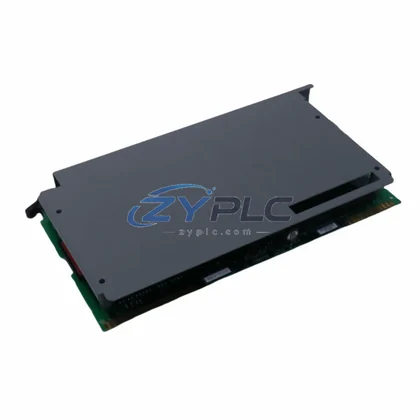
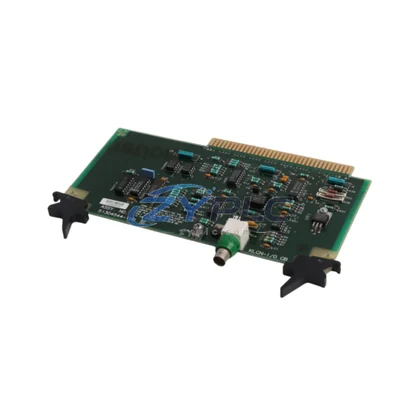
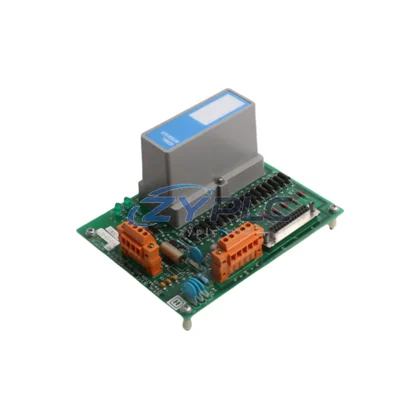
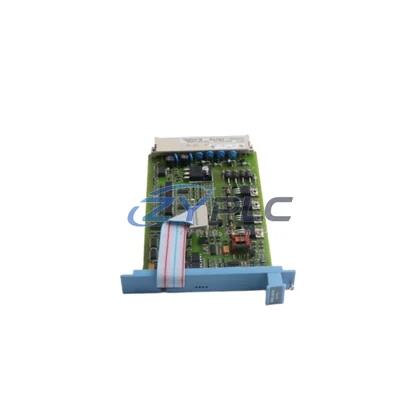
The Honeywell TK-OAV061 is a high-performance analog output module engineered for the TDC 3000 and TPS (Total Plant Solution) distributed control systems. Designed to meet the rigorous demands of modern industrial automation, the TK-OAV061 delivers precise 4–20 mA analog signal output to field devices, enabling tightly regulated motor control, valve positioning, and drive actuation across energy-intensive production environments. For facilities seeking to reduce unplanned downtime risk, improve equipment utilization rates, and minimize unplanned downtime, the TK-OAV061 represents a foundational component in a well-optimized control architecture.
Product Specification Table
| Parameter |
Specification |
| Output Channels |
6 Channels, 4–20 mA Analog Output |
| Signal Resolution |
12-bit (0.025% full scale) |
| Power Consumption |
Low-power design, optimized for TDC/TPS backplane |
| Operating Efficiency |
High-accuracy output reduces control loop hunting, lowering actuator unplanned downtime |
| Compatible Systems |
Honeywell TDC 3000, TPS, HPM, PM (Process Manager) |
| Application Environment |
Petrochemical, Power Generation, Refining, Pulp & Paper, Pharmaceutical |
| Value |
Precise output signal eliminates over-actuation; reduces valve/drive wear and energy loss |
| Warranty |
warranty terms confirmed during quotation — Tested and verified before shipment |
System Compatibility and Application
In a fully integrated Honeywell TPS environment, the TK-OAV061 analog output module operates as the final control signal bridge between the control strategy and the physical plant. Its role in maintenance-focused automation becomes clear when viewed within the broader system context. The module interfaces directly with the Honeywell HPM (High-Performance Process Manager), receiving setpoint commands and translating them into precise milliamp signals that drive field actuators with minimal deviation.
Upstream, the Honeywell TK-FTA212 field termination assembly provides the physical wiring interface, ensuring clean signal transmission from the TK-OAV061 to field instruments. On the input side, analog input modules such as the Honeywell TK-IAH161 collect real-time process feedback — temperature, pressure, and flow — feeding the control loop with the data needed to make energy-efficient decisions. When the control loop is tight and responsive, the TK-OAV061 outputs only the exact signal required, preventing over-actuation of control valves and variable frequency drives (VFDs).
In motor-driven applications, the TK-OAV061 analog output signal is commonly used to command Honeywell-compatible variable frequency drives and servo amplifiers, modulating motor speed in direct proportion to process demand. This demand-based speed control is one of the most impactful operational-efficiency strategies available in industrial automation — reducing motor load by 20–50% compared to fixed-speed operation. The Honeywell UC2000 Universal Controller and associated I/O modules further extend this capability across multi-loop control strategies.
For facilities running Honeywell’s Experion PKS (Process Knowledge System), the TK-OAV061 integrates seamlessly into the supervisory layer, where energy KPIs, equipment utilization rates, and production throughput data are aggregated and visualized on Honeywell HMI stations. Operators can monitor real-time output signal status, identify control loop anomalies, and respond proactively before unplanned downtime escalates into equipment damage or unplanned downtime.
Communication between the TK-OAV061 and the broader control network is managed through the Honeywell Local Control Network (LCN) and Universal Control Network (UCN), ensuring deterministic, low-latency data exchange across the plant. For facilities integrating legacy TDC 3000 hardware with modern Ethernet-based systems, gateway modules and Honeywell CNI (Control Network Interface) cards provide the protocol bridge needed to maintain unified condition monitoring across old and new infrastructure.
Power supply integrity is maintained through dedicated Honeywell PM Power Supplies and redundant backplane configurations, ensuring the TK-OAV061 operates without interruption even during partial system faults. Redundant output modules can be configured in hot-standby mode, eliminating single points of failure that could disrupt production continuity and cause energy-inefficient restart cycles.
Maintenance and Replacement Notes
In a refinery or petrochemical plant, the TK-OAV061 is typically deployed to control critical process loops — reactor temperature, column pressure differential, and feed flow rate. Each of these loops, when poorly controlled, results in unplanned downtime: excess heating, unnecessary pump cycling, or over-pressurization that requires energy-intensive relief. The TK-OAV061’s 12-bit resolution ensures that output signals track setpoints with sub-percent accuracy, keeping process variables within their optimal energy-efficiency bands.
In power generation facilities, the module is used to modulate turbine inlet guide vanes, boiler feed water control valves, and cooling tower fan drives. By delivering precise analog commands to these actuators, the TK-OAV061 enables operators to run equipment at its most efficient operating point — reducing fuel consumption, minimizing thermal losses, and extending the service life of rotating machinery. Fewer mechanical stress cycles translate directly into lower maintenance costs and reduced spare parts consumption.
On pharmaceutical and food-grade production lines, where process consistency is both a quality and an energy concern, the TK-OAV061 supports tight batch control. Consistent output signals reduce batch-to-batch variability, eliminating the energy cost of rework and rejected product. The module’s stable, drift-free output also reduces the frequency of manual calibration interventions, freeing maintenance personnel for higher-value predictive maintenance tasks.
From a production line rhythm (takt time) perspective, a well-functioning analog output module like the TK-OAV061 prevents the micro-stoppages and control loop oscillations that disrupt production cadence. When output signals are accurate and stable, downstream equipment — conveyors, mixers, compressors, and heat exchangers — operates at designed throughput rates, maximizing overall equipment effectiveness (OEE) without consuming excess energy.
Every TK-OAV061 unit supplied by ZYPLC undergoes full functional testing prior to shipment, including output signal accuracy verification across all six channels, loop resistance testing, and backplane communication checks. This pre-shipment testing protocol ensures that the module performs to specification from day one, eliminating the energy and productivity losses associated with infant-failure returns and emergency replacements.
Product Sourcing FAQ
Q1: How does the TK-OAV061 contribute to measurable operational stability in a process plant?
The TK-OAV061’s high-resolution 4–20 mA output minimizes control loop error, which directly reduces actuator hunting and over-travel. In motor and drive applications, this translates to demand-matched speed control, cutting operating load by 20–50% versus fixed-speed operation. In valve control applications, precise positioning reduces pressure drop losses and eliminates unnecessary cycling.
Q2: Is the TK-OAV061 compatible with both TDC 3000 and TPS systems?
Yes. The TK-OAV061 is designed for use within the Honeywell TDC 3000 and TPS (Total Plant Solution) architectures, including HPM and PM process manager configurations. It is fully compatible with standard Honeywell backplane assemblies and field termination units. For integration with Experion PKS or hybrid system configurations, compatibility should be verified against your specific system revision and firmware version.
Q3: What is the recommended replacement or upgrade path if the TK-OAV061 is end-of-life in my system?
For systems where the TK-OAV061 is being phased out, Honeywell’s migration path typically involves transitioning to Experion PKS I/O modules or Series C I/O platforms. However, for facilities maintaining existing TDC/TPS infrastructure, sourcing tested replacement TK-OAV061 units is often the most cost-effective and energy-efficient option, avoiding the downtime and reconfiguration costs associated with full platform migration. ZYPLC maintains inventory of tested TK-OAV061 modules for shipment arranged after confirmation.
Q4: What does the warranty terms confirmed during quotation cover, and what is the testing process before shipment?
All TK-OAV061 modules supplied by ZYPLC are covered by a warranty terms confirmed during quotation against manufacturing defects and functional failures. Prior to shipment, each unit undergoes a multi-point functional test: analog output accuracy across all six channels, backplane interface verification, loop resistance compliance, and visual inspection for component integrity. Test records are available upon request. In the event of a warranty claim, ZYPLC provides rapid replacement to minimize production disruption.