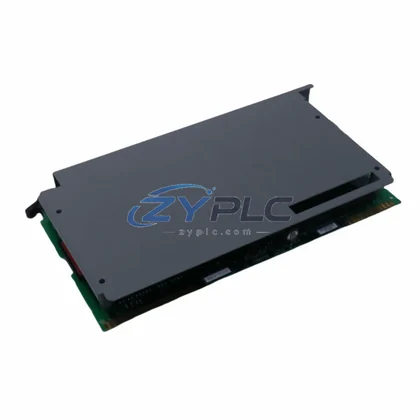
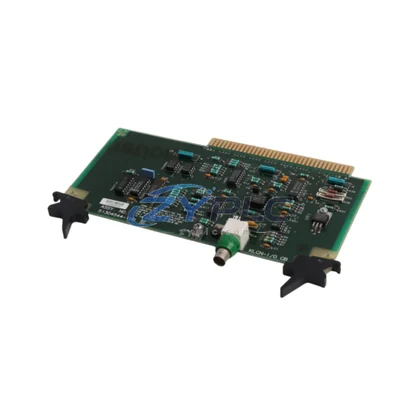
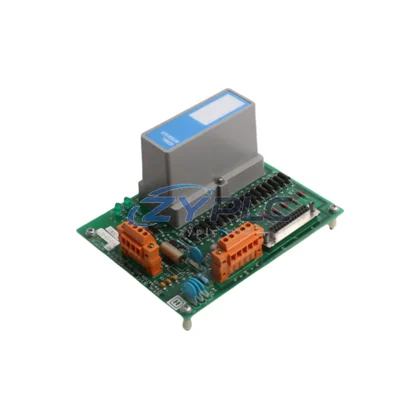
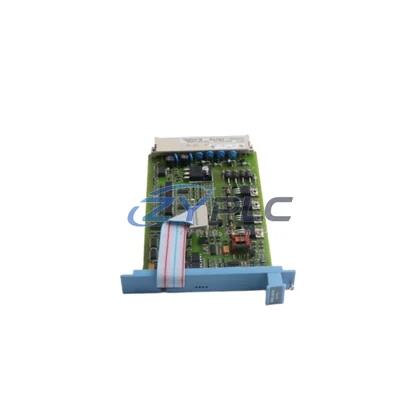
Honeywell TK-ORC161 Relay Output for TK Series: Compatibility and Replacement Notes
The Honeywell TK-ORC161 Relay Output Module is a purpose-engineered field output component designed for seamless integration within the Honeywell Safety Manager TK Series control platform. In modern industrial safety and process control architectures, the relay output layer serves as the critical bridge between the logic solver and the physical actuator field — translating digital safety commands into reliable, electrically isolated switching actions that govern motors, solenoid valves, emergency shutdown devices, and interlock circuits. The TK-ORC161 fulfills this role with precision, offering 16 channels of relay output capacity within the modular TK Series rack infrastructure.
Understanding the TK-ORC161’s value requires viewing it not as a standalone component, but as a coordinated participant in a layered automation architecture. At the control layer, the Honeywell TK-PRS001 Safety Manager Processor serves as the central logic engine, executing IEC 61511-compliant safety functions and issuing output commands across the I/O bus. The TK-ORC161 receives these commands through the TK Series backplane — typically the TK-BKP016 or TK-BKP032 rack assembly — and converts them into dry-contact relay closures capable of driving field loads up to the module’s rated switching capacity. This tight integration between processor, backplane, and output module ensures deterministic signal propagation with minimal latency, a non-negotiable requirement in safety instrumented systems (SIS) operating under SIL 2 or SIL 3 classifications.
On the power supply layer, the TK-ORC161 draws regulated DC power from the TK-PSD001 or TK-PSD002 redundant power supply modules. Honeywell’s TK Series architecture supports 1oo2 (one-out-of-two) power redundancy configurations, ensuring that a single power supply failure does not interrupt relay output operation. This redundancy design is essential in continuous process environments — petrochemical reactors, offshore platform ESD systems, and power generation turbine controls — where unplanned output loss can trigger cascading process shutdowns or safety hazards.
At the communications and diagnostics layer, the TK-ORC161 participates in the Safety Manager’s internal I/O health monitoring framework. The TK-PRS001 processor continuously polls each installed I/O module — including the TK-ORC161 — for diagnostic status, channel-level fault detection, and output verification feedback. This closed-loop diagnostic architecture allows maintenance engineers to identify relay coil degradation, contact welding, or wiring faults at the channel level without removing the module from service, dramatically reducing mean time to repair (MTTR) and supporting predictive maintenance strategies.
For human-machine interface integration, the TK-ORC161’s relay status data is surfaced through the Honeywell Safety Builder engineering workstation and can be integrated into Experion PKS or third-party SCADA platforms via the TK-SCM001 communication gateway module. Operators at the HMI layer receive real-time relay state feedback, enabling informed decision-making during abnormal process conditions. This bidirectional visibility — from field relay contact to operator display — is a hallmark of well-designed safety system architectures and is fully supported within the TK Series ecosystem.
In multi-rack or geographically distributed control architectures, the TK-ORC161 can be deployed across remote I/O enclosures connected to the main Safety Manager processor via the TK-SCM001 or compatible Modbus/PROFIBUS gateway modules. This distributed topology is common in large-scale water treatment facilities, mining conveyor systems, and chemical plant distributed control rooms, where field output modules must be located close to actuator loads to minimize cable runs and reduce installation costs while maintaining centralized logic control.
From a long-term maintenance and lifecycle perspective, the TK-ORC161’s hot-swap capability within the TK Series rack system allows field replacement without de-energizing adjacent modules or interrupting processor operation. Combined with Honeywell’s documented spare parts availability and our warranty terms confirmed during quotation coverage, plant engineers can confidently include the TK-ORC161 in their critical spare inventory strategies, knowing that replacement units will perform identically to factory specifications upon installation.
Product Specification Table
| Parameter |
Specification |
| System Role |
Relay Output Module — TK Series Safety Manager I/O Layer |
| Output Channels |
16 relay output channels |
| Output Type |
Dry-contact relay (normally open / normally closed) |
| Switching Capacity |
Rated for resistive and inductive field loads per TK Series specifications |
| Electrical Isolation |
Channel-to-channel and channel-to-backplane galvanic isolation |
| Compatible Processor |
Honeywell TK-PRS001 Safety Manager Processor |
| Compatible Rack |
TK-BKP016 / TK-BKP032 Backplane Assemblies |
| Power Supply |
TK-PSD001 / TK-PSD002 Redundant Power Supply Modules |
| Communication |
Internal TK Series I/O bus; SCADA integration via TK-SCM001 gateway |
| Safety Classification |
SIL 2 / SIL 3 capable (IEC 61511 compliant architecture) |
| Installation Environment |
Industrial control cabinet; DIN rail or rack-mount per TK Series enclosure |
| Operating Temperature |
0°C to +60°C (standard industrial range) |
| Diagnostics |
Channel-level fault detection via Safety Manager diagnostic polling |
| Hot-Swap Support |
Yes — field-replaceable without rack de-energization |
| Warranty |
warranty terms confirmed during quotation — all units tested and verified prior to shipment |
| Origin |
United States (Honeywell Industrial Safety) |
System Compatibility Notes
The TK-ORC161 achieves its full operational value when deployed within a complete TK Series system architecture. A typical SIL-rated safety system built around this module includes the following coordinated components:
The TK-PRS001 Safety Manager Processor serves as the logic solver, executing safety function blocks and issuing relay output commands to the TK-ORC161 via the backplane bus. Alongside it, the TK-IAC161 analog input module and TK-IDC161 digital input module collect field sensor signals — pressure transmitters, level switches, flame detectors — feeding process data into the processor for safety evaluation. On the output side, the TK-ORC161 works in parallel with the TK-OAC161 analog output module, which drives modulating control valves and variable frequency drives while the TK-ORC161 handles discrete switching for ESD valves and motor contactors.
The TK-BKP032 backplane rack physically houses and electrically interconnects all I/O modules, while the TK-PSD002 redundant power supply ensures uninterrupted DC power delivery across the entire rack. For remote I/O expansion, the TK-SCM001 communication gateway extends the Safety Manager’s I/O reach to distributed field enclosures via Modbus RTU or PROFIBUS DP, allowing TK-ORC161 modules to be installed close to actuator loads in remote motor control centers or junction boxes. At the HMI layer, the Honeywell Experion PKS Station or compatible operator workstation provides real-time relay status visualization, alarm management, and safety function bypass authorization — completing the full control loop from field sensor through logic solver to relay output and operator interface.
Industrial Application Notes
The TK-ORC161 is deployed across a wide range of safety-critical and process-critical industrial environments. In oil and gas processing facilities, it drives emergency shutdown (ESD) valve solenoids and high-integrity pressure protection system (HIPPS) actuators, where relay contact reliability and SIL compliance are mandatory. In power generation plants — including gas turbine, steam turbine, and combined-cycle facilities — the module controls turbine trip relays, generator breaker interlock circuits, and auxiliary system shutdown sequences, operating continuously under high-availability requirements.
In chemical and petrochemical plants, the TK-ORC161 manages reactor interlock outputs, compressor surge control relays, and fired heater safety shutdowns, where the module’s galvanic isolation prevents ground loop interference from high-voltage field equipment from corrupting safety logic. Water and wastewater treatment facilities use the module to control pump motor starters, chlorination dosing system interlocks, and overflow prevention valve actuators across distributed pump stations connected via the TK-SCM001 gateway. In mining and mineral processing operations, the TK-ORC161 drives conveyor belt emergency stop relays, crusher interlock circuits, and ventilation fan safety controls, where the module’s hot-swap capability minimizes production downtime during maintenance cycles. Pharmaceutical and food processing applications leverage the module’s clean-contact relay outputs for CIP (clean-in-place) system interlocks, sterilization cycle controls, and batch process safety shutdowns, where output signal integrity directly impacts product quality and regulatory compliance.
Product Compatibility FAQ
Q1: Is the TK-ORC161 compatible with existing TK Series racks and processors without hardware modification?
Yes. The TK-ORC161 is designed for direct plug-in compatibility with all standard TK Series backplane assemblies, including the TK-BKP016 and TK-BKP032 rack configurations. No hardware modification, adapter, or firmware update is required for integration with the TK-PRS001 Safety Manager Processor. The module is automatically recognized by the Safety Builder engineering software upon installation, and its 16 relay output channels are immediately available for assignment within the safety application logic. This plug-and-play architecture compatibility ensures that system expansions and module replacements can be completed during planned maintenance windows without extended engineering effort.
Q2: How does the TK-ORC161 support long-term maintenance and spare parts management in a safety-critical architecture?
The TK-ORC161’s hot-swap design allows field engineers to replace a faulty module without de-energizing the TK Series rack or interrupting adjacent I/O channels, minimizing process disruption during corrective maintenance. Each unit supplied by ZYPLC is covered by a warranty terms confirmed during quotation and undergoes functional testing prior to shipment, ensuring that spare units held in critical inventory will perform to factory specifications when deployed. We recommend maintaining at least one TK-ORC161 spare per installed rack in high-availability applications, and our team can support blanket order arrangements for multi-site plant operators requiring consistent spare parts supply across multiple facilities.
Q3: Can the TK-ORC161 be used in SIL 2 or SIL 3 safety instrumented functions, and what architectural constraints apply?
The TK-ORC161 is qualified for use within Honeywell Safety Manager TK Series architectures certified for SIL 2 and SIL 3 safety instrumented functions (SIFs) per IEC 61511. The achievable SIL level for any specific safety function depends on the overall system architecture — including the voting logic configuration (1oo1, 1oo2, 2oo3), proof test interval, and the diagnostic coverage provided by the TK-PRS001 processor’s continuous I/O polling. For SIL 3 applications, a redundant output architecture using two TK-ORC161 modules in a 1oo2 voting configuration is typically required. ZYPLC’s technical team can provide architecture review support and assist with SIL verification documentation for new installations or system modifications.