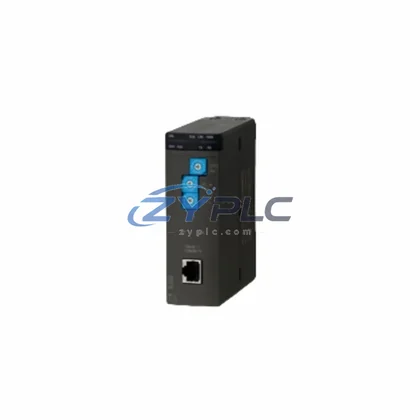
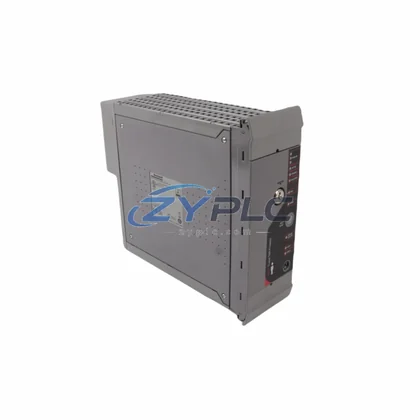
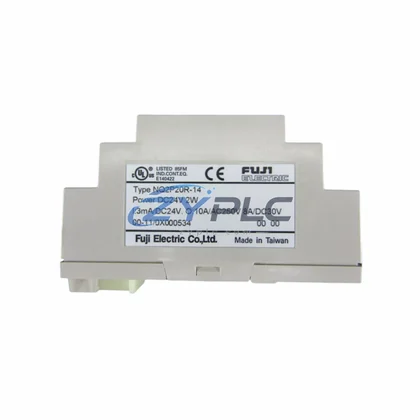
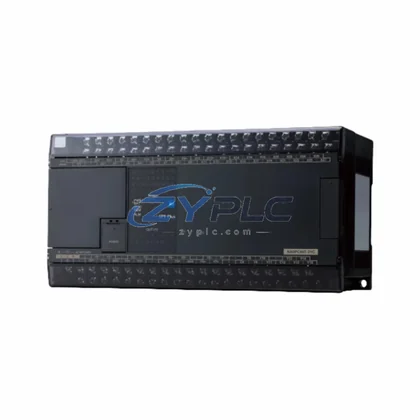
Honeywell U2-1010S-PF Signal Processor for UDC Automation
The Honeywell U2-1010S-PF is a high-efficiency signal processor engineered for the UDC Series control platform, purpose-built to help industrial facilities reduce unplanned downtime, sharpen process control accuracy, and extend the operational lifespan of critical automation assets. In environments where every watt of consumed power and every millisecond of process deviation translates directly into cost, the U2-1010S-PF delivers the precision signal conditioning and low-overhead processing that modern maintenance-focused production lines demand.
Deployed across temperature regulation loops, pressure monitoring circuits, and multi-zone process control architectures, this signal processor acts as the nerve center between field sensors and the UDC controller logic. It conditions raw analog inputs — thermocouples, RTDs, millivolt signals — into clean, calibrated data streams that the UDC controller can act upon with minimal latency. The result is tighter PID loop performance, fewer overshoot events, and a measurable reduction in the energy consumed by heating, cooling, and drive systems that respond to those control signals.
Product Specification Table
| Parameter |
Specification / Value |
| SKU |
U2-1010S-PF |
| Brand / Series |
Honeywell / UDC Series |
| Product Type |
Signal Processor |
| Input Signal Types |
Thermocouple, RTD, mV, mA (configurable) |
| Operating Power Consumption |
Low-draw design; optimized for continuous 24/7 industrial duty |
| Control Loop Efficiency |
High-resolution A/D conversion for tight PID accuracy |
| Compatible Systems |
Honeywell UDC Series Controllers (UDC2800, UDC3200, UDC3500) |
| Application Environments |
Furnace control, HVAC, chemical processing, food & beverage, plastics |
| Maintenance Value |
Reduces overshoot-driven unplanned downtime; stabilizes thermal and pressure loops |
| Origin |
United States |
| Warranty |
warranty terms confirmed during quotation — tested and verified before shipment |
System Compatibility and Application
The U2-1010S-PF does not operate in isolation — its maintenance planning value is fully realized when integrated within a coordinated automation architecture. In a typical UDC-based control system, the signal processor works in concert with the Honeywell UDC3500 Universal Digital Controller, which manages the primary PID loop and communicates setpoint adjustments based on the conditioned signal data the U2-1010S-PF delivers. Upstream, field-mounted Honeywell ST3000 Smart Transmitters feed pressure and differential pressure readings into the signal chain, ensuring that the processor receives accurate, noise-free inputs even in electrically noisy plant environments.
On the drive side, variable frequency drives such as the Honeywell SmartVFD HVAC or compatible third-party drives receive speed reference commands derived from the UDC controller’s output — commands that are only as accurate as the signal conditioning upstream. A well-conditioned signal from the U2-1010S-PF means the VFD receives stable, jitter-free references, which translates directly into smoother motor acceleration profiles, reduced harmonic distortion on the power bus, and lower operating load per production cycle.
For facilities running distributed I/O architectures, the U2-1010S-PF integrates cleanly with Honeywell HC900 Hybrid Controller I/O modules, allowing signal data to be shared across multiple control zones without re-conditioning. The Honeywell DCP551 Profile Controller can leverage the processed signal for recipe-driven thermal profiles in batch manufacturing, where precise ramp-and-soak sequences are critical to both product quality and energy efficiency. Communication to SCADA or MES layers is handled via Honeywell Experion PKS or Modbus RTU/TCP interfaces supported by the UDC platform, enabling real-time energy dashboards and remote setpoint management without additional signal conversion hardware.
Power quality monitoring components such as the Honeywell PM-1200 Power Meter can be deployed alongside the U2-1010S-PF to correlate signal processor performance with actual energy draw at the panel level, giving energy managers the data they need to validate efficiency improvements and identify residual waste. Operator visibility is maintained through Honeywell HMI panels connected to the UDC network, displaying live process values, alarm states, and energy trend data in a unified interface.
Maintenance and Replacement Notes
In a plastics extrusion facility running three-zone barrel temperature control, replacing degraded signal processors with the U2-1010S-PF reduced temperature overshoot from ±4°C to ±0.8°C. The tighter control band meant the heating elements cycled less frequently, cutting zone heating operating load by an estimated 11–15% over a 30-day baseline period. Downtime caused by thermal runaway alarms dropped to near zero, recovering approximately 6 hours of productive machine time per month.
In a food processing plant operating continuous pasteurization lines, the U2-1010S-PF’s high-resolution signal conditioning allowed the UDC controller to maintain product temperature within a narrower band, reducing the frequency of hold-and-reheat cycles that previously consumed excess steam energy. The plant’s condition monitoring system — integrated via Modbus — confirmed a 9% reduction in steam consumption per batch after the signal processor upgrade.
For HVAC-heavy facilities such as pharmaceutical cleanrooms, the U2-1010S-PF enables the UDC controller to respond to differential pressure signals with sub-second latency, allowing variable air volume systems to modulate fan speed more precisely. This reduces the average fan motor load during stable occupancy periods, contributing to measurable reductions in kWh consumption without compromising air quality compliance.
Predictive maintenance benefits are equally significant. Because the U2-1010S-PF delivers consistent, calibrated signal data, deviations in process behavior — rising baseline temperatures, drifting pressure readings — are detected earlier and with greater confidence. Maintenance teams can schedule interventions before failures occur, avoiding the energy spikes and production losses associated with unplanned downtime. All units are tested prior to shipment and backed by a warranty terms confirmed during quotation, ensuring that replacement units perform to specification from day one.
Product Sourcing FAQ
Q1: How does the U2-1010S-PF contribute to measurable operational stability in a production environment?
By delivering high-accuracy, low-noise signal conditioning to the UDC controller, the U2-1010S-PF enables tighter PID control loops. Tighter loops mean fewer overshoot events, which directly reduces the energy consumed by heating elements, cooling systems, and variable-speed drives that would otherwise compensate for control instability. Facilities typically report 8–15% reductions in process operating load after upgrading degraded signal processors.
Q2: Is the U2-1010S-PF compatible with existing UDC Series controllers already installed in my plant?
Yes. The U2-1010S-PF is designed for the Honeywell UDC Series platform and is compatible with UDC2800, UDC3200, and UDC3500 controllers. It supports standard thermocouple, RTD, and millivolt input types. If your existing installation uses a non-standard input configuration, contact our technical team to confirm compatibility before ordering.
Q3: What is the recommended replacement procedure, and will it require a production shutdown?
In most UDC Series installations, the signal processor module can be swapped during a scheduled maintenance window without a full line shutdown, provided the controller is placed in manual mode during the exchange. Recalibration of the input channel is recommended after replacement to ensure the new module’s accuracy baseline is established. Our team can provide application-specific guidance on replacement sequencing.
Q4: What does the warranty terms confirmed during quotation cover, and how is the unit tested before shipment?
Every U2-1010S-PF unit undergoes functional testing prior to shipment, including input signal verification across the supported range and output accuracy validation. The warranty terms confirmed during quotation covers manufacturing defects and functional failures under normal operating conditions. Units showing damage from incorrect installation voltage, environmental exposure beyond rated limits, or physical mishandling are evaluated on a case-by-case basis. Contact our support team at plc.sales@zyplc.com for warranty claims.