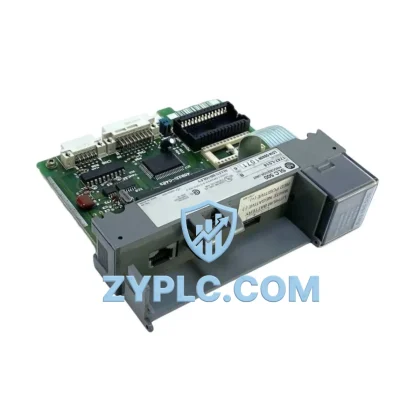
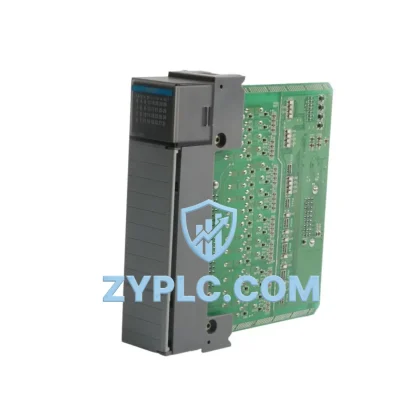
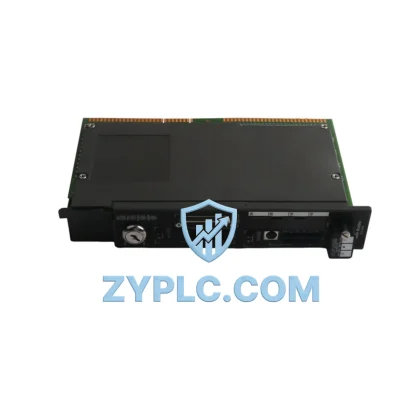
Hypertherm PCI-4 AXIS MCC 3.3V System-Ready Motion Controller for CNC Architecture
The Hypertherm PCI-4 AXIS MCC 3.3V is a high-performance, four-axis motion control card engineered for seamless integration into industrial CNC cutting and automation architectures. Operating at a 3.3V logic level and interfacing via the PCI bus, this motion control card (MCC) serves as the central coordination layer between the host controller, servo drives, I/O modules, and the machine’s mechanical execution layer. In a fully layered automation system, the PCI-4 AXIS MCC 3.3V does not function in isolation — it is the architectural backbone that synchronizes multi-axis interpolation, real-time feedback processing, and command distribution across the entire control hierarchy.
Designed for demanding industrial environments including plasma cutting, waterjet, laser cutting, and precision machining, this card delivers deterministic motion trajectories with sub-millisecond cycle times. Its four-axis simultaneous control capability enables complex contouring, coordinated gantry motion, and synchronized multi-spindle operations that are essential in high-throughput manufacturing and process automation. The card’s Contextual Integration design philosophy ensures that it can be deployed within existing Hypertherm CNC platform architectures without requiring full system redesign, dramatically reducing commissioning time and engineering overhead.
Every unit supplied by ZYPLC is covered by a 12-Month Warranty, backed by pre-shipment functional verification and full traceability documentation. Our global inventory network ensures rapid availability for both planned system builds and emergency replacement scenarios.
Architecture Specification Table
| Parameter |
Specification |
| System Role |
4-Axis PCI Motion Control Card (MCC) — CNC Control Layer |
| SKU |
PCI-4 AXIS MCC 3.3V |
| Brand |
Hypertherm |
| Series |
Hypertherm CNC Motion Control Platform |
| Interface Bus |
PCI (Peripheral Component Interconnect) |
| Logic Voltage |
3.3V |
| Controlled Axes |
4 Axes (simultaneous interpolation) |
| Motion Type |
Linear, Circular, Helical Interpolation |
| Communication Capability |
PCI Bus; compatible with EtherCAT and analog servo interfaces (system-dependent) |
| Typical Applications |
Plasma Cutting, Waterjet, Laser CNC, Precision Machining |
| Installation Environment |
Industrial Control Cabinet, IPC Chassis, DIN-rail compatible enclosures |
| Operating Temperature |
0°C to +55°C (standard industrial range) |
| Product Type |
Motion Control Card |
| Origin |
United States |
| Warranty |
12-Month Warranty (ZYPLC verified, with pre-shipment functional test) |
Coordinated Control System Design
The Hypertherm PCI-4 AXIS MCC 3.3V achieves its full potential when deployed as part of a coordinated, multi-layer control architecture. At the control layer, the card interfaces directly with the Hypertherm CNC host controller or an industrial PC running Hypertherm’s proprietary motion software, receiving high-level G-code or motion commands and translating them into real-time axis trajectories. This tight coupling between the host CPU and the MCC eliminates latency that would otherwise compromise cut quality or positional accuracy.
At the drive and execution layer, the PCI-4 AXIS MCC 3.3V connects to servo amplifiers and servo motors responsible for X, Y, Z, and rotational axis movement. In plasma cutting systems, this typically includes paired servo drives for gantry-style dual-drive configurations, where the MCC must maintain synchronization between two motors on a single axis to prevent racking. The card’s encoder feedback processing ensures closed-loop position control with real-time error correction.
The I/O layer is equally critical. The MCC works in conjunction with dedicated digital I/O modules — such as Hypertherm’s torch height control (THC) interface boards and limit switch input modules — to manage machine safety interlocks, homing sequences, and process-specific signals like arc-ok feedback from the plasma power supply. In more complex installations, an I/O expansion backplane may be used to aggregate signals from multiple machine zones into a single coherent I/O map visible to the MCC.
At the network and communication layer, the system may incorporate an EtherCAT master module or a fieldbus gateway to extend connectivity to remote I/O nodes, vision systems, or upstream MES/SCADA platforms. The PCI-4 AXIS MCC 3.3V’s Contextual Integration capability means it can coexist with these communication layers without requiring dedicated protocol bridges in most standard configurations.
The human-machine interface (HMI) layer — typically a Hypertherm touchscreen pendant or a third-party industrial panel PC — communicates with the motion controller through the host IPC, providing operators with real-time axis position feedback, alarm management, and program editing capabilities. The MCC’s status registers are continuously polled by the HMI software to display live motion state, following error, and drive fault conditions.
For power supply architecture, the control cabinet housing the IPC and PCI-4 AXIS MCC 3.3V typically includes a 24VDC regulated power supply for logic circuits, a separate servo power bus for drive amplifiers, and an uninterruptible power module to protect the MCC from transient voltage events. Proper power layer design is essential to maintaining the 3.3V logic stability that the MCC requires for reliable operation.
In redundancy-critical applications, a secondary IPC with a standby MCC can be configured in a hot-standby or warm-standby topology, with automatic switchover triggered by watchdog timeout. This architecture is increasingly common in high-value cutting systems where unplanned downtime carries significant production cost.
Application in Layered Automation Systems
Plasma and Flame Cutting Lines: In heavy plate fabrication and structural steel cutting facilities, the PCI-4 AXIS MCC 3.3V coordinates gantry motion, torch height control, and rotary bevel head positioning simultaneously. The four-axis architecture supports complex bevel cutting profiles required for weld preparation without requiring a secondary motion controller.
Waterjet Cutting Systems: Waterjet installations demand precise low-speed contouring with constant velocity maintenance to ensure cut quality. The MCC’s interpolation engine handles the tight radius transitions and feedrate overrides required for abrasive waterjet cutting of stone, composites, and aerospace alloys.
Laser Cutting and Engraving: In CO₂ and fiber laser systems, the PCI-4 AXIS MCC 3.3V manages the high-speed XY motion stage while coordinating laser power modulation signals through the I/O interface. Its deterministic cycle time ensures that laser firing commands are synchronized with axis position to within microns.
Power Generation and Energy Sector: Turbine component machining and pressure vessel fabrication facilities use Hypertherm CNC platforms for precision cutting of high-alloy materials. The MCC’s robust PCI interface and industrial-grade component selection make it suitable for the demanding thermal and vibration environments of energy sector manufacturing.
Mining and Metallurgy: In ore processing equipment manufacturing and mining machinery fabrication, large-format CNC cutting systems rely on the PCI-4 AXIS MCC 3.3V for reliable multi-shift operation. The card’s compatibility with standard industrial PCs and its straightforward PCI installation simplify maintenance in facilities where specialized CNC technicians may not always be available.
Packaging and Process Automation: Automated cutting and scoring systems in packaging lines use the MCC’s coordinated axis control to maintain registration accuracy across high-speed production runs, integrating with upstream vision systems and downstream conveyor controls through the system’s I/O and network layers.
Architecture Engineering FAQ
Q1: Is the Hypertherm PCI-4 AXIS MCC 3.3V compatible with modern industrial PCs that no longer include legacy PCI slots?
A: The PCI-4 AXIS MCC 3.3V requires a physical PCI slot operating at 3.3V. Many modern industrial PCs retain PCI slots for legacy compatibility, and PCI-to-PCIe bridge cards are available for systems that have transitioned fully to PCIe architecture. When planning a new system build or retrofit, it is advisable to select an IPC chassis that includes at least one native 3.3V PCI slot to ensure full electrical compatibility and avoid signal integrity issues that can arise with bridge adapters in high-speed motion control applications.
Q2: How does the PCI-4 AXIS MCC 3.3V integrate with Hypertherm’s torch height control (THC) and plasma power supply in a complete cutting system architecture?
A: In a complete Hypertherm cutting system, the MCC handles XY (and optionally rotary) axis motion while the THC module manages Z-axis height independently based on arc voltage feedback from the plasma power supply. The MCC and THC communicate through shared I/O signals — including arc-ok, pierce complete, and motion-hold — that are mapped through the system’s digital I/O interface. This division of responsibility allows the THC to respond to material surface variations in real time without interrupting the XY motion trajectory managed by the MCC, resulting in consistent cut quality across uneven or warped plate material.
Q3: What does the 12-Month Warranty cover, and what support does ZYPLC provide for system integration and long-term maintenance?
A: The 12-Month Warranty provided by ZYPLC covers manufacturing defects and functional failures under normal operating conditions from the date of shipment. Each unit undergoes pre-shipment functional verification to confirm PCI bus communication, axis command processing, and encoder feedback integrity. For system integration support, ZYPLC’s technical team can assist with installation guidance, compatibility verification for specific IPC and drive combinations, and troubleshooting of motion parameter configuration. For long-term maintenance planning, ZYPLC maintains inventory of the PCI-4 AXIS MCC 3.3V and related Hypertherm CNC components to support both scheduled preventive replacement programs and emergency breakdown scenarios, minimizing system downtime across the card’s operational lifecycle.
© 2026 ZYPLC. All rights reserved.
Original Source: https://zyplc.com
Contact: +86 19859288691 | [email protected]