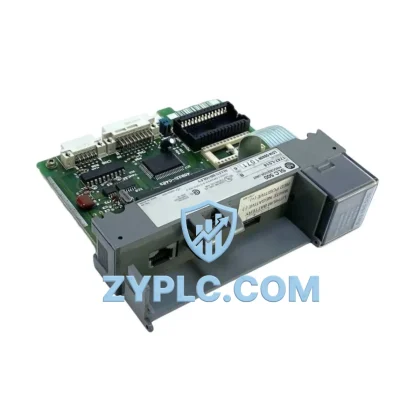
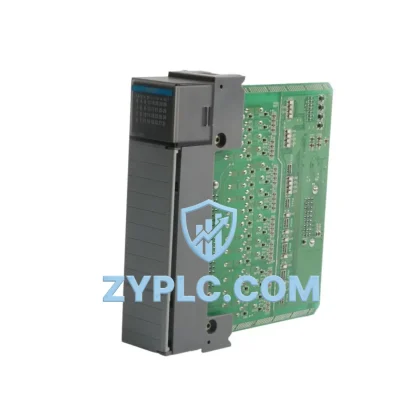
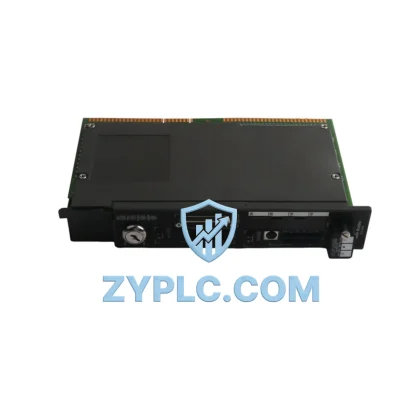
ICS Triplex T8191 System-Ready TMR I/O Module: Control Architecture Coordination and Upstream-Downstream Synergy
The ICS Triplex T8191 Trusted TMR (Triple Modular Redundant) I/O Module is a mission-critical component engineered for deployment within Tricon safety-instrumented system (SIS) architectures. Rather than functioning as a standalone device, the T8191 is designed from the ground up to operate as an integrated node within a layered, fault-tolerant control hierarchy — one where every signal path, every power rail, and every communication channel is subject to continuous cross-validation across three independent processing legs. Understanding the T8191 means understanding the full Tricon system architecture it inhabits: from the main chassis backplane to the field termination assemblies, from the safety network gateway to the operator interface layer.
In modern industrial automation, safety-instrumented systems must satisfy IEC 61511 and IEC 61508 requirements at SIL 2 or SIL 3 levels. The T8191 achieves this not through isolated redundancy, but through deep contextual integration with the surrounding control infrastructure. Its TMR voting logic — 2-out-of-3 (2oo3) — ensures that a single-channel failure neither causes a spurious trip nor allows a dangerous condition to propagate undetected. This architecture is the foundation upon which refineries, offshore platforms, chemical plants, and power generation facilities build their process safety layers.
Architecture Specification Table
| Parameter |
Specification |
| Model |
T8191 |
| Brand |
ICS Triplex |
| Series |
Trusted / Tricon |
| System Role |
TMR Digital/Analog I/O Module — Safety Instrumented System (SIS) Node |
| Redundancy Architecture |
Triple Modular Redundant (TMR), 2oo3 voting logic |
| Safety Integrity Level |
SIL 2 / SIL 3 (IEC 61508 / IEC 61511) |
| Electrical Interface |
24 VDC field power; isolated I/O channels |
| Communication |
Tricon backplane bus; compatible with TriStation 1131 programming environment |
| Installation Environment |
DIN rail / Tricon main chassis; IP20 enclosure rating |
| Operating Temperature |
0°C to +60°C |
| Certifications |
TÜV, FM, ATEX (zone-dependent configuration) |
| Origin |
United Kingdom |
| Warranty |
12-Month Warranty — covers manufacturing defects and functional failure under normal operating conditions |
Coordinated Control System Design
The T8191 does not operate in isolation. Its value is realized only when it is correctly positioned within the full Tricon system stack. At the control layer, the Tricon Main Processor (MP) — such as the T9110 or T9111 — orchestrates all I/O scanning, logic execution, and diagnostic reporting. The T8191 connects to this processor via the Tricon chassis backplane, which provides both power distribution and high-speed inter-module communication. The backplane itself is a passive but critical component: any degradation in backplane integrity directly affects the T8191’s ability to deliver consistent signal data to the MP.
Power integrity is equally fundamental. The T8110 Power Supply Module provides regulated DC power to the chassis, and in redundant configurations, a second T8110 operates in hot-standby mode. The T8191 relies on stable, clean power to maintain its internal TMR voting circuits. Any ripple or transient on the power rail can introduce diagnostic faults that, while non-dangerous by design, can trigger unnecessary maintenance interventions and reduce system availability.
On the field side, the T8191 interfaces with process instruments — pressure transmitters, temperature sensors, solenoid valve drivers, and discrete limit switches — through Field Termination Assemblies (FTAs) such as the T8830 or T8831. These FTAs provide the physical wiring interface, surge protection, and channel isolation that protect the T8191’s internal circuitry from field-side transients. Selecting the correct FTA model for the T8191 is not optional — mismatched FTAs can result in signal degradation, incorrect channel mapping, or loss of SIL certification for the associated safety function.
At the network and communication layer, the Tricon system communicates with the distributed control system (DCS) or SCADA platform via the T8431 Tricon Communication Module (TCM) or the T8404 Enhanced Intelligent Communication Module (EICM). These modules translate the Tricon’s internal safety bus data into Modbus TCP, OPC, or proprietary DCS protocols, enabling the T8191’s I/O data to be visible at the operator workstation without compromising the safety network’s integrity. The separation between the safety bus and the process network is a deliberate architectural decision — one that the T8191 is designed to support.
For human-machine interface (HMI) integration, TriStation 1131 serves as the primary engineering workstation software, providing full visibility into T8191 channel diagnostics, fault history, and forced I/O states. In larger installations, this data is aggregated into plant-wide historian systems via the T8480 Tricon Redundant Network Interface Module, enabling long-term trend analysis and predictive maintenance scheduling. The T8191’s diagnostic transparency — its ability to report per-channel health status in real time — is one of its most operationally significant features.
Application in Layered Automation Systems
The T8191 finds its most demanding applications in industries where process safety is non-negotiable and system downtime carries severe economic or environmental consequences.
In oil and gas processing and offshore platform environments, the T8191 is deployed as part of Emergency Shutdown (ESD) and High Integrity Pressure Protection Systems (HIPPS). Here, the module monitors wellhead pressure, separator levels, and gas detection signals, voting across its three internal channels to determine whether a shutdown command is warranted. The TMR architecture ensures that a single sensor failure or I/O channel fault does not cause a spurious shutdown — a critical requirement in high-production environments where an unplanned trip can cost hundreds of thousands of dollars per hour.
In petrochemical and refinery applications, the T8191 integrates with burner management systems (BMS) and reactor safety interlocks. Its ability to handle both digital and analog signals within a single TMR framework simplifies cabinet design and reduces the number of discrete safety modules required per safety function. This consolidation directly reduces panel footprint, wiring complexity, and long-term maintenance burden.
In power generation — including nuclear auxiliary systems, gas turbine control, and combined-cycle plant protection — the T8191 supports turbine overspeed protection, generator protection relays, and boiler safety interlocks. The module’s certified SIL 3 capability makes it suitable for the most demanding safety functions in these environments, where regulatory compliance and independent safety audits are mandatory.
In water treatment and municipal infrastructure, the T8191 monitors pump station interlocks, chemical dosing safety limits, and overflow prevention systems. Its low-maintenance TMR design reduces the frequency of proof testing required under IEC 61511, lowering the total cost of ownership over the system’s operational life.
In mining and metals processing, the T8191 is used in conveyor safety systems, crusher protection interlocks, and ventilation control for underground operations. The module’s robust diagnostic architecture allows maintenance teams to identify and replace a faulted channel without taking the safety function offline — a capability that is operationally essential in continuous-process mining environments.
Architecture Engineering FAQ
Q1: Is the T8191 compatible with both legacy Tricon and current Trusted platform architectures, and can it be mixed with other I/O modules in the same chassis?
The T8191 is designed for the ICS Triplex Trusted / Tricon platform and is compatible with Tricon main chassis configurations that support the Trusted I/O module form factor. It can be installed alongside other Trusted-series I/O modules — including digital input, digital output, and analog I/O variants — within the same chassis, provided that the chassis backplane revision and MP firmware version are compatible. Before mixing module types, engineers should consult the Tricon System Planning Guide and verify compatibility matrices against the installed MP model (e.g., T9110 or T9111) and TriStation 1131 software version. Contextual Integration of the T8191 into an existing Tricon architecture requires a full I/O configuration review in TriStation to ensure correct channel assignment and safety function mapping.
Q2: What are the key installation and commissioning considerations when integrating the T8191 into an operational safety system?
Commissioning the T8191 in a live safety system requires strict adherence to the site’s Management of Change (MOC) procedure and the system’s Safety Requirements Specification (SRS). The module must be inserted into the chassis with the system in maintenance mode or with the affected safety functions bypassed and documented. After physical installation, TriStation 1131 must be used to verify channel diagnostics, confirm I/O forcing states are cleared, and validate that the TMR voting logic is operating correctly across all three legs. Field wiring to the associated FTA (e.g., T8830 or T8831) must be verified for correct termination, shielding continuity, and loop integrity before the safety function is returned to service. A functional proof test of each safety function associated with the T8191 is required before the bypass is lifted.
Q3: What does the 12-Month Warranty cover for the T8191, and how does ZYPLC support long-term spare parts availability for Tricon system maintenance?
The 12-Month Warranty provided by ZYPLC covers manufacturing defects and functional failures of the T8191 under normal operating conditions, including failures attributable to internal component degradation. The warranty does not cover damage resulting from incorrect installation, field-side wiring faults, overvoltage events, or unauthorized modification. For long-term Tricon system maintenance, ZYPLC maintains stock of T8191 modules and associated Trusted-series components to support both planned spare parts programs and emergency replacement requirements. Our technical team can assist with module cross-referencing, firmware compatibility verification, and FTA selection to ensure that replacement modules integrate seamlessly into your existing Tricon architecture without requiring system reconfiguration.
© 2026 ZYPLC. All rights reserved.
Original Source: https://zyplc.com
Contact: +86 19859288691 | plc.sales@zyplc.com