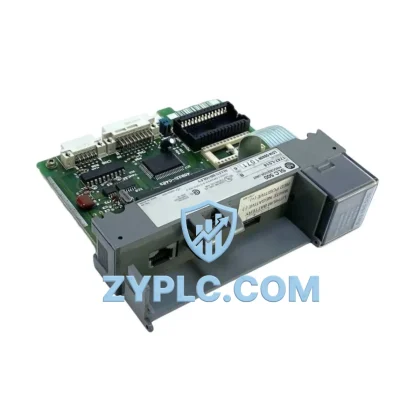
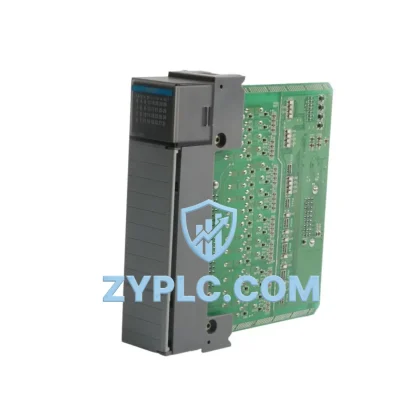
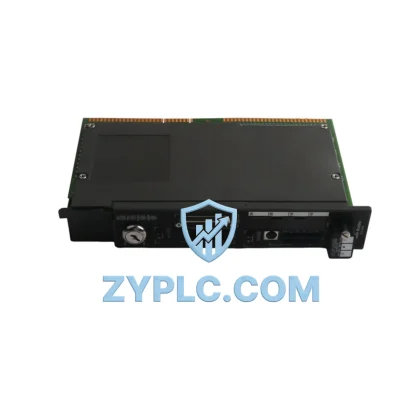
ICS Triplex T9082D System-Ready IEC 61131 Workbench for Trusted TMR Architecture
The ICS Triplex T9082D is a dedicated IEC 61131-3 compliant programming and configuration workbench engineered specifically for the Trusted Triple Modular Redundancy (TMR) safety controller platform. In modern industrial automation, the integrity of a safety instrumented system (SIS) depends not only on the hardware redundancy of its controllers but equally on the software environment used to develop, validate, and maintain the control logic. The T9082D addresses this requirement by providing a tightly integrated development environment that aligns with the Trusted TMR system architecture from the ground up, ensuring that every logic block, I/O assignment, and communication parameter is configured within a framework that preserves SIL 3 functional safety compliance throughout the engineering lifecycle.
Within a layered automation architecture, the T9082D occupies a critical position at the engineering and configuration layer, bridging the gap between the physical control hardware and the operational logic that governs process safety. Engineers working on Trusted TMR-based systems in oil and gas, petrochemical, power generation, and offshore platform applications rely on this workbench to develop fault-tolerant control strategies that account for the triple-redundant voting logic inherent to the Trusted platform. The software supports structured text, function block diagram, ladder diagram, instruction list, and sequential function chart programming languages as defined by IEC 61131-3, giving control engineers the flexibility to implement complex safety logic while maintaining full auditability and version control.
The T9082D integrates seamlessly with the broader Trusted TMR hardware ecosystem. When configuring a complete safety controller cabinet, engineers typically work with the Trusted T9110 TMR Processor Module as the central processing unit, supported by the T9431 Digital Input Module and T9451 Digital Output Module for discrete signal acquisition and actuation. Analog process variables are handled through the T9461 Analog Input Module, while the T9800 Communication Gateway Module provides the interface between the Trusted TMR backplane and plant-level networks such as Modbus TCP, PROFIBUS DP, or OPC DA/UA. The T9082D workbench provides native configuration support for all of these modules, allowing engineers to define I/O channel assignments, configure redundancy voting parameters, and set diagnostic thresholds directly within the project environment without requiring separate configuration utilities.
System architecture consistency is one of the most significant advantages the T9082D delivers in multi-controller installations. In large-scale process plants where multiple Trusted TMR controllers are deployed across different safety loops — such as emergency shutdown systems (ESD), fire and gas detection (F&G), and burner management systems (BMS) — the T9082D enables a unified engineering approach. Project libraries, function block templates, and I/O mapping conventions can be standardized across all controllers, reducing the risk of configuration discrepancies that could compromise safety system integrity during plant-wide audits or functional safety assessments.
From a network and communication architecture perspective, the T9082D supports the configuration of the Trusted T9800 series communication modules to establish deterministic data exchange between the safety controller and the distributed control system (DCS) or SCADA layer. This contextual integration capability ensures that process data, alarm states, and diagnostic information flow reliably from the TMR controller to operator workstations and historian servers, supporting both normal operations and emergency response scenarios. The workbench also facilitates the configuration of peer-to-peer communication between Trusted TMR controllers, enabling coordinated safety responses across interconnected process units.
Maintenance efficiency is substantially improved through the T9082D’s online monitoring and diagnostic capabilities. Maintenance engineers can connect to a live Trusted TMR controller, inspect the current state of all I/O channels, review the voting status of the three redundant processing legs, and identify any modules reporting faults — all without interrupting the running safety application. This capability is particularly valuable during planned maintenance windows in continuous process industries where shutting down the safety system is not operationally feasible. The workbench’s change management features ensure that any modifications to the safety application are tracked, reviewed, and approved before being downloaded to the controller, maintaining the integrity of the safety case documentation.
For new system installations, the T9082D supports a structured commissioning workflow that guides engineers through hardware configuration verification, I/O loop checking, logic validation, and factory acceptance testing (FAT) procedures. Integration with the Trusted T9082 hardware configuration tool and compatibility with the Trusted system’s self-diagnostic architecture means that commissioning teams can verify the health of every redundant module — including the T9110 processor, power supply modules such as the T9200 Power Supply Unit, and communication interfaces — before the system is handed over for operational use.
Long-term inventory availability of the T9082D is maintained to support the extended operational lifecycles typical of safety instrumented systems, which commonly remain in service for 15 to 25 years. Customers requiring replacement licenses, upgrade packages, or additional workbench seats for expanded engineering teams can rely on consistent supply chain support. All T9082D software packages are supplied with a 12-Month Warranty covering licensing integrity and software functionality, providing assurance that the engineering environment will perform as specified throughout the warranty period. Technical support for installation, activation, and compatibility queries is available through established support channels.
Architecture Specification Table
| Parameter |
Specification |
| Part Number |
T9082D |
| Brand |
ICS Triplex |
| Series |
Trusted TMR (Triple Modular Redundancy) |
| System Role |
IEC 61131-3 Programming & Configuration Workbench |
| Programming Languages |
ST, FBD, LD, IL, SFC (IEC 61131-3 compliant) |
| Target Controller Platform |
Trusted TMR Safety Controller Series |
| Safety Integrity Level |
SIL 3 (IEC 61508 / IEC 61511) |
| Communication Protocols Supported |
Modbus TCP, PROFIBUS DP, OPC DA/UA |
| Contextual Integration |
DCS / SCADA / Historian integration via T9800 Gateway |
| Online Diagnostics |
Live I/O monitoring, TMR voting status, module fault detection |
| Installation Environment |
Engineering workstation (Windows-based), control room or FAT environment |
| Compatible Hardware Modules |
T9110, T9431, T9451, T9461, T9800, T9200 |
| Origin |
United Kingdom |
| Warranty |
12-Month Warranty (licensing integrity & software functionality) |
Coordinated Control System Design
The T9082D workbench is the central engineering tool for designing and maintaining a complete Trusted TMR safety system architecture. A typical SIL 3 safety controller cabinet built around the Trusted platform integrates the T9110 TMR Processor Module as the triple-redundant CPU, with the T9200 Power Supply Unit providing redundant power distribution across the backplane. Field signal acquisition is managed through the T9431 Digital Input Module for discrete inputs from field devices such as pressure switches and level switches, and the T9461 Analog Input Module for 4–20 mA process transmitters measuring temperature, pressure, and flow. Safety outputs to final elements — including solenoid valves, motor starters, and shutdown actuators — are routed through the T9451 Digital Output Module, which incorporates output voting logic consistent with the TMR architecture.
Network connectivity between the Trusted TMR controller and the plant DCS or SCADA system is established through the T9800 Communication Gateway Module, which the T9082D configures to map process variables, alarm states, and diagnostic data to the appropriate communication protocol tags. For installations requiring peer-to-peer safety communication between multiple Trusted TMR controllers — such as in large ESD systems spanning multiple process units — the T9082D configures the inter-controller communication parameters that govern coordinated shutdown logic. The workbench also supports integration with Trusted T9082 hardware configuration utilities, ensuring that the software project remains synchronized with the physical hardware configuration of the controller chassis and backplane.
In installations where operator interface is required at the local control panel level, the T9082D project can be configured to exchange data with HMI terminals connected via OPC DA/UA, providing operators with real-time visibility of safety system status without compromising the integrity of the safety application. Terminal modules and marshalling components within the control cabinet are mapped within the T9082D I/O configuration, ensuring that every field signal path from the junction box through the marshalling panel to the Trusted TMR I/O module is documented and verifiable within the engineering project.
Application in Layered Automation Systems
The ICS Triplex T9082D finds application across a wide range of process industries where functional safety and system reliability are paramount. In oil and gas production and processing facilities, the T9082D is used to develop and maintain the safety logic for wellhead control panels, pipeline emergency shutdown systems, and gas compression station safety controllers. The workbench’s support for SIL 3 logic development and its compatibility with the Trusted TMR hardware platform make it the preferred engineering tool for safety system integrators working to IEC 61511 requirements in these environments.
In petrochemical and refinery applications, the T9082D supports the engineering of burner management systems (BMS) and high-integrity pressure protection systems (HIPPS), where the triple-redundant voting architecture of the Trusted platform provides the fault tolerance required by process safety standards. The workbench’s change management and audit trail capabilities are particularly valued in these regulated environments, where every modification to the safety application must be documented and approved as part of the management of change (MOC) process.
Power generation facilities — including thermal power plants, combined cycle gas turbine (CCGT) stations, and nuclear auxiliary systems — use the T9082D to configure turbine protection systems and boiler safety interlocks. The software’s online diagnostic capabilities allow maintenance engineers to monitor the health of the safety controller during planned outages without requiring a full system shutdown, reducing maintenance time and improving plant availability.
In water and wastewater treatment infrastructure, the T9082D supports the configuration of safety systems for chemical dosing stations, high-lift pumping stations, and reservoir overflow protection systems. The workbench’s structured commissioning workflow facilitates the systematic verification of all safety functions during system handover, ensuring that the installed safety system meets the functional requirements defined in the safety requirements specification (SRS).
Architecture Engineering FAQ
Q1: Is the T9082D compatible with all versions of the Trusted TMR controller hardware, and can it be used to maintain legacy Trusted system installations?
The T9082D is designed for use with the Trusted TMR safety controller platform and supports configuration of the core Trusted hardware modules including the T9110 processor, T9431/T9451 digital I/O modules, T9461 analog input modules, and T9800 communication gateways. Compatibility with specific hardware revisions and firmware versions should be verified against the ICS Triplex compatibility matrix for the installed system. For legacy Trusted installations, it is recommended to confirm the software version requirements with the system documentation before deploying the T9082D workbench. Our team can assist with compatibility assessment as part of the pre-sales support process.
Q2: How does the T9082D support the 12-Month Warranty and what does the warranty cover for software licensing?
All T9082D software packages supplied by ZYPLC are covered by a 12-Month Warranty that encompasses licensing integrity and software functionality. This means that if the software license fails to activate correctly, exhibits functional defects that prevent normal engineering operations, or becomes non-functional due to a manufacturing or supply defect, a replacement or resolution will be provided within the warranty period. The warranty does not cover issues arising from incompatible operating system environments, unauthorized modifications to the software installation, or hardware failures on the engineering workstation. Warranty claims should be submitted through the ZYPLC support channel with proof of purchase and a description of the issue.
Q3: Can the T9082D be used in a multi-engineer environment where several engineers need simultaneous access to the same Trusted TMR project, and how is version control managed?
The T9082D workbench supports project-based engineering workflows where the project files can be stored on a shared network location accessible to multiple engineers. However, simultaneous editing of the same project by multiple users requires careful coordination to avoid conflicting changes, as the workbench operates on a file-based project model rather than a database-driven concurrent engineering environment. Best practice for multi-engineer projects is to implement a version control system — such as a document management system or engineering change management platform — to manage project revisions, track modifications, and maintain an audit trail of all changes to the safety application. This approach supports compliance with functional safety management requirements under IEC 61508 and IEC 61511 and ensures that the as-built safety application accurately reflects the approved design at all times.
© 2026 ZYPLC. All rights reserved.
Original Source: https://zyplc.com
Contact: +86 19859288691 | [email protected]