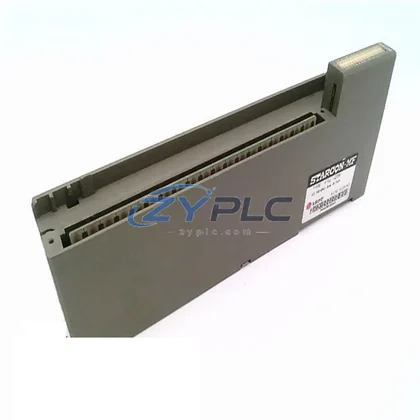
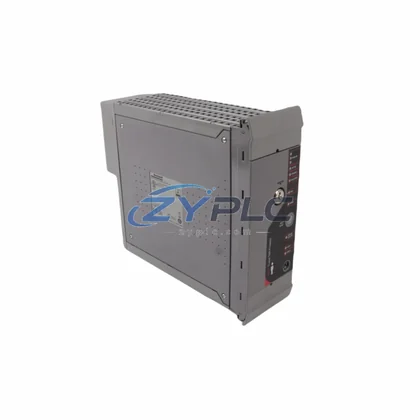
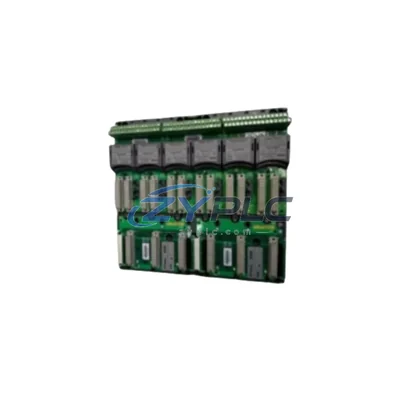
In high-demand industrial environments where uptime, precision, and energy accountability are non-negotiable, the ICS Triplex T9431 Analogue Input Module delivers the signal acquisition accuracy and fault-tolerant architecture that modern TMR (Triple Modular Redundancy) safety systems require. Designed for integration within the ICS Triplex Trusted® TMR platform, the T9431 captures real-world process variables — temperature, pressure, flow, and voltage — and converts them into reliable digital signals that drive smarter, more energy-conscious control decisions across the production line.
Unlike conventional analogue input modules that passively relay signals, the T9431 operates within a redundant voting architecture that continuously cross-validates inputs from three independent channels. This means that even when one channel drifts or degrades, the system maintains accurate process data — preventing the kind of false trips and unplanned shutdowns that silently inflate unplanned downtime and maintenance costs. In facilities running continuous processes such as oil refining, chemical production, or power generation, a single unnecessary shutdown can consume hours of restart energy and disrupt production rhythm for an entire shift.
Product Specification Table
| Parameter |
Specification / Value |
| Module Type |
Analogue Input Module |
| SKU |
T9431 |
| Series / Platform |
ICS Triplex Trusted® TMR Safety System |
| Input Channels |
Triple Redundant Analogue Inputs |
| Signal Range |
4–20 mA / 0–10 V (process standard) |
| Power Consumption |
Low-draw design optimized for TMR backplane efficiency |
| Operating Efficiency |
Continuous fault-tolerant operation with zero-downtime voting |
| Compatible Systems |
ICS Triplex Trusted® TMR Controllers, T8110, T8151, T8431 I/O |
| Application Environment |
Oil & Gas, Chemical, Power Generation, Offshore Safety Systems |
| Energy Saving Value |
Eliminates false trips; reduces restart unplanned downtime and idle losses |
| Origin |
United Kingdom |
| Warranty |
warranty terms confirmed during quotation | Tested Before Shipment |
System Compatibility and Application
The T9431 does not operate in isolation — its true maintenance planning value emerges when it is deployed as part of a fully integrated ICS Triplex Trusted® TMR control architecture. At the controller level, the ICS Triplex T8110 Trusted® TMR Controller processes the validated analogue signals from the T9431 and executes control logic that governs actuators, drives, and safety interlocks. Paired with the T8151 Communication Module, the system transmits real-time process data over PROFIBUS or Modbus protocols to upstream SCADA platforms, enabling plant-wide condition monitoring without additional hardware overhead.
On the I/O side, the T9431 works alongside the T8431 Digital Input Module and T8451 Digital Output Module to form a complete field signal interface layer. When a process variable — such as motor current draw or heat exchanger outlet temperature — exceeds its setpoint, the T9431 captures the deviation instantly, the TMR controller votes on the correct response, and the output module triggers the appropriate corrective action. This closed-loop response cycle, measured in milliseconds, prevents energy-intensive runaway conditions before they escalate.
For drive-level energy control, the T9431’s analogue signals are often used to modulate variable frequency drives (VFDs) connected to large induction motors. By feeding accurate process feedback into the VFD speed reference, facilities can eliminate the unplanned downtime of motors running at fixed full speed when partial load is sufficient. In pump and compressor applications, this alone can help restore stable operation when a compatible replacement is required.
Power quality monitoring modules integrated into the same control cabinet — such as dedicated power measurement I/O cards compatible with the Trusted® backplane — use the T9431’s signal chain to correlate process load with electrical demand. This data feeds predictive maintenance algorithms that flag bearing wear, winding insulation degradation, and coupling misalignment before they cause failures. The result is a measurable reduction in unplanned downtime and the associated energy cost of emergency restarts.
HMI terminals connected via the T8151 Communication Module display live energy dashboards that operators use to identify inefficient operating windows — periods where equipment runs at high energy draw with low productive output. By acting on this data, production planners can reschedule energy-intensive tasks to off-peak tariff windows, directly reducing electricity costs without any change to throughput.
Maintenance and Replacement Notes
In a typical continuous process plant, the T9431 is installed in the field junction cabinet closest to the sensor cluster — thermocouples, RTDs, pressure transmitters, and flow meters all feed into its input channels. The module’s triple-redundant architecture means that sensor signal validation happens at the hardware level, not in software, reducing the computational load on the TMR controller and freeing processing cycles for faster scan rates and tighter control loops.
Tighter control loops directly translate to operational stability. A temperature control loop that oscillates ±5°C around setpoint wastes significantly more heating energy than one held to ±0.5°C. The T9431’s high-resolution analogue conversion ensures that the controller always has the most accurate process picture available, enabling the kind of tight PID tuning that keeps operating load at its theoretical minimum for any given production rate.
In batch manufacturing environments, the T9431 contributes to production rhythm optimization by ensuring that phase transitions — heating to reaction, reaction to cooling, cooling to discharge — are triggered at precisely the right process conditions rather than on conservative time-based schedules. This eliminates the buffer unplanned downtime built into time-based sequencing and allows faster, more consistent batch cycles.
From a maintenance cost perspective, the T9431’s self-diagnostics continuously report module health status to the TMR controller. Maintenance teams receive early warning of input channel drift or calibration deviation, allowing scheduled recalibration during planned maintenance windows rather than emergency intervention during production. Each avoided emergency maintenance event saves not only the direct repair cost but also the energy cost of an unplanned restart sequence.
Every T9431 unit supplied by ZYPLC is drawn from verified inventory stock, subjected to functional testing prior to shipment, and covered by a warranty terms confirmed during quotation. This ensures that the module arrives ready for installation without the commissioning delays that erode project energy efficiency targets.
Product Sourcing FAQ
Q1: How does the T9431 contribute to measurable operational stability on the production line?
The T9431 provides high-accuracy analogue signal acquisition within the ICS Triplex TMR architecture, enabling tighter control loop performance. Tighter loops reduce process oscillation, which directly lowers unplanned downtime in heating, cooling, pumping, and compression applications. Additionally, by eliminating false trips through TMR voting, the module prevents the energy-intensive restart sequences that follow unnecessary shutdowns.
Q2: Is the T9431 compatible with existing ICS Triplex Trusted® TMR systems already installed in my facility?
Yes. The T9431 is designed for the ICS Triplex Trusted® TMR platform and is compatible with standard Trusted® backplane configurations. It interfaces with TMR controllers such as the T8110 and communicates via the same I/O bus as other Trusted® modules including the T8431 and T8451. Always verify the firmware revision of your existing system against the module’s compatibility matrix before installation.
Q3: What is the recommended replacement or upgrade path if my current analogue input module is degrading?
If your existing TMR analogue input module shows calibration drift or channel faults, the T9431 is the direct replacement within the Trusted® platform. ZYPLC recommends a like-for-like swap during a planned maintenance window, with functional testing of the replacement unit completed before installation. Our pre-shipment testing protocol ensures the T9431 arrives verified and ready for immediate commissioning.
Q4: What warranty and testing does ZYPLC provide with the T9431?
Every T9431 supplied by ZYPLC carries a warranty terms confirmed during quotation covering manufacturing defects and functional performance. Each unit undergoes pre-shipment functional testing to confirm analogue input accuracy, channel integrity, and backplane communication. Documentation of test results is available upon request. For urgent requirements, expedited shipping options are available — contact our team directly for lead time confirmation.