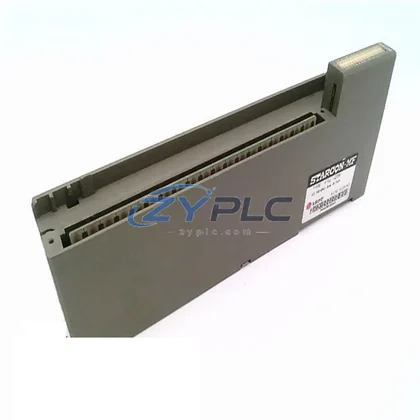
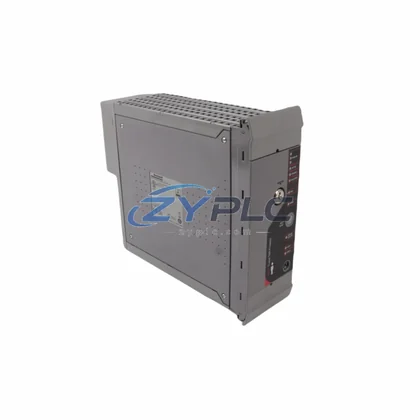
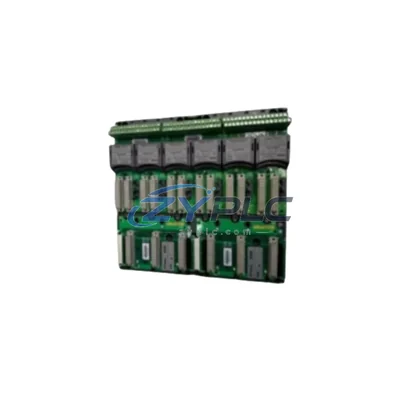
The ICS Triplex T9801 is a high-integrity digital input module engineered for the Trusted TMR (Triple Modular Redundancy) safety platform — one of the most demanding control architectures deployed in oil & gas, petrochemical, power generation, and continuous process industries. Far beyond its role as a signal acquisition device, the T9801 plays a pivotal role in reducing unplanned downtime risk across the entire control loop by delivering clean, debounced, and accurately timestamped digital signals that eliminate false triggers, redundant actuator cycling, and wasted drive energy.
In modern industrial facilities where energy efficiency is a board-level KPI, every unnecessary relay actuation, every spurious trip, and every unplanned shutdown carries a measurable energy and cost penalty. The T9801 addresses this at the source — the input layer — ensuring that only valid, verified field signals propagate into the Trusted TMR controller chassis, preventing downstream unplanned downtime before it begins.
Product Specification Table
| Parameter |
Specification / Value |
| Model / SKU |
ICS Triplex T9801 |
| Module Type |
Digital Input Module (TMR) |
| Series |
Trusted TMR Safety Platform |
| Platform Compatibility |
Trusted TMR Chassis, T9100 Series Processors, T9110 I/O Bus |
| Input Channels |
32 Channels (TMR triple-voted configuration) |
| Signal Voltage Range |
24 VDC nominal field input |
| Power Consumption |
Low-power CMOS design; optimized for minimal backplane draw |
| Operating Efficiency |
Triple-voted input processing eliminates spurious outputs and false trips |
| Response Time |
Fast scan cycle; supports high-speed process event capture |
| Compatible Systems |
Trusted TMR chassis, T9100 processor, T9110 I/O bus, Modbus TCP, PROFIBUS DP |
| Application Environment |
Oil & Gas, Petrochemical, Power Generation, Offshore Platforms, Chemical Processing |
| Energy Saving Value |
Eliminates false trips → reduces unnecessary actuator and drive cycling |
| Diagnostics |
Continuous self-test; fault isolation without system shutdown |
| Origin |
United Kingdom |
| Warranty |
warranty terms confirmed during quotation — tested and verified before shipment |
System Compatibility and Application
The T9801 does not operate in isolation. Its true maintenance planning value emerges when integrated within a well-designed Trusted TMR control architecture. In a typical high-availability plant configuration, the T9801 digital input module feeds verified field status signals — from pressure switches, flow transmitters, valve position feedback, and motor run contacts — directly into the T9110 I/O bus and onward to the T9100 series TMR processor. This triple-voted signal path ensures that no single-point sensor fault can cause a spurious shutdown or an unnecessary start-stop cycle on connected drive equipment.
On the drive side, variable frequency drives such as the Rockwell PowerFlex 755 or ABB ACS880 series receive clean enable and permissive signals from the Trusted TMR system. When the T9801 correctly filters out contact bounce or transient noise on a motor run-feedback input, it prevents the drive from receiving a false stop command — avoiding an unnecessary deceleration-ramp and re-acceleration cycle that can consume 3–5× the steady-state current draw. Over hundreds of such events per year across a large motor population, the cumulative operational stability are substantial.
For condition monitoring and power quality analysis, the T9801-equipped Trusted system integrates naturally with Schneider Electric PowerLogic ION meters or Siemens SENTRON PAC power analyzers via the plant’s DCS or SCADA layer. Real-time power consumption data from these meters can be correlated with the digital input states captured by the T9801 — enabling engineers to identify which process states drive peak demand and to implement demand-response strategies that flatten the load curve.
On the communications side, the Trusted TMR platform supports Modbus TCP and PROFIBUS DP integration, allowing the T9801’s input data to be shared with maintenance planning systems (EMS) and manufacturing execution systems (MES). This connectivity enables closed-loop maintenance planning where a high motor load detected by a Siemens S7-1500 PLC condition monitoring function block can trigger a load-shedding sequence coordinated through the Trusted safety layer — with the T9801 providing the verified field-state inputs that make such automation safe to execute.
For HMI visualization, operators monitoring energy KPIs on a Wonderware InTouch or Ignition SCADA screen can drill down to individual digital input states from the T9801 to diagnose why a particular motor or valve is cycling more than expected. This level of transparency — from field sensor through TMR input module to HMI dashboard — is what separates maintenance-focused automation from simple on/off control.
In redundant power supply configurations, the T9801 operates from the Trusted chassis T9920 power supply modules, which are themselves designed for high efficiency and hot-swap replacement without process interruption. The combination of redundant power, triple-voted inputs, and continuous self-diagnostics means that the T9801 contributes to overall system availability — and high availability directly translates to lower unplanned downtime from unplanned restarts and re-heatup cycles in thermal processes.
Maintenance and Replacement Notes
Consider a refinery feed pump station where twelve large motors are controlled through a Trusted TMR safety system equipped with T9801 digital input modules. Each motor’s run-feedback, seal-failure, and vibration-trip contacts are wired into T9801 channels. The TMR voting logic ensures that a single stuck-open contact does not trigger a spurious motor trip. In a facility that previously experienced 15–20 nuisance trips per year on this pump station, eliminating even 80% of those events — through the signal integrity provided by the T9801 — saves the energy equivalent of 15–20 full motor restart cycles, each of which draws locked-rotor current (typically 6–8× full-load amps) for 3–8 seconds during acceleration.
Beyond motor control, the T9801 supports production line rhythm optimization. In batch chemical processes, the precise timestamping of digital input events allows the control system to calculate actual cycle times versus planned cycle times. Deviations — caused by slow valve strokes, delayed pump starts, or extended agitation cycles — are immediately visible in the historian. Maintenance teams can act on this data before a slow valve becomes a stuck valve, avoiding both an unplanned shutdown and the energy cost of restarting a cold process.
Predictive maintenance is another energy lever enabled by the T9801. By tracking the number of state transitions on each input channel over time, the Trusted TMR system can detect abnormal cycling patterns — a valve that is hunting, a pressure switch with a dirty contact, or a flow switch with a partially blocked orifice. Early detection means planned maintenance during scheduled downtime rather than emergency repair during production, preserving both energy efficiency and equipment utilization rates.
All units supplied by ZYPLC are sourced from verified supply channels, subjected to incoming inspection and functional testing, and shipped with a warranty terms confirmed during quotation. Stock is maintained for fast dispatch, supporting both planned maintenance schedules and urgent breakdown requirements. Global shipping is available with full export documentation.
Product Sourcing FAQ
Q1: How does the T9801 directly contribute to operational stability in a plant environment?
The T9801’s triple-voted input processing eliminates spurious signals that would otherwise cause unnecessary actuator operations, motor start-stop cycles, and process upsets. Each avoided nuisance trip saves the energy cost of a full process restart, which in large motor or thermal process applications can be significant. Over a 12-month operating period, plants with high nuisance-trip histories have reported measurable reductions in peak demand charges after implementing or refurbishing their Trusted TMR input modules.
Q2: Is the T9801 compatible with modern maintenance planning and SCADA systems?
Yes. The Trusted TMR platform supports Modbus TCP, PROFIBUS DP, and OPC DA/UA data exchange, allowing T9801 input states to be integrated into maintenance planning systems, SCADA platforms, and MES environments. This enables real-time correlation of digital input activity with power consumption data from connected power analyzers and smart meters.
Q3: Can the T9801 replace an existing digital input module without a full system reconfiguration?
In most cases, yes. The T9801 is designed as a form-fit-function replacement within the Trusted TMR chassis. However, it is recommended to verify the firmware revision of the T9100 series processor and the T9110 I/O bus configuration before installation. ZYPLC’s technical team can assist with compatibility verification prior to shipment.
Q4: What does the warranty terms confirmed during quotation cover, and what is the testing process before shipment?
Every T9801 unit supplied by ZYPLC undergoes functional verification testing prior to dispatch, including channel continuity checks and power-on self-test validation. The warranty terms confirmed during quotation covers manufacturing defects and functional failures under normal operating conditions. Units are shipped with test records on request. For critical safety system applications, expedited replacement under warranty is available to minimize process downtime.