KUKA 00-106-446 Gearbox KR Series Automation: Precision Drive Control for Optimized Production Lines
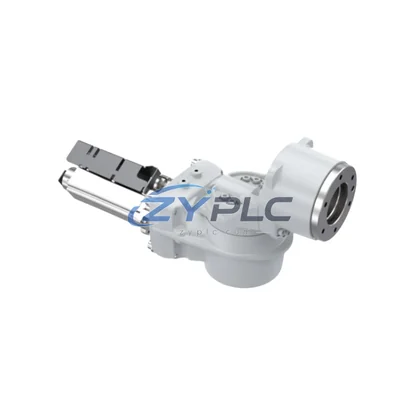
The KUKA 00-106-446 is a high-efficiency industrial robot gearbox engineered for the KR Series — specifically the KR150 and KR180 ZH150-180 configurations. In modern manufacturing environments where energy costs and equipment utilization directly impact profitability, this gearbox plays a critical role in reducing mechanical losses, stabilizing torque transmission, and enabling tighter control over robot joint motion. By minimizing internal friction and maintaining precise gear meshing under variable load conditions, the 00-106-446 contributes directly to lower per-cycle operating load and improved production line throughput.
Unlike generic replacement gearboxes, the KUKA 00-106-446 is designed to integrate seamlessly with the KR Series robot controller ecosystem. When paired with the KUKA KR C4 controller, the gearbox operates within a closed-loop servo feedback architecture that continuously adjusts motor output to match actual joint load — eliminating the unplanned downtime associated with over-torquing or reactive braking. This level of drive coordination is essential in high-cycle applications such as spot welding, palletizing, and precision assembly, where even marginal inefficiencies compound into significant energy and maintenance costs over time.
Product Specification Table
| Parameter |
Specification |
| SKU / Part Number |
00-106-446 |
| Brand |
KUKA |
| Compatible Series |
KR150 / KR180 ZH150-180 |
| Product Type |
Industrial Robot Gearbox |
| Drive Efficiency |
High-efficiency cycloidal / planetary gear transmission |
| Power Loss Reduction |
Minimized via precision gear meshing and low-friction sealing |
| Compatible Controller |
KUKA KR C4 / KR C5 |
| Application Environment |
Automotive, heavy-duty palletizing, arc welding, material handling |
| Maintenance Value |
Reduces reactive torque loss; supports regenerative braking cycles |
| Communication Protocol |
PROFINET / EtherNet/IP (via controller) |
| Origin |
Germany |
| Warranty |
warranty terms confirmed during quotation |
| Testing |
Full outgoing inspection and load test before shipment |
| Availability |
RFQ Available — export shipping options available |
System Compatibility and Application
Achieving genuine energy efficiency in a robotic production cell requires more than a single high-performance component — it demands a coordinated architecture where every element from power input to mechanical output is optimized. The KUKA 00-106-446 gearbox sits at the mechanical heart of this architecture, and its efficiency gains are amplified when the surrounding system is properly configured.
At the drive level, the KUKA KPP 600-20 servo power pack supplies regulated DC bus power to the robot’s axis drives, and its energy recovery function channels regenerative braking energy back into the bus rather than dissipating it as heat. The KUKA KSD 32 servo drive manages axis-level current and torque commands, and when the 00-106-446 gearbox maintains consistent mechanical efficiency, the drive operates closer to its optimal efficiency curve — reducing switching losses and thermal stress on power electronics.
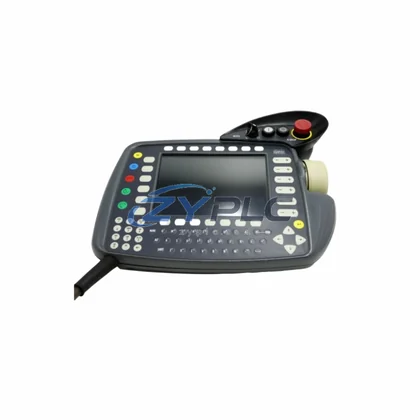
For condition monitoring, integrating a Siemens SENTRON PAC3200 power meter at the robot cell distribution panel allows engineers to track real-time kWh consumption per production cycle. When gearbox wear begins to increase mechanical resistance, the power meter data reveals the trend before it becomes a failure event — enabling condition-based maintenance rather than reactive repair. Similarly, the KUKA smartPAD HMI provides operators with live axis load data, making it straightforward to identify joints where the 00-106-446 replacement has restored normal torque profiles.
On the control side, the KUKA KR C5 controller supports KUKA.EnergyMonitoring software, which logs per-axis operating load across programs and shifts. After installing a new 00-106-446 gearbox, this data provides quantifiable evidence of efficiency recovery — a critical metric for maintenance ROI reporting. Communication between the robot controller and plant-level SCADA systems is handled via PROFINET or EtherNet/IP industrial protocols, ensuring that energy data flows seamlessly into MES dashboards without manual data entry.
For facilities running mixed robot fleets, KUKA.WorkVisual project management software maintains axis configuration records, so gearbox replacement events are logged against the robot’s digital twin for traceability and warranty documentation. At the I/O level, Beckhoff EK1100 EtherCAT couplers are commonly deployed in KR Series cells to aggregate sensor signals from vibration monitors, temperature probes, and torque transducers mounted near the gearbox. This data feeds into predictive maintenance algorithms that flag abnormal mechanical signatures weeks before a gearbox failure would cause unplanned downtime.
Rounding out the architecture, a Phoenix Contact QUINT 24V DC UPS power supply ensures that controller and monitoring systems remain online during brief power interruptions, protecting the integrity of energy logging data and preventing corrupted cycle records. When the full stack — from the KPP servo power pack through the KSD servo drive, the 00-106-446 gearbox, and the SENTRON power meter — operates as a unified maintenance-focused system, the result is measurable, reportable efficiency improvement at the cell level.
Maintenance and Replacement Notes
In automotive body shop applications, a worn or misaligned robot gearbox is one of the most common sources of hidden unplanned downtime. As internal gear surfaces degrade, the robot controller compensates by increasing motor current to maintain programmed path accuracy — a process invisible to operators but measurable in monthly electricity bills. Replacing a degraded joint gearbox with a genuine KUKA 00-106-446 restores the original mechanical efficiency, allowing the servo drive to return to its designed operating point and reducing per-cycle energy draw by eliminating compensatory over-current.
Beyond operational stability, gearbox condition directly affects production line takt time. A robot operating with a worn gearbox exhibits increased joint compliance — meaning the actual tool center point position lags behind the programmed path, forcing the controller to slow motion profiles to maintain accuracy. After installing the 00-106-446, restored gear stiffness allows the robot to execute faster, more aggressive motion profiles without sacrificing path accuracy, directly improving cycle time and line throughput without any changes to the robot program.
Predictive maintenance integration further extends these gains. By monitoring the current signature of the axis servo drive before and after gearbox replacement, maintenance teams can establish a baseline efficiency profile for the 00-106-446. Deviations from this baseline — detectable months before mechanical failure — trigger scheduled maintenance windows that are planned around production schedules rather than forced by unexpected breakdowns. This shift from reactive to predictive maintenance reduces average annual downtime per robot cell and lowers the total cost of ownership across the robot fleet.
Every KUKA 00-106-446 unit supplied by ZYPLC undergoes full outgoing inspection including load testing and backlash measurement before shipment. Stock is maintained to support fast dispatch, minimizing the window between fault detection and robot return-to-service. All units are covered by a warranty terms confirmed during quotation, providing procurement teams with the confidence to plan gearbox replacement programs as a scheduled capital maintenance activity rather than an emergency purchase.
Product Sourcing FAQ
Q1: How much energy can I expect to save after replacing a worn gearbox with the KUKA 00-106-446?
Actual savings depend on the degree of wear in the original gearbox and the robot’s duty cycle. In high-cycle applications such as spot welding or palletizing, a degraded gearbox can cause the servo drive to draw 10–20% more current than the design baseline to maintain path accuracy. Replacing with a genuine 00-106-446 restores the original mechanical efficiency, eliminating this compensatory over-current and reducing per-cycle operating load accordingly. Power metering at the robot cell before and after replacement provides quantifiable data for energy reporting.
Q2: Is the KUKA 00-106-446 compatible with both KR C4 and KR C5 controllers?
Yes. The 00-106-446 is a mechanical component compatible with all KR150 and KR180 ZH150-180 robots regardless of controller generation. The KR C4 and KR C5 controllers manage servo drive parameters independently of the gearbox hardware, so no controller reconfiguration is required after replacement. Standard axis mastering procedures should be performed after installation to restore path accuracy.
Q3: What is the recommended replacement interval, and how do I know when the gearbox needs replacing?
KUKA recommends gearbox inspection intervals based on operating hours and load class, typically every 10,000–20,000 hours for heavy-duty applications. Early indicators of gearbox wear include increased joint backlash, abnormal noise during acceleration or deceleration, rising servo drive current at constant load, and path accuracy deviations flagged by the robot controller. Integrating vibration and current monitoring at the axis level allows maintenance teams to detect these trends early and schedule replacement during planned downtime.
Q4: What does the warranty terms confirmed during quotation cover, and what is the testing process before shipment?
Every KUKA 00-106-446 unit supplied by ZYPLC is covered by a warranty terms confirmed during quotation against manufacturing defects and functional failure under normal operating conditions. Prior to shipment, each unit undergoes full outgoing inspection including load testing, backlash measurement, and seal integrity verification. Test records are available upon request. In the event of a warranty claim, ZYPLC provides technical support and replacement coordination to minimize robot downtime.