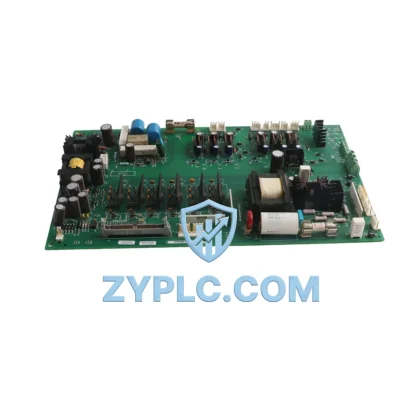
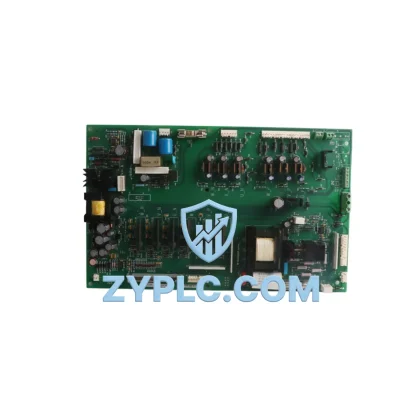
KUKA 00-119-763 Energy-Saving Servo Power Supply for KRC2 Automation
The KUKA 00-119-763 is a high-efficiency servo power supply unit engineered for KUKA KRC2 and KRC4 robot controller platforms. As a core component of the KUKA drive and power architecture, this module directly governs how electrical energy is converted, regulated, and distributed to servo axes — making it a critical lever for reducing idle power draw, minimizing thermal losses, and sustaining peak drive performance across multi-axis robotic cells.
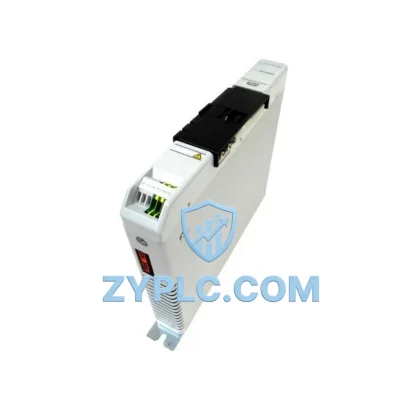
In modern industrial automation environments where energy costs and equipment uptime are equally scrutinized, the 00-119-763 delivers measurable value. Its regulated DC bus output feeds directly into the servo drive chain — including axis-specific modules such as the KSP600-3×20 (00-198-266) — ensuring that each servo axis receives stable, clean power without voltage ripple that could degrade motor efficiency or trigger protective shutdowns. The result is a tighter energy loop: less wasted heat, fewer nuisance faults, and more consistent cycle times on the production line.
This unit is fully compatible with the KRC2 SBM2 controller architecture and cross-compatible with select KRC4 configurations, making it a versatile replacement for aging power supply modules without requiring controller-level reconfiguration. All units supplied by ZYPLC are sourced from verified industrial channels, undergo pre-shipment functional testing, and are backed by a 12-month warranty.
Efficiency Performance Table
| Parameter |
Specification / Value |
| Part Number |
00-119-763 |
| Compatible Controllers |
KUKA KRC2 (SBM2), KRC4 |
| Cross-Reference SKUs |
KSP600-3×20, 00-198-266, KPS-600/20-ESC, 00-134-525 |
| Module Type |
Servo Power Supply Unit (PSU) |
| Output |
Regulated DC Bus for Multi-Axis Servo Drive |
| Efficiency Class |
High-Efficiency Industrial Grade |
| Application Environment |
Robotic Welding, Assembly, Material Handling, Palletizing |
| Energy Optimization Value |
Reduces idle draw, stabilizes bus voltage, lowers thermal losses |
| Origin |
Germany |
| Warranty |
12-Month Warranty (ZYPLC) |
| Stock Status |
In Stock — Ships within 1–3 Business Days |
| Testing |
Pre-Shipment Functional & Load Test |
Energy-Aware Automation Architecture
The 00-119-763 does not operate in isolation — it sits at the heart of a tightly integrated energy and control architecture. Understanding how it interacts with surrounding components is key to appreciating its efficiency contribution.
On the drive side, the PSU feeds regulated DC power to individual servo axis modules. In a typical KRC2 cell, this includes the KSP600-3×20 servo drive pack (cross-referenced as 00-198-266), which manages torque and velocity control for up to three axes simultaneously. When the PSU delivers stable bus voltage, the KSP600 operates within its optimal efficiency window — reducing switching losses and heat generation at the drive stage.
The KRC2 SBM2 safety board module works in parallel with the PSU to monitor drive enable states and emergency stop conditions. A well-functioning PSU ensures that the SBM2 does not experience spurious enable/disable cycles caused by voltage sag — a common source of unplanned downtime in aging robot cells.
On the controller side, the KRC4 KPS-600/20-ESC (00-134-525) represents the next-generation equivalent power supply architecture. Facilities running mixed KRC2/KRC4 fleets benefit from stocking both variants, as the energy management philosophy — regulated bus, axis-level current limiting, regenerative braking support — is consistent across generations.
For energy monitoring, integrating a KUKA SmartPAD or compatible HMI with energy logging capability allows operators to track per-cycle power consumption at the controller level. When paired with a PROFINET or EtherNet/IP communication module, real-time power data can be streamed to a SCADA or MES platform, enabling plant-wide energy dashboards that flag inefficient robot programs or degraded drive components before they escalate into failures.
At the I/O level, the KUKA KRC2 I/O board interfaces with field devices — sensors, safety relays, and peripheral actuators — whose power draw is also managed through the controller’s internal bus. A stable PSU reduces the risk of I/O voltage fluctuation that can cause false sensor reads or intermittent fieldbus communication errors on DeviceNet or Interbus networks commonly used in legacy KUKA installations.
For facilities undergoing energy audits, replacing a degraded 00-119-763 with a tested unit is one of the highest-ROI interventions available — restoring the drive system to its designed efficiency curve without the capital cost of a full controller upgrade.
Power Optimization in Real Production Lines
In automotive body-in-white welding lines, KUKA KRC2 robots running continuous spot-welding cycles place sustained demand on the servo power supply. A degraded or out-of-spec PSU in this environment causes the servo drives to compensate for voltage instability by drawing higher peak currents — increasing both energy consumption and thermal stress on the drive modules. Replacing the 00-119-763 with a tested unit restores the designed power delivery curve, reducing per-cycle energy draw and extending the service life of downstream drive components.
In palletizing and material handling applications, where robots operate in repetitive high-speed pick-and-place cycles, the PSU’s ability to handle regenerative energy from deceleration events is equally important. A healthy 00-119-763 manages bus voltage during regenerative braking phases, preventing overvoltage faults that would otherwise trigger emergency stops and interrupt production flow. Eliminating these nuisance stops can recover hours of lost production per shift in high-throughput facilities.
Predictive maintenance programs benefit directly from PSU condition monitoring. By tracking bus voltage stability, ripple amplitude, and thermal output — either through the KRC2’s internal diagnostics or an external power quality analyzer — maintenance teams can identify PSU degradation weeks before it causes a fault. This shifts maintenance from reactive to scheduled, reducing both repair costs and unplanned downtime.
ZYPLC maintains ready stock of the 00-119-763 and its cross-reference equivalents to support just-in-time replacement needs. All units are tested under load prior to shipment, with documentation available on request. The 12-month warranty covers functional defects and provides a clear cost basis for maintenance budgeting.
Energy Optimization FAQ
Q1: How does replacing the KUKA 00-119-763 reduce energy consumption in a KRC2 robot cell?
A degraded servo power supply introduces bus voltage instability, which forces servo drives to draw higher peak currents to maintain torque output. A tested replacement unit restores stable DC bus delivery, allowing the KSP600-3×20 and other axis modules to operate within their designed efficiency range — reducing per-cycle energy consumption and lowering heat generation across the drive system.
Q2: Is the 00-119-763 compatible with both KRC2 and KRC4 controllers?
The 00-119-763 is primarily designed for the KRC2 SBM2 architecture. It is cross-compatible with select KRC4 configurations, but compatibility should be verified against your specific controller serial number and software version. ZYPLC’s technical team can assist with compatibility confirmation before purchase.
Q3: What is included in the pre-shipment testing process?
Each 00-119-763 unit undergoes functional verification and load testing before shipment. This includes DC bus output measurement, ripple and noise assessment, and thermal performance check under simulated drive load conditions. Test records are available on request for quality documentation purposes.
Q4: What does the 12-month warranty cover, and how is a claim processed?
The 12-month warranty covers functional defects in the power supply unit under normal industrial operating conditions. If a unit fails within the warranty period, ZYPLC will provide a replacement or repair at no additional cost. Claims are initiated by contacting our sales team with the order reference and a description of the fault. Return shipping and inspection are coordinated directly with our technical support team.
—
© 2026 ZYPLC. All rights reserved.
Original Source: https://zyplc.com
Contact: +86 19859288691 | [email protected]