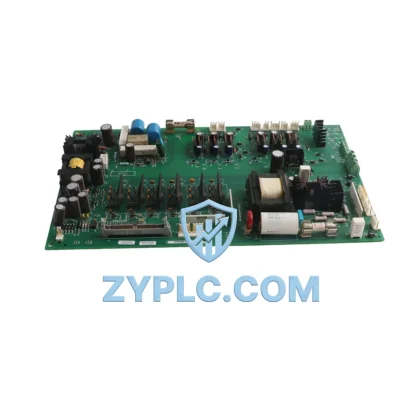
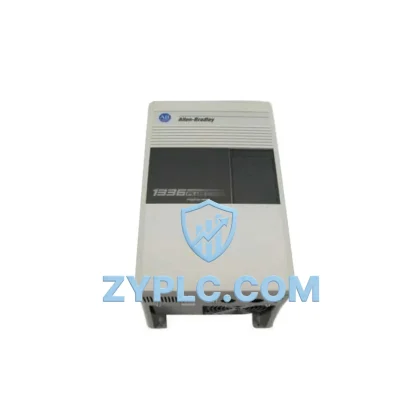
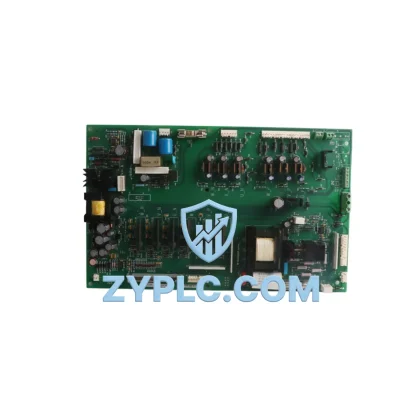
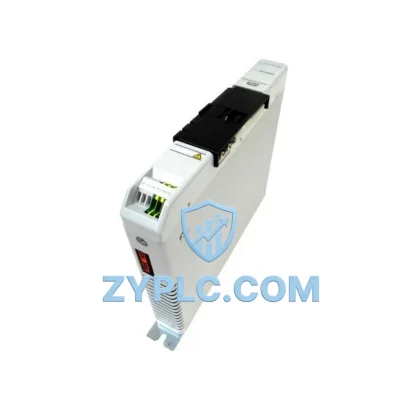
KUKA KSP-600-3×64 Energy-Saving Servo Drive for Optimized KR C2 Automation
The KUKA KSP-600-3×64 is a high-performance servo drive module engineered for the KUKA KR C2 robot controller platform. Designed to deliver precise, energy-efficient motor control across demanding industrial automation environments, this drive module plays a central role in reducing unnecessary power consumption, improving production line throughput, and extending the operational lifespan of robotic systems. Whether deployed in automotive body-in-white assembly, material handling, arc welding, or palletizing applications, the KSP-600-3×64 enables factories to achieve measurable gains in equipment utilization and energy efficiency without compromising motion accuracy or cycle time.
At ZYPLC, every KSP-600-3×64 unit is sourced from verified supply channels, subjected to pre-shipment functional testing, and backed by a 12-month warranty. Stock is maintained on-hand for fast dispatch, supporting urgent replacement and MRO procurement needs globally.
Efficiency Performance Table
| Parameter |
Specification / Value |
| SKU |
KSP 600-3X64 / KPP 600-20 1X64 / KPP 600-20 2X40 UL |
| Product Type |
Servo Drive Module |
| Series |
KUKA KR C2 |
| Rated Output Current |
3 × 64 A |
| Operating Efficiency |
High-efficiency PWM vector control |
| Compatible Systems |
KUKA KR C2, KR C2 ed05 robot controllers |
| Application Environment |
Industrial robotics, automotive, material handling, welding |
| Energy-Saving Value |
Regenerative braking support, reduced idle power draw, optimized torque response |
| Origin |
Germany |
| Warranty |
12-Month Warranty — tested and verified before shipment |
Energy-Aware Automation Architecture
The KSP-600-3×64 does not operate in isolation — it functions as the precision execution layer within a tightly integrated energy-aware automation architecture. In a typical KUKA KR C2 installation, the drive module receives motion commands from the KUKA KR C2 robot controller and translates them into high-fidelity current waveforms that drive the servo motors with minimal energy loss. Paired with the KUKA KPP 600-20 power supply module — including variants such as the KPP 600-20 1X64 and KPP 600-20 2X40 — the system maintains a stable DC bus, enabling regenerative energy recovery during deceleration phases and feeding that energy back into the shared bus rather than dissipating it as heat.
On the control side, the KUKA KRC2 DSE-IBS-C33 interface board manages real-time communication between the controller and the drive, ensuring that torque commands, position feedback, and fault signals are exchanged with microsecond-level latency. This tight feedback loop is what allows the KSP-600-3×64 to execute smooth, energy-optimized motion profiles rather than relying on brute-force current delivery. Complementing this, the KUKA RDC (Resolver-to-Digital Converter) board provides accurate rotor position data, which the drive uses to apply field-oriented control (FOC) — a technique that dramatically reduces reactive power consumption compared to conventional scalar control methods.
For facilities running multiple robots on a shared production line, integrating the KSP-600-3×64 with a KUKA KPS 600 primary power supply and a centralized energy monitoring system — such as a Siemens SENTRON PAC power meter or equivalent — allows plant engineers to track per-axis energy consumption in real time. This data feeds into predictive maintenance workflows, where anomalies in current draw or thermal behavior can signal bearing wear, cable degradation, or axis misalignment before they cause unplanned downtime. The KUKA smartPAD teach pendant provides the operator interface for monitoring drive status, adjusting motion parameters, and acknowledging fault conditions directly on the shop floor.
In multi-axis robot cells, the KSP-600-3×64 is often deployed alongside KUKA KSD 1-48 single-axis servo drives for auxiliary axes such as external positioners or track units. This mixed-drive architecture allows system integrators to right-size the power electronics for each axis, avoiding the energy waste associated with oversized drives running at partial load. Communication across the cell is typically handled via PROFIBUS-DP or EtherCAT fieldbus protocols, with the KR C2 controller acting as the bus master and the drive modules responding to cyclic process data objects (PDOs) for position, velocity, and torque setpoints.
Power Optimization in Real Production Lines
In automotive stamping and assembly plants, where KUKA KR 210 and KR 500 robots operate in high-duty-cycle environments, the KSP-600-3×64 contributes directly to line efficiency by enabling faster settling times and more aggressive deceleration ramps without mechanical shock. This means shorter inter-cycle pauses, higher parts-per-hour throughput, and reduced wear on gearboxes and end-of-arm tooling — all of which translate into lower total cost of ownership over the robot’s service life.
From an energy standpoint, the drive’s regenerative capability is particularly valuable in applications with frequent direction reversals, such as spot welding or press-tending. During each braking event, kinetic energy that would otherwise be wasted as heat in resistive braking resistors is instead converted back to electrical energy and shared across the DC bus. In a cell with six or more axes operating simultaneously, this regenerative exchange can reduce net energy draw from the grid by 10–20%, depending on the motion profile and duty cycle.
Predictive maintenance integration is another key benefit. By monitoring the KSP-600-3×64’s internal temperature sensors, current ripple patterns, and fault log history through the KR C2 controller’s diagnostic interface, maintenance teams can schedule drive replacements during planned downtime windows rather than reacting to unexpected failures. This shift from reactive to predictive maintenance has been shown to reduce unplanned downtime by up to 30% in high-volume production environments, directly improving overall equipment effectiveness (OEE) and reducing the cost of emergency spare parts procurement.
ZYPLC maintains ready stock of the KSP-600-3×64 and related KR C2 drive components to support fast turnaround for both planned maintenance and emergency replacement scenarios. All units are tested prior to shipment and covered by a 12-month warranty, giving procurement and maintenance teams confidence in both product quality and supply continuity.
Energy Optimization FAQ
Q1: How does the KSP-600-3×64 reduce energy consumption compared to standard servo drives?
The KSP-600-3×64 uses field-oriented control (FOC) and supports regenerative braking, which recovers kinetic energy during deceleration and feeds it back to the shared DC bus. This reduces net grid energy draw and minimizes heat generation, lowering both energy costs and cooling requirements in the control cabinet.
Q2: Is the KSP-600-3×64 compatible with all KR C2 controller variants?
Yes, the KSP-600-3×64 is designed for use with KUKA KR C2 and KR C2 ed05 robot controllers. It is compatible with the standard KR C2 power supply modules including the KPP 600-20 series. If you are upgrading from an older drive configuration, please verify the firmware version of your KR C2 controller to ensure compatibility before installation.
Q3: What is the recommended replacement procedure and how long does it take?
Drive replacement on a KR C2 system typically requires powering down the controller, disconnecting the motor and resolver cables, swapping the drive module, and performing a cold restart with parameter verification. The process generally takes 1–2 hours for a trained technician. ZYPLC can provide technical documentation and pre-shipment testing reports to support your maintenance team.
Q4: What warranty and testing does ZYPLC provide for the KSP-600-3×64?
Every KSP-600-3×64 unit sold by ZYPLC is functionally tested before shipment to verify output current, communication integrity, and thermal performance. All units are covered by a 12-month warranty from the date of shipment. In the event of a warranty claim, ZYPLC provides rapid replacement support to minimize production impact.
© 2026 ZYPLC. All rights reserved.
Original Source: https://zyplc.com
Contact: +86 19859288691 | [email protected]