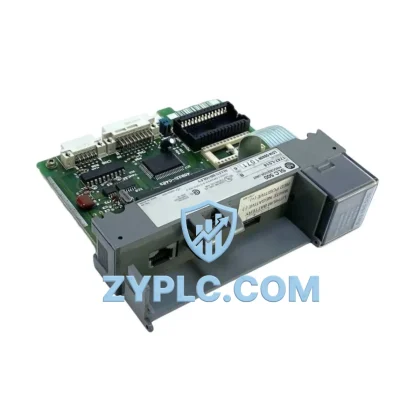
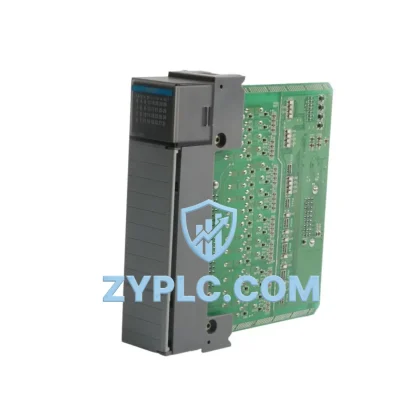
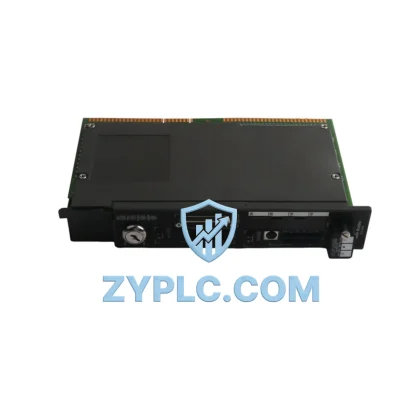
Lam Research VME-7671-421000 System-Ready CPU Board for VME Architecture
The Lam Research VME-7671-421000 CPU Board (cross-reference: 605-048878-001 / 3VCCPU AHCT / 210000520 / 210000422 / 9800032722, with encoder interface RH-11D-3001-E100AL-SP(N)) is a high-performance central processing unit module engineered for VMEbus-based industrial control architectures. Designed to serve as the computational backbone of multi-slot VME chassis systems, this CPU board delivers deterministic real-time processing, robust I/O coordination, and seamless integration across all layers of a layered automation hierarchy — from field-level signal acquisition to supervisory control and data acquisition (SCADA) interfaces.
In modern industrial automation, the CPU board is not merely a standalone processor — it is the architectural anchor that governs signal flow, arbitrates bus transactions, synchronizes distributed I/O modules, and maintains communication integrity across the entire control platform. The VME-7671-421000 fulfills this role with precision, supporting the demanding requirements of semiconductor equipment, advanced manufacturing systems, and process-critical automation environments where Lam Research platforms are widely deployed.
ZYPLC supplies this module with a 12-Month Warranty and full Contextual Integration support, ensuring that every unit shipped is tested, verified, and ready for direct installation into your existing VME system architecture.
Architecture Specification Table
| Parameter |
Specification |
| System Role |
Central Processing Unit (CPU) — VMEbus Master |
| Part Number |
VME-7671-421000 |
| Cross References |
605-048878-001 / 3VCCPU AHCT / 210000520 / 210000422 / 9800032722 |
| Encoder Interface |
RH-11D-3001-E100AL-SP(N) |
| Bus Standard |
VMEbus (IEEE 1014 / IEC 821) |
| Form Factor |
VME 6U Single-Board Computer |
| Electrical Supply |
+5 VDC / ±12 VDC via VME backplane power rail |
| Communication Capability |
VMEbus, RS-232/RS-422 serial, encoder feedback interface |
| Operating Temperature |
0°C to +55°C (industrial grade) |
| Installation Environment |
VME 6U chassis / rack-mount control cabinet |
| Warranty |
12-Month Warranty (ZYPLC) |
| Contextual Integration |
Full system-level integration support provided |
| Brand / OEM |
Lam Research |
| Origin |
United States |
Coordinated Control System Design
The VME-7671-421000 CPU Board operates at the control layer of a VMEbus-based system, where it arbitrates data flow between upstream supervisory systems and downstream field devices. Its effectiveness is fully realized when deployed alongside a coordinated suite of compatible modules within the same VME chassis or control cabinet.
At the power layer, the CPU board relies on a regulated VME backplane power supply — typically a dedicated industrial-grade PSU module providing stable +5 VDC and ±12 VDC rails — to ensure noise-free operation during high-frequency bus transactions. Voltage fluctuations at this layer directly impact CPU stability, making power supply selection a critical architectural decision.
At the I/O layer, the VME-7671-421000 coordinates with analog input modules, digital I/O cards, and encoder feedback interfaces — including the integrated RH-11D-3001-E100AL-SP(N) encoder module — to acquire real-time process signals. These I/O modules occupy adjacent VME slots and communicate with the CPU board via the VMEbus backplane, enabling deterministic scan-cycle execution. In Lam Research semiconductor equipment platforms, this I/O layer typically includes motion control I/O boards, pressure sensor interfaces, and valve control output modules.
At the network and communication layer, the CPU board interfaces with communication gateway modules that bridge the VMEbus architecture to higher-level networks such as Ethernet-based SCADA systems, fieldbus segments (PROFIBUS, DeviceNet), or proprietary Lam Research equipment communication protocols. Serial communication ports (RS-232/RS-422) on the VME-7671-421000 support direct connection to remote I/O nodes, HMI terminals, and diagnostic workstations.
At the human-machine interface (HMI) layer, operator panels and industrial touchscreen terminals connect to the CPU board’s serial or network ports, providing real-time process visualization, alarm management, and recipe control. In Lam Research etch and deposition systems, HMI integration is essential for process recipe execution and endpoint detection coordination.
At the execution layer, the CPU board’s encoder interface (RH-11D-3001-E100AL-SP(N)) directly supports servo drive coordination and motion axis control, enabling precise positioning of robotic wafer-handling mechanisms, chamber door actuators, and gas flow control assemblies. Servo amplifiers, stepper motor drivers, and pneumatic valve controllers at this layer receive command signals from the CPU board via dedicated I/O channels.
For redundancy design, critical VME architectures may deploy a secondary CPU board in a hot-standby or warm-standby configuration, with a VMEbus redundancy controller managing automatic failover. This architecture is particularly relevant in continuous-process semiconductor fabrication environments where unplanned downtime carries significant yield and cost implications.
Typical coordinated components in a VME-7671-421000 system architecture include: VME 6U backplane chassis (9-slot or 21-slot), VMEbus power supply modules, analog I/O boards (12-bit or 16-bit resolution), digital I/O modules (24 VDC sourcing/sinking), the RH-11D-3001-E100AL-SP(N) encoder interface card, RS-422 serial communication modules, Ethernet gateway cards, industrial HMI terminals, servo amplifier units, and VMEbus system controller cards. Together, these components form a complete, validated control architecture centered on the VME-7671-421000 as the processing core.
Application in Layered Automation Systems
The Lam Research VME-7671-421000 CPU Board is primarily deployed in semiconductor manufacturing equipment, where it serves as the central controller for plasma etch systems, chemical vapor deposition (CVD) chambers, and wafer-handling robotics. In these applications, the CPU board manages multi-axis motion control, process recipe execution, endpoint detection signal processing, and real-time fault monitoring — all within a deterministic VMEbus scan cycle that meets the stringent timing requirements of advanced semiconductor process control.
Beyond semiconductor fabrication, the VME-7671-421000 architecture is applicable to a range of industrial process control environments. In power generation and electrical substation automation, VMEbus CPU boards provide the processing backbone for protection relay coordination, SCADA data acquisition, and grid synchronization control. The board’s robust electrical design and wide operating temperature range make it suitable for substation control cabinets and power plant distributed control systems (DCS).
In petrochemical and refinery process control, VME-based CPU architectures support continuous process monitoring, safety instrumented system (SIS) integration, and multi-loop PID control for reactor temperature, pressure, and flow management. The VME-7671-421000’s deterministic processing capability ensures that safety-critical control loops maintain scan-cycle integrity even under high I/O load conditions.
In water treatment and municipal infrastructure automation, VMEbus CPU boards coordinate pump station control, chemical dosing systems, and SCADA telemetry across geographically distributed plant networks. The board’s serial communication interfaces support legacy RTU integration, enabling cost-effective modernization of existing infrastructure without full system replacement.
In mining, metallurgy, and heavy industry, VME-based control systems manage conveyor drive coordination, crusher control, smelting process automation, and environmental monitoring systems. The VME-7671-421000’s industrial-grade construction ensures reliable operation in high-vibration, high-EMI environments typical of mining and metallurgical facilities.
In packaging and discrete manufacturing production lines, the CPU board supports high-speed motion control, vision system integration, and production line synchronization — enabling flexible manufacturing architectures that can accommodate rapid product changeovers and recipe-driven production scheduling.
Architecture Engineering FAQ
Q1: Is the VME-7671-421000 compatible with existing Lam Research VME chassis and backplane configurations?
The VME-7671-421000 is designed to the IEEE 1014 VMEbus standard and is compatible with standard 6U VME chassis and backplane configurations used in Lam Research equipment platforms. For specific chassis slot assignments, bus arbitration settings, and interrupt vector configurations, refer to the Lam Research system documentation for your equipment model. ZYPLC provides Contextual Integration support to assist with system-specific compatibility verification prior to installation.
Q2: How does the 12-Month Warranty apply, and what does it cover?
Every VME-7671-421000 CPU Board supplied by ZYPLC is covered by a 12-Month Warranty from the date of shipment. This warranty covers manufacturing defects, functional failures under normal operating conditions, and component-level failures identified during the warranty period. Units are tested prior to shipment using functional verification procedures. In the event of a warranty claim, ZYPLC provides replacement or repair support with priority turnaround to minimize system downtime. Contact plc.sales@zyplc.com for warranty registration and claim procedures.
Q3: What are the recommended steps for installing and commissioning the VME-7671-421000 in an existing VME control system?
Prior to installation, verify that the VME chassis power supply provides stable +5 VDC and ±12 VDC within specification tolerances. Confirm slot assignment and bus arbitration jumper settings match the system’s existing CPU slot configuration. Install the board with the chassis powered down, ensuring proper seating in the VMEbus connector. After power-up, verify CPU initialization via the system’s diagnostic interface or HMI terminal. Configure serial port parameters (baud rate, parity, stop bits) to match connected devices. For encoder interface commissioning (RH-11D-3001-E100AL-SP(N)), verify encoder signal wiring polarity and resolution settings before enabling motion control axes. ZYPLC’s Contextual Integration support team is available to assist with commissioning procedures and system-level validation.
© 2026 ZYPLC. All rights reserved.
Original Source: https://zyplc.com
Contact: +86 19859288691 | plc.sales@zyplc.com