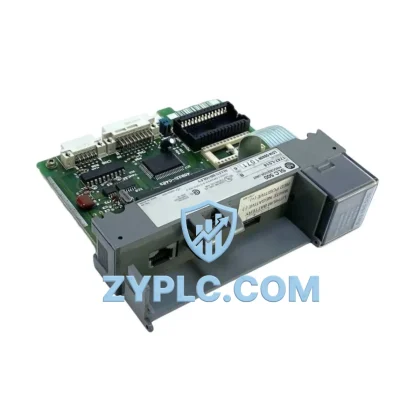
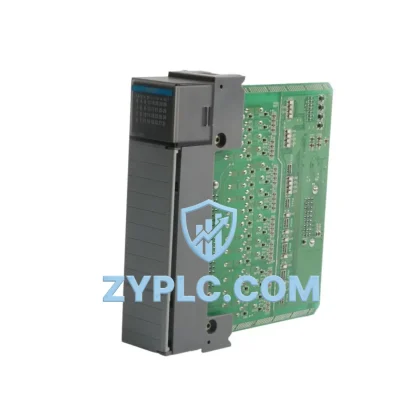
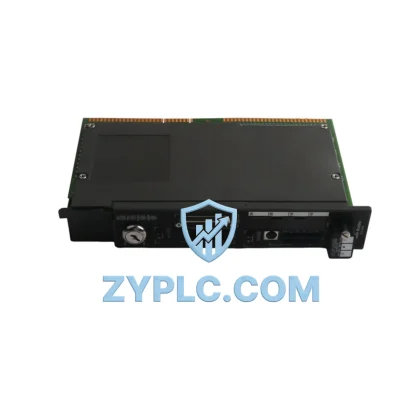
Metso PDP401 System-Ready Display Processor for Valmet DNA Architecture
The Metso PDP401 is a process display processor engineered for deployment within the Valmet DNA distributed control system (DCS) platform. In layered industrial automation architectures, the PDP401 occupies a critical position at the intersection of the control layer and the human-machine interface layer — receiving structured process data from the control execution layer and rendering it into coherent, real-time operator displays. Its role is not simply to show data, but to maintain system-wide display consistency, reduce operator response latency, and support the diagnostic visibility that modern process plants demand.
Understanding the PDP401 requires understanding the architecture it serves. The Valmet DNA system is a fully integrated DCS platform used extensively in pulp and paper, power generation, and process industries. Within this platform, the PDP401 functions as the display processing backbone — coordinating with field I/O modules, communication buses, and operator workstations to ensure that process variables, alarms, and control states are accurately reflected across all display nodes. When paired with Valmet DNA controller modules such as the ACN series application controllers, the PDP401 ensures that display refresh cycles remain synchronized with control execution cycles, eliminating the display lag that can compromise operator decision-making in fast-moving process environments.
At the network layer, the PDP401 interfaces with the Valmet DNA network infrastructure, typically operating over the proprietary DNA bus or Ethernet-based backbone depending on system generation. This connectivity allows the processor to pull live data from multiple I/O field stations simultaneously, aggregating signals from analog input modules, digital I/O cards, and fieldbus-connected instruments. In redundant system designs, the PDP401 supports failover display continuity — ensuring that if a primary control node experiences a fault, operator displays remain active and accurate, drawing from redundant data paths without manual intervention.
The power layer is equally important to system stability. The PDP401 is designed to operate within the regulated DC power environment provided by Valmet DNA power supply units, which deliver clean, conditioned voltage to all rack-mounted modules. Voltage fluctuations or ground noise at the power layer can introduce display artifacts or communication errors; the PDP401’s internal filtering and regulated input circuitry mitigate these risks, maintaining display integrity even in electrically noisy industrial environments such as steel mills, chemical plants, or offshore platforms.
From a system architecture perspective, the PDP401 also plays a role in engineering and commissioning efficiency. During system startup, engineers use the PDP401 in conjunction with Valmet DNA engineering workstations and configuration tools to map process tags to display objects, define alarm thresholds, and validate signal paths from field instruments through to operator screens. This configuration layer — connecting the PDP401 to DNA historian modules, batch control servers, and advanced process control (APC) interfaces — determines how effectively the system can support long-term process optimization and regulatory compliance reporting.
In multi-loop process control environments, the PDP401 supports the display of complex control strategies including cascade loops, ratio control, and feedforward schemes. Operators working with Valmet DNA operator stations rely on the PDP401 to render these strategies in intuitive faceplate and trend formats, enabling rapid identification of process deviations. The processor’s ability to handle multiple concurrent display requests without performance degradation is essential in large-scale plants where dozens of operators may be monitoring different sections of the same process simultaneously.
Long-term maintenance is simplified by the PDP401’s modular design, which is consistent with the broader Valmet DNA hardware philosophy. Replacement and hot-swap procedures are well-documented within the Valmet DNA maintenance framework, and ZYPLC maintains tested inventory of the PDP401 to support both planned maintenance cycles and emergency replacement scenarios. Each unit undergoes functional verification prior to shipment, covering communication handshake, display output integrity, and power input tolerance — ensuring that the replacement unit integrates into the existing architecture without requiring extended reconfiguration.
Architecture Specification Table
| Parameter |
Specification |
| System Role |
Process Display Processor — HMI/Control Layer Interface |
| Compatible Platform |
Valmet DNA Distributed Control System (DCS) |
| Communication |
Valmet DNA Bus / Ethernet Backbone (system-dependent) |
| Electrical Input |
Regulated DC (per Valmet DNA rack power specification) |
| Display Function |
Real-time process variable rendering, alarm display, trend visualization |
| Installation Environment |
Control room rack / DCS cabinet, industrial-grade |
| Redundancy Support |
Failover display continuity in redundant DNA architectures |
| Origin |
Finland |
| Warranty |
12-Month Warranty — tested, verified stock |
Coordinated Control System Design
The PDP401 does not operate in isolation — its value is realized through tight integration with the surrounding Valmet DNA architecture. At the control execution layer, Valmet DNA ACN application controllers generate the process data streams that the PDP401 consumes. These controllers manage PID loops, sequence logic, and interlock functions, passing structured data to the display layer via the DNA communication bus. The PDP401 processes this data and distributes it to connected Valmet DNA operator workstations, where process engineers and control room operators interact with live plant data.
Field signal acquisition is handled by Valmet DNA I/O field stations — distributed I/O units that collect analog and digital signals from transmitters, valves, motors, and other field devices. These field stations communicate upstream to the ACN controllers and, by extension, make their data available to the PDP401 for display processing. In plants using HART-enabled field instruments or FOUNDATION Fieldbus devices, the DNA system’s fieldbus interface modules bridge the field communication layer to the DNA bus, ensuring that even advanced diagnostic data from smart instruments appears correctly on PDP401-driven displays.
System time synchronization — critical for alarm sequencing and event logging — is managed through the Valmet DNA time synchronization module, which ensures that the PDP401’s display timestamps align with controller event logs and historian records. This synchronization is essential for post-incident analysis and regulatory reporting in industries such as power generation and pharmaceuticals. The DNA historian server archives the process data streams that the PDP401 displays in real time, creating a continuous record that supports both operational review and long-term process optimization.
For plants requiring high-availability architectures, the PDP401 is deployed alongside redundant DNA controller pairs and redundant power supply modules, ensuring that no single point of failure can interrupt display continuity. Cabinet-level integration typically includes Valmet DNA rack backplanes and structured cabling systems that maintain signal integrity across all modules within the control cabinet.
Application in Layered Automation Systems
The Metso PDP401 finds application across a wide range of process industries where the Valmet DNA platform is the control system of choice. In pulp and paper manufacturing, the PDP401 supports display of continuous process variables including stock consistency, headbox pressure, dryer temperature profiles, and chemical dosing rates — all critical to product quality and energy efficiency. Operators rely on PDP401-driven displays to monitor multi-stage processes that span large physical areas, with display nodes distributed across the mill floor and centralized in the main control room.
In power generation plants — including biomass, combined heat and power (CHP), and waste-to-energy facilities — the PDP401 supports display of boiler parameters, turbine control states, and grid synchronization data. The processor’s ability to handle high-frequency data updates without display degradation is particularly valuable in these environments, where rapid process changes require immediate operator awareness. Water treatment and wastewater facilities use the PDP401 to monitor dosing systems, filtration stages, and pump station status across geographically distributed sites, with the DNA network providing the communication backbone that connects remote I/O stations to centralized display processors.
In mining and minerals processing, the PDP401 supports display of crusher load, conveyor belt status, flotation cell parameters, and tailings management data. The harsh electrical environment of mining operations — characterized by high-power motor drives, variable frequency drives (VFDs), and long cable runs — places demands on the communication and power layers of the DCS that the Valmet DNA architecture, and the PDP401 within it, is specifically designed to handle. Petrochemical and refinery applications similarly benefit from the PDP401’s role in maintaining display integrity across complex, multi-unit process environments where safety instrumented systems (SIS) and basic process control systems (BPCS) must operate in coordinated but independent layers.
Architecture Engineering FAQ
Q1: Is the Metso PDP401 compatible with all generations of the Valmet DNA DCS platform?
The PDP401 is designed for the Valmet DNA (formerly Metso DNA) platform. Compatibility with specific system generations depends on the DNA software version and rack configuration in use at your site. ZYPLC recommends providing your system generation details when inquiring, so our technical team can confirm direct compatibility or identify any firmware or interface requirements before shipment.
Q2: How does the PDP401 integrate into a redundant Valmet DNA architecture, and what happens during a controller failover?
In redundant DNA architectures, the PDP401 is configured to receive data from both the primary and standby controller paths. During a controller failover event, the PDP401 continues to display process data sourced from the now-active standby controller without operator intervention. Display continuity is maintained throughout the switchover, and alarm states are preserved, ensuring that operators remain fully informed during the transition. This behavior is governed by the DNA system’s redundancy management layer, not by the PDP401 alone, so correct system-level configuration is essential.
Q3: What does the 12-Month Warranty cover, and what is the replacement process if a fault is identified after installation?
ZYPLC’s 12-Month Warranty covers functional defects identified under normal operating conditions consistent with the Valmet DNA system’s specified environment. Each PDP401 unit is tested prior to shipment for communication integrity, display output function, and power input tolerance. If a fault is identified post-installation within the warranty period, ZYPLC will provide a replacement unit from verified stock. Contact our technical team at plc.sales@zyplc.com or +86 19859288691 to initiate a warranty assessment. Replacement units are dispatched from available inventory to minimize system downtime.
© 2026 ZYPLC. All rights reserved.
Original Source: https://zyplc.com
Contact: +86 19859288691 | plc.sales@zyplc.com