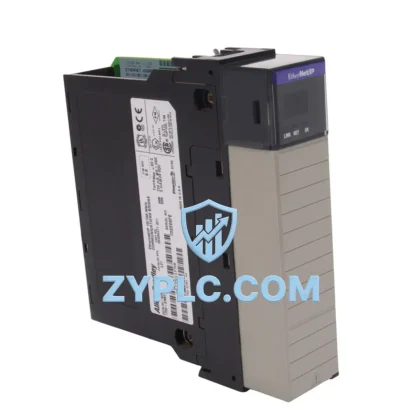
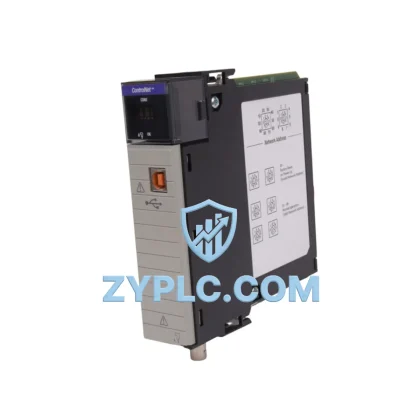
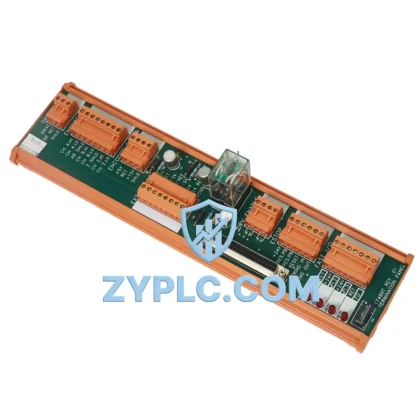
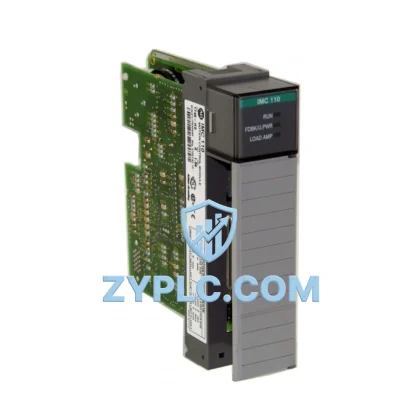
Mitsubishi A1SD71-S2 Energy-Saving Positioning Module MELSEC-A: Precision Motion Control for Optimized Industrial Automation
The Mitsubishi A1SD71-S2 is a high-performance positioning module designed for the MELSEC-A series programmable logic controller platform. In modern manufacturing environments where energy efficiency and production throughput are equally critical, the A1SD71-S2 delivers precise axis control while minimizing unnecessary power draw across the motion control loop. Whether integrated into a standalone machine cell or embedded within a multi-axis production line, this module enables engineers to reduce idle-state energy consumption, tighten positioning accuracy, and extend the operational lifespan of connected drive systems.
At ZYPLC, every A1SD71-S2 unit is sourced from verified supply channels, subjected to full functional testing prior to shipment, and backed by a 12-month warranty. Our inventory is maintained to support fast order fulfillment for MRO replacement, system expansion, and new line commissioning projects.
Efficiency Performance Table
| Parameter |
Specification / Value |
| SKU / Part Number |
A1SD71-S2 |
| Brand |
Mitsubishi Electric |
| Series |
MELSEC-A |
| Product Category |
Positioning Module / Motion Control |
| Control Axes |
1-axis independent positioning control |
| Output Interface |
Pulse train output (open collector) |
| Max Output Pulse Frequency |
200 kpps |
| Power Consumption |
Low-standby design; active only during positioning execution |
| Compatible Systems |
MELSEC-A series CPU (A1S, A2S, A3N, A2N, A1N base units) |
| Application Environment |
Industrial automation, CNC auxiliary, conveyor indexing, press control |
| Energy Optimization Value |
Eliminates continuous polling; event-driven pulse output reduces bus load |
| Origin |
Japan |
| Warranty |
12-Month Warranty (ZYPLC) |
| Stock Status |
In Stock — Pre-shipment tested |
Energy-Aware Automation Architecture
The A1SD71-S2 does not operate in isolation — its energy efficiency contribution is best understood within the context of the broader MELSEC-A control architecture. When paired with an A1SCPU or A2SCPU as the host controller, the module receives positioning commands via the backplane bus and executes them autonomously, freeing the CPU from continuous motion polling. This reduces overall CPU cycle load and lowers the thermal output of the control cabinet, which in turn reduces cooling energy demand.
On the drive side, the A1SD71-S2 pulse output connects directly to servo amplifiers such as the Mitsubishi MR-J2S series or compatible third-party drives. When combined with a Mitsubishi FR-D740 inverter on auxiliary axes — such as conveyor belts or rotary indexers — the system achieves coordinated speed and position control that eliminates mechanical overshoot and reduces motor braking losses. The FR-D740’s built-in energy-saving mode further complements the A1SD71-S2’s event-driven pulse architecture by ramping motor speed only when positioning commands are active.
For I/O coordination, the A1SX42 digital input module and A1SY42P transistor output module are commonly deployed alongside the A1SD71-S2 to handle limit switch feedback, origin return signals, and interlock outputs. These modules share the same A1S68B base unit, enabling a compact, low-wiring-overhead configuration that reduces installation labor and minimizes signal propagation delays that could otherwise cause positioning errors and wasted motion cycles.
Data visibility is a key pillar of energy-aware automation. Integrating a Mitsubishi GOT2000 series HMI into the control panel allows operators to monitor real-time positioning status, cycle counts, and fault history without requiring additional SCADA infrastructure. For plants running networked architectures, the A1SJ71E71-B5-S3 Ethernet interface module enables remote monitoring of the A1SD71-S2’s operating parameters, supporting predictive maintenance workflows that prevent unplanned downtime — one of the largest sources of energy waste in discrete manufacturing.
Where multi-axis coordination is required, the A1SD75P3-S3 three-axis positioning module can be deployed on adjacent slots to extend the motion control scope without changing the CPU or communication infrastructure. Both modules share the same programming environment and ladder logic conventions, reducing engineering time and the risk of configuration errors that lead to repeated test cycles and wasted energy during commissioning.
For applications requiring analog feedback integration — such as torque monitoring or load-based speed adjustment — the Q64AD analog input module (used in hybrid MELSEC-Q/A migration projects) provides four-channel 16-bit resolution data acquisition that feeds back into the positioning logic, enabling adaptive control strategies that reduce motor overload events and extend drive service intervals.
Power Optimization in Real Production Lines
In stamping and press-feed applications, the A1SD71-S2 is typically configured to execute high-speed incremental positioning moves synchronized with the press stroke. By using the module’s built-in deceleration curve control, engineers can eliminate the abrupt stop-start cycles that cause mechanical shock, increase motor current draw, and accelerate wear on ball screws and linear guides. Smoother deceleration profiles directly translate to lower peak current demand, which reduces energy billing under demand-charge tariff structures common in industrial facilities.
In conveyor indexing systems, the A1SD71-S2’s origin return function ensures that after a power interruption or emergency stop, the axis returns to a known reference position using a controlled, low-speed search sequence rather than a full-speed home cycle. This reduces the energy consumed during restart sequences and shortens the time-to-production after unplanned stops — a critical metric in high-throughput assembly lines where every minute of downtime represents measurable energy and output loss.
Predictive maintenance integration is another area where the A1SD71-S2 contributes to long-term energy optimization. By logging positioning error accumulation over time — accessible via the GOT2000 HMI or the A1SJ71E71-B5-S3 Ethernet module — maintenance teams can identify mechanical degradation trends before they cause positioning failures. Replacing a worn ball screw or re-tensioning a drive belt during a planned maintenance window consumes far less energy and production time than an unplanned breakdown requiring emergency repair and line restart.
ZYPLC maintains ready stock of the A1SD71-S2 to support both emergency replacement and planned upgrade projects. All units are tested for pulse output accuracy, parameter memory integrity, and backplane communication before shipment. Combined with our 12-month warranty, this ensures that your production line returns to full efficiency with minimal risk and delay.
Energy Optimization FAQ
Q1: How does the A1SD71-S2 contribute to reducing energy consumption on a production line?
The A1SD71-S2 uses an event-driven pulse output architecture, meaning it only generates output signals during active positioning commands. This eliminates the continuous signal overhead associated with analog position control systems, reduces CPU bus utilization, and allows connected servo drives to enter low-power standby states between positioning cycles. When integrated with inverter-driven auxiliary axes such as the FR-D740, the overall system energy profile is significantly flattened compared to traditional relay-based motion control.
Q2: Is the A1SD71-S2 compatible with current Mitsubishi servo amplifiers and inverters?
The A1SD71-S2 outputs a standard open-collector pulse train signal compatible with a wide range of Mitsubishi servo amplifiers including the MR-J2S series, as well as third-party drives that accept pulse/direction or CW/CCW input. For inverter-controlled axes, the pulse output can be converted to an analog speed reference via an intermediate signal converter. For new system designs, Mitsubishi’s current MELSEC-iQ-R or MELSEC-Q platforms with dedicated motion CPUs offer enhanced integration, and ZYPLC can advise on migration paths.
Q3: What is the recommended replacement or upgrade path if the A1SD71-S2 is discontinued?
For direct replacement within an existing MELSEC-A system, the A1SD71-S2 is the correct module. For system modernization, the MELSEC-Q series QD75P1 or QD75D1 positioning modules offer backward-compatible pulse output with enhanced diagnostic capabilities and network connectivity. ZYPLC can supply both the A1SD71-S2 for immediate MRO needs and QD75-series modules for planned upgrades, with technical guidance on parameter migration.
Q4: What testing and warranty coverage does ZYPLC provide for the A1SD71-S2?
Every A1SD71-S2 unit shipped by ZYPLC undergoes pre-shipment functional testing covering pulse output verification, parameter memory read/write, and backplane communication integrity. Units are supplied with a 12-month warranty covering manufacturing defects and functional failures under normal operating conditions. Our technical team is available to support installation, parameter configuration, and troubleshooting throughout the warranty period.
© 2026 ZYPLC. All rights reserved.
Original Source: https://zyplc.com
Contact: +86 19859288691 | [email protected]