Mitsubishi A1SX10 Energy-Saving PLC Input Module: Precision Control for Optimized Melsec-A Automation
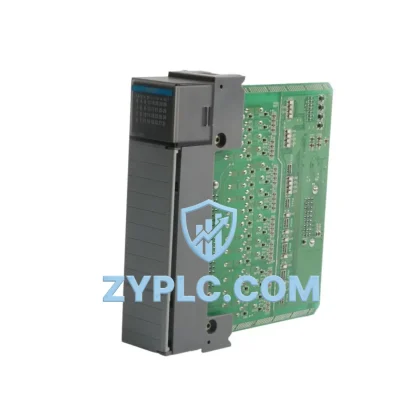
In modern industrial environments where every kilowatt-hour counts, the Mitsubishi A1SX10 AC digital input module stands as a foundational component for energy-conscious automation architects. Designed for the Melsec-A series programmable logic controller platform, the A1SX10 delivers reliable, low-latency signal acquisition from field devices — enabling tighter control loops, faster fault detection, and measurable reductions in idle energy consumption across production lines.
The A1SX10 accepts 16-point AC digital inputs, making it well-suited for capturing status signals from motor starters, limit switches, pressure sensors, and safety interlocks. When integrated into a well-structured Melsec-A control architecture, this module allows the CPU — such as the A1SCPU or A2USCPU-S1 — to respond to field conditions with sub-cycle precision, eliminating the delayed reactions that lead to over-running motors, unnecessary conveyor movement, and wasted compressed air cycles.
Efficiency Performance Table
| Parameter |
Specification / Value |
| SKU |
A1SX10 |
| Module Type |
AC Digital Input Module (16-point) |
| Input Voltage Range |
100–120V AC / 200–240V AC |
| Power Consumption |
Approx. 7W (module self-consumption) |
| Operating Efficiency |
High-isolation optocoupler input, minimal signal loss |
| Compatible Platform |
Mitsubishi Melsec-A Series (A1S, A2S, A2US backplanes) |
| Application Environment |
Industrial automation, process control, discrete manufacturing |
| Energy Optimization Value |
Enables precise on/off control to eliminate idle-state energy draw |
| Communication Protocol |
Melsec-A backplane bus (compatible with CC-Link via A1SJ61BT11) |
| Warranty |
12-Month Warranty — tested and verified before shipment |
Energy-Aware Automation Architecture
The A1SX10 does not operate in isolation — its true energy-saving value emerges when it is embedded within a coordinated Melsec-A automation architecture. In a typical energy-optimized production cell, the A1SX10 feeds real-time field status data to the CPU, which then orchestrates output actions through a companion module such as the A1SY10 transistor output module. Together, these two modules form the sensing-and-actuation backbone of a lean control loop.
For drive-level energy management, the A1SX10 works in tandem with Mitsubishi inverter drives such as the FR-D720S or FR-E720 series. When the input module detects that a conveyor section is idle or a pump has reached its setpoint, the CPU can issue a speed-reduction or stop command to the inverter, cutting motor energy consumption by 30–50% during low-demand periods. This kind of demand-responsive motor control is one of the highest-impact energy strategies available in discrete manufacturing.
On the data monitoring side, the A1SX10 integrates naturally with analog input modules such as the A1S64AD, which captures 4–20mA signals from power transducers and current transformers. When combined with the A1SD75P3-S3 positioning module for servo axis control, the system can coordinate motion profiles that minimize acceleration energy spikes — a critical factor in high-cycle stamping and assembly lines.
For facilities running CC-Link networks, the A1SJ61BT11 CC-Link master module allows the A1SX10’s input data to be shared across distributed control nodes, enabling plant-wide energy visibility without additional wiring infrastructure. HMI visualization through a GT2710-STBA GOT2000 panel gives operators real-time feedback on input states, alarm conditions, and energy-related KPIs — reducing the time operators spend manually checking field equipment and the associated energy cost of unplanned interventions.
Where legacy Melsec-A systems are being extended or modernized, the Q06HCPU with an A1SJ71QLP21 MELSECNET/10 link module can bridge A-series I/O into a Q-series backbone, preserving the investment in existing A1SX10 modules while gaining access to higher-speed processing and advanced energy management functions available in the Q platform.
Power Optimization in Real Production Lines
Consider a mid-scale automotive parts assembly line running three shifts. Without precise input monitoring, motors and actuators often remain energized during micro-stoppages, shift changeovers, and material replenishment pauses. The A1SX10, by providing accurate, debounce-filtered AC input signals, allows the Melsec-A CPU to implement intelligent standby logic: conveyors ramp down after 30 seconds of no part detection, pneumatic solenoids de-energize when the safety gate is open, and cooling fans switch to low-speed mode when thermal sensors report ambient temperatures below threshold.
In a food and beverage bottling facility, the A1SX10 monitors fill-level sensors and cap-presence switches. When the module detects a line jam, the CPU immediately halts upstream conveyors and signals the FR-D720S inverter to coast the infeed motor to a stop rather than holding it at full torque against a blocked load — a scenario that, left unmanaged, can waste several kilowatts per hour and accelerate motor winding degradation.
Predictive maintenance also benefits from the A1SX10’s reliable input capture. By logging the frequency and duration of limit switch activations over time, maintenance teams can identify mechanical wear patterns — a switch that used to close in 12ms now takes 40ms — before they cause unplanned downtime. Reduced unplanned downtime directly translates to lower energy waste from emergency restarts, heated idle periods, and out-of-sequence production recovery.
All units supplied by ZYPLC are sourced from verified supply channels, undergo functional output testing prior to shipment, and are covered by a 12-month warranty. Stock availability is maintained to support both planned maintenance schedules and urgent breakdown replacements, minimizing the production energy cost of extended downtime.
Energy Optimization FAQ
Q1: How does the A1SX10 contribute to measurable energy savings on the production floor?
The A1SX10 enables the Melsec-A CPU to respond immediately to field conditions — stopping motors, reducing inverter speed, and de-energizing actuators the moment a process step completes or a fault is detected. This eliminates the idle-running energy waste that accumulates when control systems rely on timed delays rather than real input signals.
Q2: Is the A1SX10 compatible with both 100V and 200V AC field devices?
Yes. The A1SX10 supports both 100–120V AC and 200–240V AC input ranges across its 16 input points, making it suitable for mixed-voltage field environments common in older industrial facilities undergoing partial modernization.
Q3: Can the A1SX10 be used as a direct replacement for a failed module without reprogramming?
In most cases, yes. The A1SX10 is a slot-compatible replacement within Melsec-A backplanes (A1S, A2S, A2US). As long as the replacement module matches the original I/O assignment in the CPU program, no ladder logic changes are required. ZYPLC recommends verifying the wiring terminal configuration before installation.
Q4: What does the 12-month warranty cover, and how is pre-shipment testing conducted?
Every A1SX10 unit shipped by ZYPLC is tested for input point continuity, isolation integrity, and correct signal response before dispatch. The 12-month warranty covers functional failure under normal operating conditions. Units showing physical damage from incorrect installation or overvoltage are assessed case by case. Contact our team at plc.sales@zyplc.com for warranty claims or pre-purchase technical consultation.
© 2026 ZYPLC. All rights reserved.
Original Source: https://zyplc.com
Contact: +86 19859288691 | plc.sales@zyplc.com