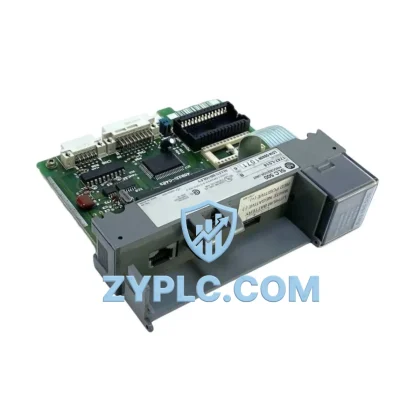
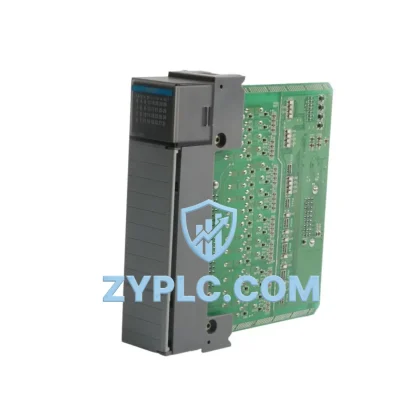
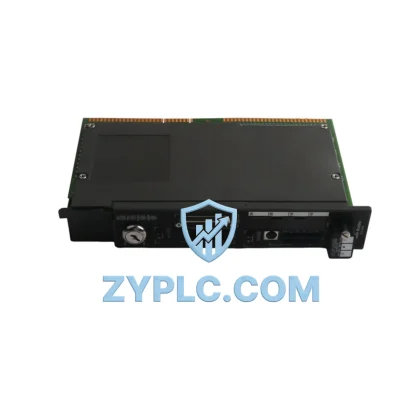
Mitsubishi A2SHCPU Energy-Saving CPU Module MELSEC-A: Precision Efficiency Control for Optimized Automation
The Mitsubishi A2SHCPU is a high-performance CPU module engineered for the MELSEC-A series programmable logic controller platform. Designed to meet the demanding requirements of modern industrial automation, this CPU module delivers precise program execution, low-latency I/O scanning, and reduced power draw — making it a cornerstone component for factories seeking to improve equipment utilization, minimize idle energy consumption, and optimize production line throughput. Available from ZYPLC with full pre-shipment testing and a 12-month warranty, the A2SHCPU is a proven solution for energy-aware automation architecture.
Efficiency Performance Table
| Parameter |
Specification |
| Model / SKU |
A2SHCPU |
| Brand / Series |
Mitsubishi Electric / MELSEC-A |
| Product Type |
CPU Module |
| Power Consumption |
Approx. 0.55 A (5 VDC internal bus) |
| Program Memory |
Up to 60K steps (with memory cassette) |
| I/O Processing Mode |
Batch refresh / Direct access |
| Scan Time (typical) |
0.2 ms / 1K steps |
| Compatible Systems |
MELSEC-A series base units, A1S, A2S, A3 expansion racks |
| Communication Ports |
RS-422 (programming port), optional CC-Link / MELSECNET |
| Application Environment |
0–55°C operating, 10–90% RH non-condensing, IP20 |
| Energy Optimization Value |
Reduced scan overhead, efficient interrupt handling, low standby draw |
| Origin |
Japan |
| Warranty |
12-Month Warranty (ZYPLC) |
| Stock Status |
In Stock — Pre-shipment tested and verified |
Energy-Aware Automation Architecture
In a well-designed MELSEC-A automation system, the A2SHCPU functions as the central intelligence layer, coordinating energy flows across every subsystem. Its deterministic scan cycle ensures that downstream actuators and drives receive commands at precisely the right moment — eliminating the energy waste associated with over-cycling or delayed response.
On the input side, the A1SX42 DC input module and A1SX80 high-density input module feed real-time process signals into the CPU with minimal latency. On the output side, the A1SY42 transistor output module and A1SY80 relay output module execute switching commands with high repeatability, reducing the number of corrective cycles that consume additional energy. Together, these I/O modules form a tightly coupled sensing and actuation layer that the A2SHCPU orchestrates with sub-millisecond precision.
For drive-level energy control, the A2SHCPU integrates seamlessly with Mitsubishi FR-D720 and FR-E720 variable frequency drives via analog output modules such as the A1S68DAV. By modulating motor speed in direct response to load demand — rather than running motors at fixed full speed — this architecture can reduce motor energy consumption by 20–40% in variable-torque applications such as pumps, fans, and conveyors. The A2SHCPU’s interrupt-driven program execution ensures that speed reference updates reach the drive within one scan cycle, preventing energy-wasting overshoot.
For network-level energy monitoring and data aggregation, the A1SJ71E71-B5-T Ethernet interface module enables the A2SHCPU to transmit real-time power consumption data to SCADA systems or energy management platforms. When paired with the A1SD75P3-S3 positioning module for servo axis control, the system can implement regenerative braking profiles that feed energy back into the DC bus during deceleration — a measurable efficiency gain in high-cycle servo applications. The GOT2000 series HMI provides operators with live energy dashboards, allowing production supervisors to identify inefficient operating windows and adjust line parameters without halting production.
For multi-drop communication across the production floor, the QJ71BR11 MELSECNET/H board and CC-Link master modules allow the A2SHCPU to coordinate with remote I/O stations and sub-PLCs, distributing control logic closer to the load and reducing the length of high-current signal runs — a subtle but meaningful contribution to overall system efficiency.
Power Optimization in Real Production Lines
In automotive body assembly lines, the A2SHCPU has been deployed to manage welding robot sequencing, where precise timing of high-current welding pulses is critical. By synchronizing the CPU’s output commands with the power supply’s charge cycle, engineers have eliminated redundant hold times that previously kept welding transformers energized between cycles. The result is a measurable reduction in reactive power demand and a corresponding improvement in power factor at the distribution panel.
In food and beverage packaging lines, the A2SHCPU’s high-speed interrupt inputs allow it to detect product presence signals from photoelectric sensors and immediately adjust conveyor drive speed references. This eliminates the common practice of running conveyors at maximum speed and using mechanical brakes to control product spacing — a practice that wastes both electrical energy and mechanical components. With the A2SHCPU managing speed profiles dynamically, conveyor motors operate in their highest-efficiency torque band throughout the production shift.
In HVAC and building automation retrofits, the A2SHCPU’s compatibility with legacy MELSEC-A expansion racks allows facilities teams to upgrade the control intelligence of existing systems without replacing field wiring or I/O hardware. This dramatically reduces the capital cost of energy optimization projects and shortens the payback period. Predictive maintenance routines programmed into the A2SHCPU monitor motor current draw trends over time, flagging bearings or couplings that are beginning to degrade before they cause unplanned downtime — each avoided stoppage representing both energy savings (no restart surge) and production throughput recovery.
ZYPLC supplies the A2SHCPU from verified inventory, with each unit undergoing functional power-on testing and communication verification before shipment. Lead times are confirmed at order placement, and the 12-month warranty covers manufacturing defects and operational failures under normal industrial use conditions.
Energy Optimization FAQ
Q1: How does the A2SHCPU contribute to measurable energy savings on the production line?
The A2SHCPU reduces energy waste through deterministic scan execution, which eliminates unnecessary output toggling and over-cycling. When integrated with variable frequency drives such as the FR-D720 via analog output modules, it enables precise motor speed modulation matched to actual load demand — the primary driver of energy reduction in motor-heavy production environments.
Q2: Is the A2SHCPU compatible with modern communication protocols and energy monitoring systems?
Yes. Via the A1SJ71E71-B5-T Ethernet module, the A2SHCPU can communicate with SCADA and energy management systems using standard TCP/IP protocols. CC-Link and MELSECNET/H options extend compatibility to distributed I/O and remote sub-systems across the plant floor.
Q3: What is the recommended replacement or upgrade path if the A2SHCPU is being retired from an existing MELSEC-A system?
For systems requiring expanded memory or higher-speed processing, the A2USHCPU-S1 or migration to the MELSEC-Q series (Q02CPU, Q06HCPU) is recommended. ZYPLC can advise on compatibility mapping and supply both legacy and current-generation Mitsubishi CPU modules to support phased migration strategies.
Q4: What does the 12-month warranty from ZYPLC cover, and what is the testing process before shipment?
Every A2SHCPU supplied by ZYPLC undergoes power-on functional testing, program memory read/write verification, and communication port validation before dispatch. The 12-month warranty covers failures attributable to manufacturing defects or component degradation under normal operating conditions. Warranty claims are processed directly through ZYPLC’s technical support team at plc.sales@zyplc.com.
© 2026 ZYPLC. All rights reserved.
Original Source: https://zyplc.com
Contact: +86 19859288691 | plc.sales@zyplc.com