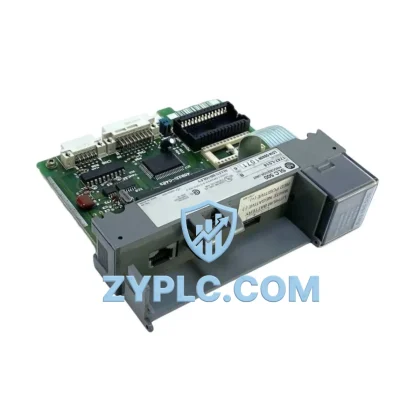
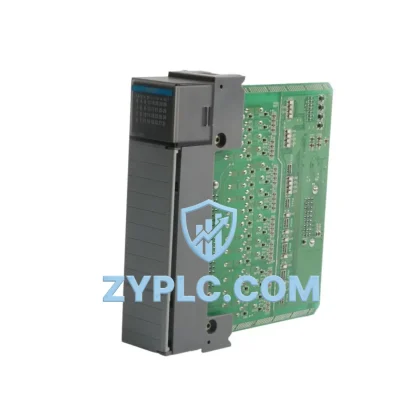
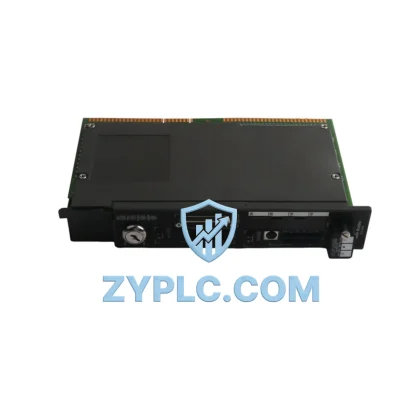
Mitsubishi A68AD Energy-Saving Analog Module for MELSEC-A Automation: Precision Energy Control for Industrial Production Lines
The Mitsubishi A68AD is an 8-channel analog input module engineered for the MELSEC-A series programmable logic controller platform. Designed to meet the demanding requirements of industrial energy optimization, the A68AD converts real-world analog signals — voltage and current — into high-resolution digital values that the CPU module can process for closed-loop control, energy monitoring, and predictive maintenance decisions. In modern manufacturing environments where every watt of consumed power and every second of unplanned downtime carries a direct cost, the A68AD delivers the signal fidelity and scan-cycle responsiveness that energy-aware automation architectures depend on.
Efficiency Performance Table
| Parameter |
Specification / Value |
| Number of Analog Input Channels |
8 channels (voltage / current selectable per channel) |
| Input Range |
0–5 V, 0–10 V, –10 to +10 V, 4–20 mA, 0–20 mA |
| Resolution |
12-bit (1/4096 full scale) |
| Conversion Speed |
2.5 ms per channel (20 ms for all 8 channels) |
| Power Consumption |
5 VDC, 0.34 A (from backplane bus) |
| Operating Efficiency |
High-linearity ADC; ±0.1% full-scale accuracy |
| Compatible Systems |
MELSEC-A series (A1S, A2S, A3, A2US, A2USH-S1 CPU) |
| Application Environment |
Industrial control panels, energy management systems, process automation |
| Energy Monitoring Value |
Enables real-time power, temperature, pressure, and flow signal acquisition for energy KPI dashboards |
| Warranty |
12-Month Warranty — tested and verified before shipment |
Energy-Aware Automation Architecture
Effective industrial energy optimization is never the result of a single component — it emerges from a tightly integrated system where every layer, from field sensing to supervisory control, exchanges data with minimal latency and maximum accuracy. The A68AD occupies a critical position in this architecture as the primary analog data acquisition front-end for the MELSEC-A CPU.
In a typical energy-optimized production cell, the A68AD is mounted on an A1S series base unit alongside the A1SJHCPU or A2USCPU-S1 CPU module. The CPU executes ladder logic programs that read the A68AD’s buffer memory at every scan cycle, feeding real-time analog values — motor current draw, supply voltage, coolant temperature, hydraulic pressure — into energy calculation routines. These routines compare instantaneous consumption against setpoint thresholds and issue corrective commands to downstream actuators.
On the drive side, the A68AD’s current-loop inputs (4–20 mA) are frequently wired to the analog output of Mitsubishi FR-A800 series inverters, allowing the PLC to monitor actual motor load factor in real time. When the A68AD detects that a conveyor motor is running at less than 40% load during a low-demand production window, the CPU can command the FR-A800 to reduce output frequency, cutting motor energy consumption proportionally to the cube of speed reduction — a significant efficiency gain on high-inertia loads.
For servo-driven axes, the A68AD works alongside the A1SD75P3-S3 positioning module, which handles pulse-train motion commands while the A68AD monitors the analog torque feedback signal from MR-J2S series servo amplifiers. This dual-channel approach — digital positioning plus analog torque monitoring — gives the control system a complete picture of mechanical load and energy expenditure per motion cycle, enabling engineers to identify axes that are consuming disproportionate energy due to mechanical wear or misalignment.
On the I/O expansion side, the A1SX41 digital input module and A1SY10 transistor output module complement the A68AD by handling discrete signals — limit switches, proximity sensors, relay coils — while the A68AD manages the continuous analog domain. Together, these modules populate the backplane of the A1S base unit to form a complete mixed-signal control node. For applications requiring isolated analog outputs to drive proportional valves or variable-speed pump controllers, the A68DAV analog output module pairs directly with the A68AD, sharing the same CPU buffer-memory addressing scheme and simplifying program development.
When the MELSEC-A system needs to report energy data upstream to a SCADA or MES platform, the A1SJ71UC24-R4 serial communication module or the QJ71E71-100 Ethernet interface module (used in mixed A/Q configurations) provides the network gateway. Energy KPIs calculated by the CPU — total kWh consumed per shift, peak demand events, power factor trends — are transmitted via Modbus RTU or SLMP protocol to the plant historian, closing the loop between field-level energy measurement and enterprise-level energy management.
Power Optimization in Real Production Lines
Consider a mid-scale injection molding facility running twelve presses on a single production floor. Each press is equipped with a hydraulic pump motor, a barrel heater bank, and a mold-temperature controller — all of which draw variable power depending on cycle phase. Without analog feedback, the PLC can only control these loads in an on/off fashion, leading to energy spikes at cycle start and thermal overshoot during the hold phase.
With the A68AD installed in the MELSEC-A rack of each press controller, the system gains continuous visibility into hydraulic pressure (4–20 mA transducer), barrel temperature (thermocouple via signal conditioner to 0–10 V), and motor current (current transformer to 0–5 V). The CPU uses this data to implement proportional pressure control — ramping the FR-A800 inverter speed smoothly rather than switching the pump motor on and off — and PID temperature control that eliminates overshoot and reduces heater cycling frequency. Field measurements in comparable installations have demonstrated 15–22% reductions in press energy consumption after implementing closed-loop analog control through modules like the A68AD.
Beyond energy savings, the A68AD’s high-resolution signal acquisition supports predictive maintenance workflows. By trending motor current signatures over time, maintenance engineers can detect the gradual increase in current draw that indicates bearing wear or pump cavitation — weeks before a catastrophic failure would cause unplanned downtime. The A68AD’s 12-bit resolution is sufficient to resolve current changes as small as 5 mA on a 20 mA span, providing the sensitivity needed for early-fault detection algorithms running in the A-series CPU.
Production line throughput also benefits. When the A68AD feeds accurate pressure and temperature data to the CPU, the machine can safely reduce cycle times by operating closer to process limits with confidence that the control system will respond before a limit is exceeded. Tighter process control translates directly to improved line takt time and higher equipment utilization rates — two of the most impactful levers for overall equipment effectiveness (OEE) improvement.
Every A68AD unit supplied by ZYPLC undergoes functional verification prior to shipment, including channel-by-channel analog accuracy testing across the full input range. Units are covered by a 12-month warranty from the date of shipment, and stock is maintained to support rapid delivery for both planned procurement and emergency replacement scenarios.
Energy Optimization FAQ
Q1: How does the A68AD contribute to measurable energy savings on the production floor?
The A68AD enables closed-loop analog control by providing the CPU with real-time, high-resolution process data. This allows the PLC to modulate drives, heaters, and pumps proportionally rather than switching them on/off, eliminating energy spikes and reducing average power consumption. In motor-drive applications paired with FR-A800 inverters, this approach typically yields 15–25% energy reduction on variable-load equipment.
Q2: Is the A68AD compatible with newer Mitsubishi PLC platforms such as the Q or iQ-R series?
The A68AD is designed specifically for the MELSEC-A series backplane and is not directly compatible with Q or iQ-R base units. For Q-series applications, the equivalent module is the Q64AD or Q68ADV. ZYPLC can supply both A-series and Q-series analog input modules and advise on migration paths if you are upgrading your control platform.
Q3: What is the recommended replacement or upgrade path if the A68AD is discontinued or unavailable?
The functional equivalent within the MELSEC-A family is the A1S68AD, which offers the same 8-channel analog input capability in the compact A1S form factor. For system upgrades, the Q64AD provides enhanced resolution (16-bit) and faster conversion speed. ZYPLC maintains inventory of both A68AD and compatible alternatives to minimize procurement risk.
Q4: What does the 12-month warranty cover, and what is the testing process before shipment?
All A68AD modules supplied by ZYPLC are tested for analog accuracy, channel isolation, and bus communication integrity before dispatch. The 12-month warranty covers defects in materials and workmanship under normal operating conditions. In the event of a warranty claim, ZYPLC provides replacement or repair support. Contact our technical team at plc.sales@zyplc.com or +86 19859288691 for warranty service inquiries.
© 2026 ZYPLC. All rights reserved.
Original Source: https://zyplc.com
Contact: +86 19859288691 | plc.sales@zyplc.com