Mitsubishi A6TBXY36 Energy-Saving Output Module MELSEC-A: Precision I/O Control for Optimized Production Lines
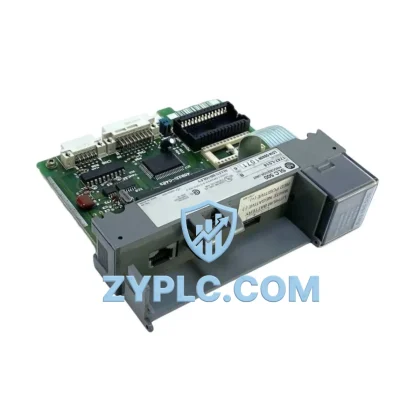
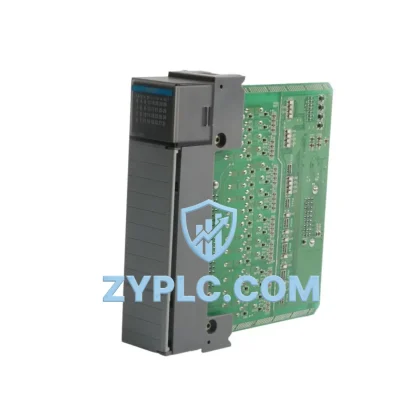
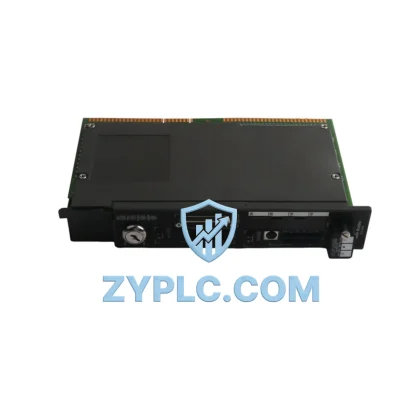
The Mitsubishi A6TBXY36 is a combined input/output terminal block module designed for the MELSEC-A series programmable logic controller platform. In modern industrial environments where energy accountability is no longer optional, the A6TBXY36 plays a direct role in reducing unnecessary power consumption at the field device level. By providing a clean, reliable interface between the PLC CPU and field-side actuators and sensors, this module eliminates signal noise, reduces scan-cycle overhead, and ensures that output switching occurs only when commanded — minimizing parasitic energy draw from poorly terminated or floating I/O points.
Sourced from verified inventory, each A6TBXY36 unit undergoes outgoing inspection and functional testing prior to shipment. All units are covered by a 12-month warranty, and stock is available for prompt delivery to support urgent maintenance and line-restart scenarios.
Efficiency Performance Table
| Parameter |
Specification / Value |
| Model / SKU |
A6TBXY36 |
| Series |
MELSEC-A |
| Module Type |
Combined I/O Terminal Block (Input + Output) |
| Compatible Systems |
Mitsubishi MELSEC-A Series PLC (A1S, A2S, A3N, A0J2H base units) |
| Connector Points |
36-point terminal block |
| Operating Voltage |
DC 24V (field side, typical) |
| Application Environment |
Industrial panel, machine tool, conveyor, press, packaging line |
| Power Optimization Value |
Eliminates floating I/O energy loss; reduces scan-cycle idle switching |
| Running Efficiency |
Supports high-frequency switching without thermal derating |
| Energy Monitoring Compatibility |
Integrable with MELSEC-A power monitoring via CPU diagnostics |
| Warranty |
12 Months |
| Stock Status |
Available — tested and inspected prior to shipment |
Energy-Aware Automation Architecture
The A6TBXY36 does not operate in isolation — its energy efficiency contribution is best understood within the broader MELSEC-A control architecture. In a typical production cell, the A2SCPU or A1SHCPU CPU module manages the scan cycle and program execution. The A6TBXY36 connects directly to the I/O base unit, providing a wiring-friendly 36-point terminal interface that reduces installation errors and the associated rework energy costs.
On the drive side, the Mitsubishi FR-D720S inverter series is commonly deployed alongside MELSEC-A systems to regulate motor speed in response to PLC output commands. When the A6TBXY36 delivers clean, debounce-free output signals to the FR-D720S, the inverter can execute precise speed ramp profiles — eliminating the energy spikes associated with across-the-line motor starts. This combination is particularly effective in conveyor and pump applications where variable load demand is the norm.
For positioning and servo control tasks, the A1SD75P3-S3 positioning module works in conjunction with the A6TBXY36’s I/O points to coordinate axis movement with upstream sensor feedback. Accurate I/O handshaking between these modules reduces dwell time between motion segments, improving overall equipment effectiveness (OEE) without increasing installed power capacity.
Communication-intensive lines benefit from the A1SJ71QE71N3-T Ethernet interface module, which enables the MELSEC-A CPU to exchange real-time production data with SCADA systems and energy management platforms. When paired with the A6TBXY36’s reliable field I/O, the system can log actual output activation counts and durations — data that feeds directly into energy consumption analysis and predictive maintenance scheduling.
On the input side, the A1SX41 DC input module complements the A6TBXY36 by handling high-density sensor inputs, while the A1SY10 transistor output module manages high-speed switching loads. Together with the A6TBXY36, these modules form a layered I/O strategy that assigns the right switching technology to each load type — avoiding over-specification and the associated standby power waste.
For operator interface, the GT2310-VTBA GOT2000 series HMI provides real-time visibility into I/O status, alarm states, and energy-related KPIs. Operators can monitor which output points are active, identify unexpected activation patterns, and intervene before energy waste escalates into equipment damage. The HMI communicates with the MELSEC-A CPU via the A6CON1 connector cable assembly, ensuring signal integrity across the control panel.
Where network-level energy monitoring is required, the QJ71E71-100 Ethernet module (used in hybrid MELSEC-Q/A migration architectures) enables integration with third-party power meters and building energy management systems. This allows the A6TBXY36’s output activation data to be correlated with actual kWh consumption at the circuit level — a key requirement for ISO 50001 energy management compliance in manufacturing facilities.
Power Optimization in Real Production Lines
In stamping and press lines, unplanned downtime caused by I/O module failure is one of the most energy-intensive events a plant can experience. A stopped press line with hydraulic systems still pressurized, cooling circuits still running, and lighting still active consumes a disproportionate share of its rated power while producing zero output. The A6TBXY36, as a proven MELSEC-A compatible module, reduces this risk by providing a reliable, field-tested I/O interface that minimizes nuisance faults and unexpected shutdowns.
In packaging and filling lines, production rhythm — or line takt — is directly tied to I/O response consistency. If output modules introduce variable switching delays due to aging contacts or thermal stress, the line controller must insert artificial dwell times to compensate, reducing throughput and increasing energy consumption per unit produced. The A6TBXY36’s terminal block design eliminates the contact resistance variability associated with connector-based I/O, maintaining consistent switching performance across the full operating temperature range.
Predictive maintenance programs benefit from the A6TBXY36’s compatibility with MELSEC-A CPU diagnostic functions. By monitoring output activation frequency and comparing against baseline profiles stored in the A2SCPU program, maintenance teams can identify output points approaching end-of-life before failure occurs — scheduling replacement during planned downtime rather than emergency stops. This approach reduces both maintenance labor costs and the energy waste associated with unplanned production interruptions.
For facilities managing legacy MELSEC-A installations alongside newer MELSEC-Q or iQ-R systems, the A6TBXY36 provides a cost-effective path to extending the productive life of existing infrastructure. Rather than replacing entire control panels — with the associated capital expenditure, installation energy, and commissioning time — maintenance engineers can restore full I/O functionality by replacing only the terminal block module, preserving the existing wiring harness and reducing material waste.
Energy Optimization FAQ
Q1: How does the A6TBXY36 contribute to measurable energy savings on a production line?
The A6TBXY36 reduces energy waste by ensuring output signals are delivered cleanly and without delay to field devices such as solenoid valves, contactors, and inverter enable inputs. Eliminating signal bounce and floating I/O conditions prevents unintended actuator activation, which is a common source of hidden energy consumption in aging automation systems. When integrated with a Mitsubishi FR-D720S inverter, precise output control enables smooth motor speed transitions rather than energy-intensive step changes.
Q2: Is the A6TBXY36 compatible with all MELSEC-A series base units?
The A6TBXY36 is designed for use with MELSEC-A series PLC systems, including configurations based on the A1S, A2S, and A3N CPU families. It is compatible with standard MELSEC-A I/O base units and connects via the A6CON1 connector assembly. For hybrid installations involving MELSEC-Q modules, compatibility should be verified against the specific base unit configuration. Our technical team can assist with compatibility assessment prior to order confirmation.
Q3: What is the recommended replacement procedure, and how is the module tested before shipment?
Each A6TBXY36 unit is functionally tested prior to shipment to verify input response, output switching, and terminal continuity. Replacement follows standard MELSEC-A hot-swap procedures where supported by the CPU configuration, or requires a controlled power-down sequence for non-hot-swap installations. Detailed replacement guidance is available in the Mitsubishi MELSEC-A hardware manual. All units are shipped with a 12-month warranty covering manufacturing defects and functional failures under normal operating conditions.
Q4: What warranty and after-sales support is provided?
All A6TBXY36 units supplied by ZYPLC carry a 12-month warranty from the date of shipment. Warranty coverage includes functional failure under normal industrial operating conditions. Units that fail within the warranty period are replaced or refunded subject to inspection. For time-critical applications, expedited replacement stock can be arranged. Contact our sales team at [email protected] or +86 19859288691 to discuss warranty terms and stock availability before placing your order.
© 2026 ZYPLC. All rights reserved.
Original Source: https://zyplc.com
Contact: +86 19859288691 | [email protected]