Mitsubishi AY13 System-Ready Digital Output for MELSEC-A Architecture: Control Layer Coordination and System-Wide Integration
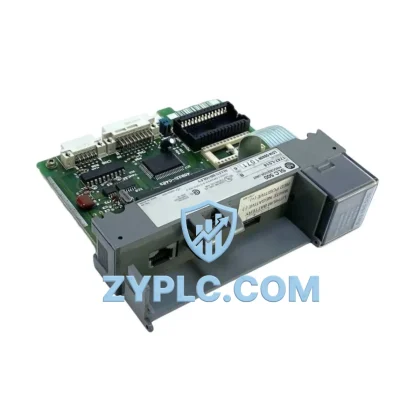
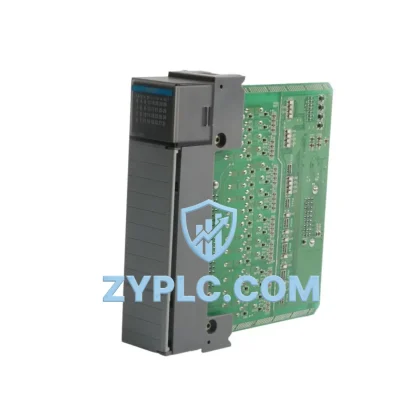
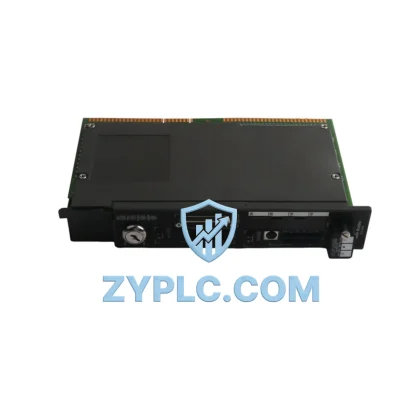
The Mitsubishi AY13 is a transistor-type digital output module engineered for deployment within the MELSEC-A series programmable logic controller platform. Rather than functioning as a standalone component, the AY13 occupies a defined role within a layered automation architecture — bridging the control layer decisions made by the CPU module and the physical execution layer where actuators, solenoids, relays, and motor starters receive their operating commands. Understanding the AY13 in this context is essential for engineers designing systems that demand signal integrity, deterministic response, and long-term maintainability across demanding industrial environments.
In a complete MELSEC-A control system, the AY13 is mounted directly onto an A-series base unit — such as the A1S38B or A1S68B — which provides the backplane bus for data exchange between all installed modules. The CPU module, typically an A1SCPU or A2SCPU, executes the ladder logic program and writes output data to the module’s output registers at each scan cycle. The AY13 then converts these digital signals into transistor-switched outputs capable of driving 24 VDC field devices at up to 0.5 A per point. This tight coupling between the CPU scan cycle and the output switching behavior ensures that the control system responds to process changes with minimal latency — a critical requirement in packaging lines, conveyor systems, and process interlocks.
The power supply architecture supporting the AY13 and its companion modules is equally important to system reliability. The A1S61P or A1S62P power supply modules provide regulated 5 VDC backplane power and 24 VDC field power, ensuring that both the logic circuitry and the output drivers operate within their specified voltage tolerances. Proper power budgeting across the base unit — accounting for the combined current draw of the AY13 alongside input modules such as the AX40 or A1SX41 — is a fundamental step in system commissioning that directly affects long-term thermal performance and module longevity.
At the network and communications layer, the AY13 integrates seamlessly into MELSEC-A architectures that employ the A1SJ71UC24-R4 serial communication module or the AJ71QLP21 MELSECNET/10 link module. These communication modules allow the host CPU to exchange data with supervisory SCADA systems, remote I/O stations, and peer PLCs without interrupting the local I/O scan. In distributed control architectures — common in water treatment facilities, chemical processing plants, and power generation substations — the AY13 may serve as the final output stage in a remote I/O drop, receiving commands from a master CPU over the network and executing them locally with the same determinism as a directly connected module.
For human-machine interface integration, the AY13’s output status bits are directly accessible to HMI platforms such as the A985GOT or A956GOT graphic operation terminals. Operators can monitor individual output channel states in real time, enabling rapid fault diagnosis without requiring a programming device. This transparency at the HMI layer reduces mean time to repair and supports the kind of continuous operation demanded in mining, metallurgy, and petrochemical applications where unplanned downtime carries significant financial consequences.
Redundancy and system resilience are additional considerations when specifying the AY13 within critical control architectures. In hot-standby configurations using dual A2SCPU modules, the output modules — including the AY13 — remain powered and ready to accept commands from the standby CPU in the event of a primary CPU fault. This architecture ensures that the output layer does not become a single point of failure, which is a mandatory design criterion in safety-instrumented systems and continuous process control applications.
From a maintenance and lifecycle perspective, the AY13’s modular form factor allows field replacement without disturbing adjacent modules or rewiring terminal blocks. Engineers familiar with the MELSEC-A platform can swap a suspect AY13 in minutes, restoring system operation before the next scheduled maintenance window. All units supplied by ZYPLC are tested prior to shipment and covered by a 12-Month Warranty, providing procurement teams and maintenance engineers with the confidence to specify the AY13 as a long-term inventory component rather than a single-use replacement part.
Architecture Specification Table
| Parameter |
Specification |
| System Role |
Digital Output Module — MELSEC-A Series Control Architecture |
| Output Points |
16 points (transistor sink type) |
| Rated Output Voltage |
12–24 VDC |
| Max Output Current |
0.5 A per point / 4 A per common |
| Output Type |
Transistor (NPN sink) |
| Isolation Method |
Photocoupler isolation |
| Response Time (OFF→ON) |
≤ 1 ms |
| Response Time (ON→OFF) |
≤ 1 ms |
| Compatible Base Units |
A1S38B, A1S68B, A38B, A68B and compatible A-series bases |
| Compatible CPUs |
A1SCPU, A2SCPU, A3NCPU and MELSEC-A series CPUs |
| Communication Bus |
MELSEC-A backplane bus (parallel I/O bus) |
| Operating Temperature |
0°C to 55°C |
| Operating Humidity |
10% to 90% RH (non-condensing) |
| Mounting |
Base unit slot mount (DIN rail via base) |
| Dimensions (W×H×D) |
Approx. 27.4 × 98 × 90 mm |
| Weight |
Approx. 0.15 kg |
| Warranty |
12-Month Warranty (ZYPLC) |
Coordinated Control System Design
Deploying the AY13 effectively requires a holistic view of the MELSEC-A system architecture. The following components are commonly specified alongside the AY13 in complete control system designs:
The A1SCPU serves as the central processing unit, executing the control program and managing I/O data exchange with all modules on the base unit, including the AY13. In larger systems, the A2SCPU provides expanded program memory and additional I/O capacity, supporting more complex ladder logic that drives multiple AY13 modules across extended base configurations. The A1S68B eight-slot base unit is the most common mounting platform for mixed I/O configurations, accommodating the AY13 alongside digital input modules such as the AX40 (32-point DC input) and the A1SX41 (16-point DC input), creating a balanced I/O architecture suited to machine control and process automation.
Power integrity is maintained by the A1S61P power supply module, which delivers stable 5 VDC backplane power and supports the 24 VDC field supply required by the AY13’s output circuits. For applications requiring network connectivity, the A1SJ71UC24-R4 serial communication module enables RS-232C and RS-422 communication with SCADA hosts and operator terminals, while the AJ65SBTB1-32D CC-Link remote I/O terminal block extends the digital I/O network to field junction boxes without additional wiring runs back to the main panel. Motion control integration is supported through the A1SD75P3-S3 positioning module, which coordinates servo drive commands with the AY13’s discrete outputs to synchronize motion sequences with auxiliary actuator control. At the operator interface layer, the A985GOT graphic operation terminal provides real-time visualization of AY13 output states, alarm management, and trend logging — completing the human-machine interface layer of the control architecture.
Application in Layered Automation Systems
The AY13 is deployed across a wide range of industrial sectors where reliable digital output switching is a fundamental control requirement. In automotive and discrete manufacturing environments, the AY13 drives solenoid valves, pneumatic actuators, and indicator lamps on assembly lines where cycle times are measured in seconds and output response consistency directly affects product quality. In power generation and electrical substation applications, the AY13 provides the switching interface between the PLC control layer and protection relay coils, circuit breaker trip circuits, and alarm annunciator panels — environments where output reliability is a safety-critical requirement.
In petrochemical and refinery process control systems, the AY13 is integrated into emergency shutdown (ESD) architectures where its photocoupler isolation prevents ground loop interference from corrupting output signals in electrically noisy field environments. Water and wastewater treatment facilities use the AY13 to control pump motor starters, valve actuators, and chemical dosing systems across distributed remote I/O architectures connected via CC-Link or MELSECNET. In mining and mineral processing operations, the AY13’s robust operating temperature range and vibration tolerance make it suitable for deployment in control panels located close to crushing, screening, and conveying equipment. Metallurgical and steel mill applications leverage the AY13’s fast response time to coordinate furnace burner control, cooling water valve sequencing, and rolling mill auxiliary systems with the precision required by high-temperature process control. In food and beverage packaging lines, the AY13 interfaces with servo drives, labeling machines, and reject mechanisms, where its deterministic output timing ensures that packaging sequences execute without positional errors.
Architecture Engineering FAQ
Q1: Is the AY13 compatible with both the A1S-series compact base units and the larger A-series modular base units?
Yes. The AY13 is designed for the MELSEC-A backplane bus and is compatible with both compact base units such as the A1S38B and A1S68B and the larger modular base units including the A38B and A68B. Engineers should verify the total current consumption of all installed modules against the power supply module’s rated output — typically the A1S61P or A1S62P — to ensure the base unit operates within its thermal and electrical design limits. Mixed configurations combining the AY13 with analog modules, communication modules, and positioning modules are fully supported within the MELSEC-A architecture.
Q2: How does the AY13 behave during a CPU fault or communication interruption in a networked MELSEC-A system?
In the event of a CPU fault or watchdog timer expiration, the MELSEC-A CPU module sets all output modules — including the AY13 — to their fail-safe state, which by default de-energizes all output points. This behavior is configurable through the CPU’s parameter settings, allowing engineers to define specific output states for fault conditions in applications where maintaining actuator position during a CPU restart is preferable to de-energization. In networked configurations using the A1SJ71UC24-R4 or MELSECNET link modules, communication timeout parameters should be configured to match the expected network recovery time to prevent nuisance output cycling during transient communication interruptions.
Q3: What does the 12-Month Warranty cover, and how does ZYPLC support long-term spare parts availability for the AY13?
The 12-Month Warranty provided by ZYPLC covers manufacturing defects and functional failures under normal operating conditions for a period of twelve months from the date of shipment. Units that fail within the warranty period are repaired or replaced at no charge, subject to inspection confirming that the failure was not caused by installation errors, overvoltage conditions, or environmental factors outside the module’s rated specifications. For long-term spare parts planning, ZYPLC maintains inventory of the AY13 and compatible MELSEC-A components to support maintenance programs in industries where the MELSEC-A platform remains in active service. Engineers planning system upgrades or lifecycle extensions are encouraged to contact ZYPLC to discuss multi-unit procurement and consignment stock arrangements that reduce lead time risk for critical spare parts.
© 2026 ZYPLC. All rights reserved.
Original Source: https://zyplc.com
Contact: +86 19859288691 | plc.sales@zyplc.com