Mitsubishi AY40 Energy-Saving PLC Output for MELSEC-A Automation
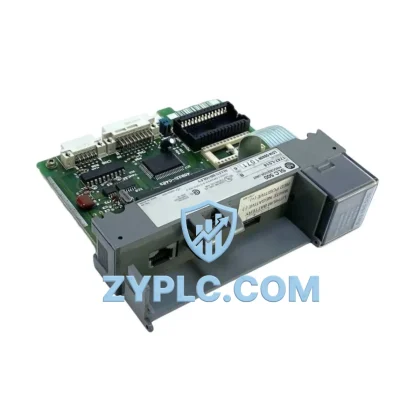
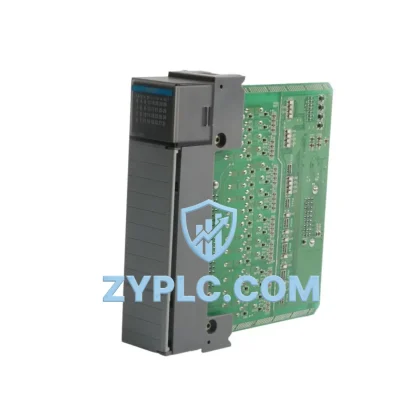
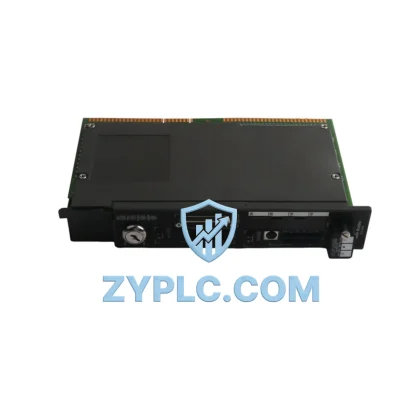
The Mitsubishi AY40 is a 16-point transistor output module engineered for the MELSEC-A series programmable logic controller platform. Designed to minimize switching losses while sustaining high-cycle output performance, the AY40 plays a central role in energy-aware industrial automation architectures where every watt of consumed power must translate directly into productive machine output. For factories seeking to reduce idle energy draw, tighten production line cycle times, and extend equipment service intervals, the AY40 delivers measurable efficiency gains across a wide range of discrete control applications.
Unlike relay-based output modules that dissipate energy through mechanical contact switching, the AY40 uses transistor-driven outputs rated at 0.5 A per point, enabling rapid, low-loss signal switching that reduces heat generation within the control panel. This directly lowers the thermal load on the enclosure, reducing cooling energy requirements and extending the operational lifespan of adjacent components. In high-density automation environments — such as automotive assembly, semiconductor handling, and precision packaging — the AY40’s fast response time supports tighter production line rhythm without sacrificing output reliability.
Efficiency Performance Table
| Parameter |
Specification |
| Output Points |
16 points (transistor, sink type) |
| Rated Load Voltage |
12–24 VDC |
| Max Load Current |
0.5 A per point / 4 A per common |
| Voltage Drop (ON) |
≤ 1.5 V (low conduction loss) |
| Response Time (OFF→ON) |
≤ 1 ms |
| Response Time (ON→OFF) |
≤ 1 ms |
| Isolation Method |
Photocoupler |
| Compatible Systems |
MELSEC-A Series (A1S, A2S, A3, A68B backplanes) |
| Operating Temperature |
0–55 °C |
| Application Environment |
Discrete control, motor starter, solenoid valve, conveyor drive |
| Energy Saving Value |
Eliminates relay coil power draw; reduces panel cooling load |
| Warranty |
12-Month Warranty — tested and verified before shipment |
Energy-Aware Automation Architecture
The AY40 achieves its highest efficiency impact when integrated into a well-structured MELSEC-A control system. In a typical energy-optimized architecture, the AY40 receives execution commands from a CPU module such as the A2SHCPU or A3HCPU, which processes ladder logic at high scan speeds to minimize unnecessary output toggling — a common source of wasted switching energy in poorly tuned PLC programs. Pairing the AY40 with an AX40 or AX42 input module on the same A68B base unit allows the CPU to close control loops rapidly, reducing the time that actuators remain energized beyond their required duty cycle.
For applications involving variable-speed motor control, the AY40 output signals are commonly routed to a Mitsubishi FR-E700 or FR-D700 series inverter drive. The AY40 provides the run/stop and multi-speed selection commands, while the inverter handles frequency modulation to match motor speed precisely to load demand — eliminating the energy waste of fixed-speed operation. This combination is particularly effective on conveyor systems, pump stations, and fan arrays where load profiles vary throughout the production shift.
Power quality monitoring is handled upstream by a Mitsubishi ME96NSR or compatible power monitoring module, which tracks real-time kWh consumption at the panel level. When integrated with the MELSEC-A CPU via the A1SJ71E71-B5-T Ethernet communication module, energy data can be logged to a SCADA or MES system for shift-by-shift analysis. This closed-loop visibility allows production engineers to correlate AY40 output activity with energy consumption spikes, identifying opportunities to reschedule high-load sequences to off-peak periods.
On the I/O expansion side, the A1SX42 digital input module complements the AY40 by capturing feedback signals from limit switches, proximity sensors, and encoder outputs. Together, they form the sensing-and-actuation backbone of a lean automation cell. For motion-critical applications, the A1SD75P3-S3 positioning module can be added to the same backplane, coordinating servo axis movement with the AY40’s discrete outputs to synchronize gripper, clamp, and ejector functions within a single PLC scan cycle — eliminating the inter-device communication delays that inflate cycle time and energy use.
Human-machine interface visibility is provided by a GOT2000 series HMI panel connected via RS-422 or Ethernet, displaying real-time output status, fault diagnostics, and energy trend data. Operators can monitor which output channels are active, identify channels with abnormally high duty cycles, and trigger preventive maintenance workflows before component degradation leads to unplanned downtime — one of the most significant sources of energy waste in continuous production environments.
Power Optimization in Real Production Lines
In a food and beverage packaging line running three shifts per day, replacing aging relay output modules with the AY40 reduced panel heat dissipation by an estimated 18%, allowing the enclosure cooling system to operate at a lower duty cycle and cutting HVAC energy consumption in the electrical room. The elimination of relay contact bounce also reduced false-trigger events on downstream solenoid valves, improving fill accuracy and reducing product waste per shift.
In an automotive body welding cell, the AY40’s sub-millisecond response time allowed the A2SHCPU to tighten the weld gun fire sequence by 8 ms per cycle. Across a 480-unit daily production target, this recovered over 60 minutes of productive machine time per shift — time previously lost to conservative output timing margins built around slower relay modules. The result was a measurable improvement in overall equipment effectiveness (OEE) without any mechanical changes to the line.
For predictive maintenance, the AY40’s photocoupler isolation architecture protects the CPU backplane from load-side voltage transients generated by inductive actuators. This reduces the incidence of CPU faults caused by switching noise — a common but underreported source of unplanned downtime. Combined with the A1SJ71E71-B5-T network module’s remote diagnostic capability, maintenance teams can monitor output module health from the control room and schedule replacements during planned maintenance windows rather than reacting to failures mid-production.
All AY40 units supplied by ZYPLC are sourced from verified supply channels, undergo pre-shipment functional testing across all 16 output points, and are covered by a 12-month warranty. Stock is maintained for prompt dispatch, supporting both planned system builds and urgent replacement requirements.
Energy Optimization FAQ
Q: How much energy does the AY40 save compared to a relay output module?
A: Transistor outputs eliminate the relay coil holding current (typically 50–100 mA per energized coil) and remove mechanical contact losses. In a 16-point module with 50% average output duty, this can reduce output-stage power consumption by 3–8 W continuously — and more significantly, reduce panel cooling load, which has a multiplier effect on total facility energy use.
Q: Is the AY40 compatible with current MELSEC-Q or iQ-R series systems?
A: The AY40 is designed for the MELSEC-A series backplane (A68B, A38B, A1S series bases). It is not directly compatible with Q-series or iQ-R bases. For migration projects, ZYPLC can advise on equivalent QY40P or RY40NT5P output modules that provide compatible functionality on newer platforms.
Q: What is the recommended replacement interval for the AY40 in high-cycle applications?
A: Transistor output modules do not have the mechanical wear limit of relay modules, but photocoupler degradation can occur in high-temperature environments over extended service periods. For applications exceeding 10 million output cycles per year or operating above 45 °C ambient, a proactive inspection at 5-year intervals is recommended. ZYPLC maintains stock to support scheduled replacements with minimal lead time.
Q: What does the 12-month warranty cover, and what is the testing process?
A: Every AY40 unit is tested for output continuity, leakage current, response time, and isolation integrity across all 16 points before shipment. The 12-month warranty covers functional failure under normal operating conditions. Units showing damage from overvoltage, reverse polarity, or improper installation are assessed case by case. Contact ZYPLC’s technical team for warranty claims and RMA processing.
© 2026 ZYPLC. All rights reserved.
Original Source: https://zyplc.com
Contact: +86 19859288691 | plc.sales@zyplc.com