Mitsubishi BC186A032G54 Energy-Saving Board for MELSEC Automation
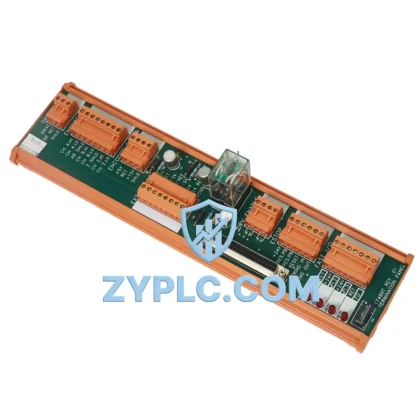
The Mitsubishi BC186A032G54 (also referenced as A24PW7.5D) is a precision-engineered power circuit board designed for the MELSEC A-Series programmable logic controller platform. In modern industrial environments where energy efficiency is no longer optional but a core operational KPI, this board plays a foundational role in stabilizing power delivery to the CPU and I/O subsystems — directly reducing unnecessary power draw, minimizing heat-related degradation, and extending the operational lifespan of the entire control cabinet.
As factories push toward leaner production cycles and tighter energy budgets, the integrity of the power supply layer within a PLC system becomes critical. The BC186A032G54 delivers a stable 7.5W regulated output that ensures the MELSEC A-Series CPU modules — such as the A2UCPU and A3UCPU — receive clean, consistent power without voltage fluctuation. Unstable power at the board level is one of the most overlooked causes of intermittent faults, unexpected shutdowns, and degraded cycle times on production lines. By replacing a failing or aged power board with a tested BC186A032G54, maintenance teams can immediately restore system stability and eliminate the hidden energy waste caused by compensatory power cycling.
Efficiency Performance Table
| Parameter |
Specification |
| SKU |
BC186A032G54 / A24PW7.5D |
| Rated Output Power |
7.5W |
| Compatible Platform |
Mitsubishi MELSEC A-Series PLC |
| Compatible CPU Modules |
A2UCPU, A3UCPU, A1SCPU and related A-Series variants |
| Operating Environment |
Industrial control panels, 0–55°C ambient, humidity ≤90% RH non-condensing |
| Energy Optimization Value |
Eliminates power instability faults; reduces compensatory cycling energy waste |
| Condition |
Tested, fully functional, original Mitsubishi Electric |
| Warranty |
12-Month Warranty |
| Availability |
In Stock — Ready to Ship |
Energy-Aware Automation Architecture
The BC186A032G54 does not operate in isolation — it is the power foundation upon which an entire MELSEC A-Series automation architecture depends. In a typical energy-optimized production cell, the A2UCPU or A3UCPU serves as the central processing unit, executing ladder logic that governs motor start/stop sequences, conveyor timing, and sensor-triggered actions. The power board ensures this CPU operates without brownout conditions that would otherwise force unnecessary re-initialization cycles, each of which consumes additional energy and disrupts line throughput.
On the I/O layer, modules such as the A1SX40 digital input module and A1SY10 transistor output module rely on stable backplane power to accurately read field signals and actuate outputs. A degraded power board introduces noise into these signal paths, leading to false triggers and wasted actuator cycles. Replacing the BC186A032G54 restores signal integrity across the entire I/O rack.
For drive-level energy control, the MELSEC A-Series system is commonly paired with Mitsubishi FR-D740 or FR-E740 series inverters to regulate motor speed based on real-time load demand. The PLC communicates speed references and torque limits to these drives via the A1SJ71UC24-R4 serial communication module, enabling variable frequency drive (VFD) control that dramatically reduces motor energy consumption during partial-load conditions — a strategy that can cut motor energy use by 30–50% compared to fixed-speed operation.
Data acquisition for energy monitoring is handled through analog input modules such as the A1S68AD, which reads current transducer signals and feeds real-time power consumption data back to the CPU. This closed-loop energy feedback allows the PLC program to dynamically adjust drive setpoints, reducing peak demand charges and smoothing energy consumption curves across shift changes.
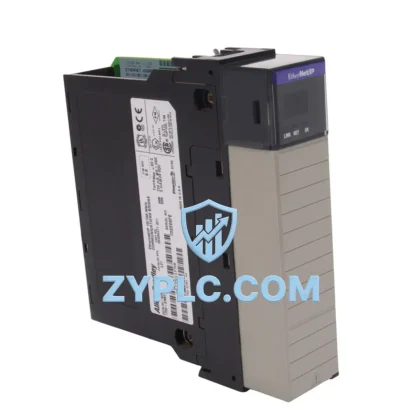
For networked factory environments, the QJ71E71-100 Ethernet module or MELSECNET/H communication boards enable the A-Series controller to report energy metrics upstream to SCADA or MES platforms, supporting plant-wide energy dashboards and predictive maintenance scheduling. The A1SJ71BR11 MELSECNET/B data link module further extends this capability across multi-drop network topologies common in older but still-operational factory floors.
Power supply redundancy and quality are further supported by the A1S61PN and A1S62PN power supply units, which work in conjunction with the BC186A032G54 board to maintain regulated DC rails across the base unit. When the power board is functioning optimally, these supply units operate within their rated efficiency bands, avoiding the thermal derating that occurs under unstable load conditions.
Power Optimization in Real Production Lines
In automotive stamping lines, food processing conveyors, and textile machinery — all common MELSEC A-Series application environments — the BC186A032G54 contributes to energy optimization in several measurable ways. First, by eliminating power-related CPU faults, it reduces unplanned downtime. Each unplanned stop on a production line not only halts output but also triggers energy-intensive restart sequences: motors re-accelerate from zero, pneumatic systems re-pressurize, and heating zones recover from thermal loss. A single prevented fault event can save hundreds of kilowatt-hours over a production shift.
Second, stable power delivery improves the accuracy of the PLC’s scan cycle timing. When power fluctuations cause scan time jitter, the synchronization between the PLC and downstream servo drives — such as the MR-J4 series servo amplifiers used in precision positioning applications — degrades. This forces operators to add conservative timing buffers into motion profiles, slowing line throughput and increasing energy consumption per unit produced. Restoring the BC186A032G54 to specification tightens scan cycle consistency and allows motion profiles to be optimized for both speed and energy efficiency.
Third, from a predictive maintenance perspective, a tested and warrantied BC186A032G54 provides a known-good baseline for power board performance. Maintenance teams can use this baseline to establish normal operating temperature and current draw profiles, enabling early detection of future degradation before it causes a production fault. This proactive approach reduces emergency maintenance costs and the energy waste associated with reactive repair cycles.
All units are pre-shipment tested under load conditions to verify output voltage stability, ripple performance, and thermal behavior. Stock is available for immediate dispatch, supporting just-in-time maintenance strategies that minimize spare parts inventory carrying costs while ensuring rapid response to field failures.
Energy Optimization FAQ
Q1: How does replacing the BC186A032G54 contribute to energy savings on the production line?
A: A failing power board causes voltage instability that forces the PLC CPU to perform error recovery cycles, triggers unnecessary actuator re-initialization, and degrades drive communication timing. Each of these events consumes additional energy. A tested BC186A032G54 eliminates these fault-driven energy losses and restores the system to its designed efficiency operating point.
Q2: Is the BC186A032G54 compatible with all MELSEC A-Series base units?
A: The BC186A032G54 (A24PW7.5D) is designed for specific A-Series base units including those housing the A2UCPU and A3UCPU. Compatibility should be verified against your specific base unit model number. Our technical team can assist with cross-referencing your existing hardware configuration before purchase.
Q3: What is the testing and quality assurance process before shipment?
A: Every BC186A032G54 unit undergoes functional load testing to verify output voltage regulation, ripple noise levels, and thermal stability. Units that do not meet Mitsubishi Electric’s original performance specifications are not shipped. A test report is available upon request for quality-critical applications.
Q4: What does the 12-month warranty cover?
A: The 12-month warranty covers functional failure under normal operating conditions. If the unit fails to perform to specification within 12 months of shipment, we provide a replacement or full refund. Warranty claims are processed within 5 business days of fault confirmation, minimizing production disruption.
© 2026 ZYPLC. All rights reserved.
Original Source: https://zyplc.com
Contact: +86 19859288691 | plc.sales@zyplc.com