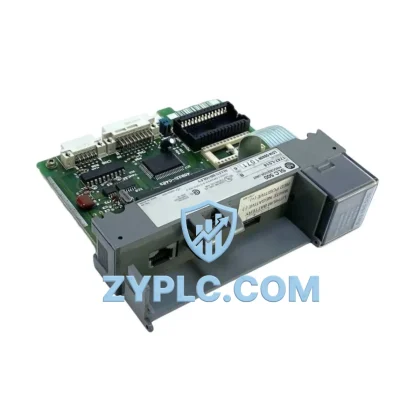
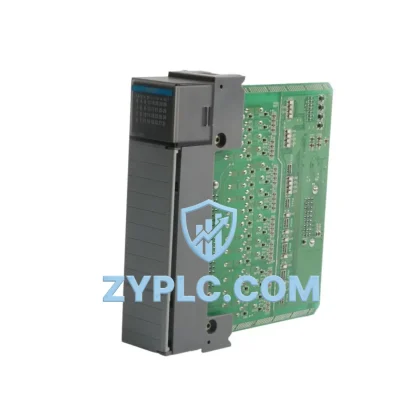
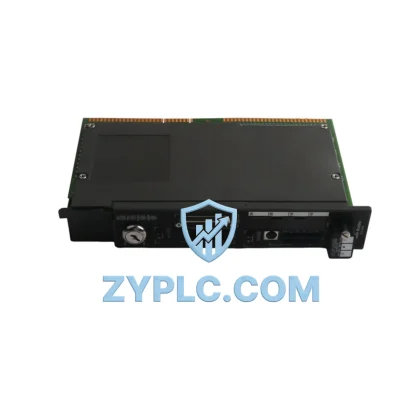
Mitsubishi BC386A504G51A Energy-Saving PLC Motherboard for Optimized MELSEC Automation
In modern industrial environments where energy costs and equipment uptime directly impact profitability, the Mitsubishi BC386A504G51A PLC motherboard stands as a critical component in achieving lean, efficient automation. Designed for the MELSEC platform, this motherboard serves as the central processing backbone of a programmable logic controller system, coordinating data acquisition, control execution, and inter-module communication with minimal power overhead. For factories seeking to reduce idle energy consumption, tighten production cycle times, and extend the operational lifespan of their automation infrastructure, the BC386A504G51A delivers measurable results across every layer of the control architecture.
The BC386A504G51A is engineered to support high-density I/O configurations without introducing unnecessary power draw. When paired with digital input modules such as the QX10 and digital output modules like the QY10, the system achieves precise, low-latency signal processing that eliminates the energy waste associated with polling delays and redundant scan cycles. This tight integration between the motherboard and I/O modules ensures that field signals from sensors, actuators, and safety interlocks are processed at optimal speed, reducing the CPU load and enabling faster production line response times.
Energy-aware automation begins at the CPU level. The Q06HCPU central processing unit, commonly deployed alongside the BC386A504G51A in MELSEC Q-series configurations, supports multi-program execution and interrupt-driven processing. This architecture allows the system to enter low-activity states during non-peak production windows, cutting standby power consumption without sacrificing control responsiveness. When integrated with the Q61P power supply module, the entire rack operates within a tightly regulated voltage envelope, preventing energy spikes that can degrade component longevity and inflate electricity costs.
Drive-level efficiency is equally important. In production lines where the BC386A504G51A governs motor control sequences, pairing the PLC system with a Mitsubishi FR-D720 inverter drive enables variable frequency control of induction motors. Rather than running motors at fixed speed regardless of load demand, the FR-D720 adjusts output frequency in real time based on PLC commands, reducing motor energy consumption by 20–50% during partial-load operations. This is particularly impactful in conveyor systems, pump stations, and HVAC-integrated manufacturing environments where load profiles fluctuate throughout the shift.
Data visibility is foundational to energy optimization. The Q64AD analog input module, when installed in the same MELSEC rack as the BC386A504G51A, enables continuous monitoring of current, voltage, and temperature signals from field instruments. This real-time data stream feeds into energy dashboards and predictive maintenance algorithms, allowing engineers to identify inefficient equipment before it causes unplanned downtime. Combined with the QJ71E71-100 Ethernet communication module, the system can transmit energy metrics to SCADA platforms and MES systems over standard TCP/IP networks, enabling plant-wide energy management without proprietary middleware.
For facilities using CC-Link or PROFIBUS fieldbus architectures, the QJ71BR11 CC-Link master module extends the BC386A504G51A’s control reach across distributed I/O stations and remote drive units. This reduces the need for dedicated local controllers at each machine cell, consolidating energy monitoring and control into a single MELSEC backbone. The result is a leaner control topology with fewer power supplies, less wiring, and reduced heat generation in control panels.
Operator visibility is maintained through the GT2710-STBA GOT2000 series HMI, which provides real-time display of energy KPIs, alarm states, and production throughput metrics. Operators can monitor kilowatt-hour consumption per production batch, compare shift-over-shift efficiency trends, and trigger energy-saving modes directly from the touchscreen interface. This closes the feedback loop between machine performance and human decision-making, enabling continuous improvement without requiring engineering intervention for routine adjustments.
Legacy system compatibility is a key strength of the BC386A504G51A. In plants still operating older MELSEC A-series networks, the A1SJ71E71-B2-S3 Ethernet interface module can bridge legacy and modern control segments, allowing the BC386A504G51A-based system to communicate with older PLCs during phased modernization projects. This protects capital investment while progressively improving energy efficiency across the plant floor.
Every BC386A504G51A unit supplied by ZYPLC undergoes full functional testing prior to shipment. Each board is verified for communication integrity, power rail stability, and slot interface performance. Units are shipped with a 12-month warranty, and stock is maintained for immediate dispatch to minimize production downtime for customers requiring urgent replacement parts.
Efficiency Performance Table
| Parameter |
Specification / Value |
| SKU / Part Number |
BC386A504G51A |
| Brand |
Mitsubishi Electric |
| Series |
MELSEC |
| Product Type |
PLC Motherboard / Base Unit |
| Compatible CPU Modules |
MELSEC Q-Series, A-Series (legacy) |
| Operating Voltage |
24V DC (via Q61P or equivalent power supply) |
| Typical Power Consumption |
Low-standby architecture; optimized for multi-slot rack efficiency |
| Communication Interfaces |
CC-Link, Ethernet (via QJ71E71-100), RS-232/485 |
| Application Environment |
Industrial automation, process control, energy management, motor drive systems |
| Energy Optimization Value |
Enables variable drive integration, real-time I/O monitoring, and distributed control consolidation |
| Origin |
Japan |
| Warranty |
12 Months (ZYPLC) |
| Pre-shipment Testing |
Full functional test on every unit |
Energy-Aware Automation Architecture
The BC386A504G51A functions as the structural hub of a MELSEC automation rack, providing the backplane connectivity that links CPU, power, I/O, and communication modules into a unified control system. In a typical energy-optimized deployment, the rack is populated with a Q06HCPU for multi-tasking control logic, a Q61P power supply for regulated DC distribution, QX10 digital input modules for field signal acquisition, and QY10 transistor output modules for actuator control. Analog energy data is captured via the Q64AD module, while network connectivity is handled by the QJ71E71-100 Ethernet module and the QJ71BR11 CC-Link master for distributed field devices.
At the drive layer, the FR-D720 inverter receives speed reference commands from the PLC over CC-Link or analog output, enabling closed-loop motor speed control that tracks actual production demand rather than running at fixed rated speed. Operator interaction is managed through the GT2710-STBA HMI, which displays live energy data and allows shift supervisors to activate energy-saving presets during low-demand periods. For plants with mixed-generation equipment, the A1SJ71E71-B2-S3 module bridges legacy MELSEC networks into the modern control architecture, ensuring no stranded assets during the transition to energy-efficient automation.
Power Optimization in Real Production Lines
In automotive component manufacturing, the BC386A504G51A has been deployed to coordinate multi-axis servo positioning, conveyor indexing, and press cycle control within a single MELSEC rack. By consolidating these functions onto one backplane rather than distributing them across multiple standalone controllers, the plant reduced control panel power consumption by eliminating redundant power supplies and communication gateways. Cycle time consistency improved as inter-controller communication latency was eliminated, and the engineering team gained a single point of energy data aggregation for monthly reporting.
In food and beverage processing, the BC386A504G51A manages filling line sequencing and CIP (clean-in-place) cycle automation. Integration with the FR-D720 drive on pump motors reduced energy consumption during low-flow CIP phases by 35%, as the drive modulates pump speed to match actual flow demand rather than running at full rated speed throughout the cleaning cycle. Predictive maintenance alerts generated from Q64AD current monitoring data have reduced unplanned motor failures by flagging bearing wear signatures before they cause line stoppages.
In water treatment facilities, the BC386A504G51A coordinates aeration blower control, dosing pump sequencing, and SCADA data reporting via the QJ71E71-100 Ethernet module. Variable speed control of blower motors through the FR-D720 has delivered measurable reductions in daily kilowatt-hour consumption, with the PLC adjusting blower output based on dissolved oxygen sensor feedback captured through the Q64AD analog module. Maintenance intervals have been extended by 20% due to reduced mechanical stress from soft-start and variable-speed operation.
Energy Optimization FAQ
Q1: How does the BC386A504G51A contribute to energy savings in a MELSEC system?
The BC386A504G51A provides the backplane infrastructure that enables tight integration between CPU, I/O, analog monitoring, and drive communication modules. This consolidated architecture eliminates the energy overhead of standalone controllers and communication gateways, while enabling real-time data exchange that supports variable drive control, demand-based motor speed adjustment, and predictive maintenance — all of which directly reduce energy consumption and unplanned downtime.
Q2: Is the BC386A504G51A compatible with both Q-series and A-series MELSEC systems?
The BC386A504G51A is a MELSEC-series base unit designed for Q-series rack configurations. Legacy A-series integration can be achieved through communication bridge modules such as the A1SJ71E71-B2-S3, allowing phased modernization without full system replacement. Always verify slot count and power supply compatibility before deployment.
Q3: What is the replacement and testing process when ordering from ZYPLC?
Every BC386A504G51A unit is tested for full functional performance prior to shipment, including backplane communication integrity, power rail verification, and slot interface checks. Units are packaged for safe transit and shipped with documentation. A 12-month warranty covers defects in materials and workmanship from the date of delivery.
Q4: Can this motherboard support energy monitoring and SCADA integration?
Yes. When combined with the QJ71E71-100 Ethernet communication module and the Q64AD analog input module, the BC386A504G51A-based system can transmit real-time energy data — including current draw, voltage levels, and power consumption metrics — to SCADA, MES, or energy management platforms over standard Ethernet networks. This enables plant-wide energy visibility without proprietary software dependencies.
© 2026 ZYPLC. All rights reserved.
Original Source: https://zyplc.com
Contact: +86 19859288691 | plc.sales@zyplc.com