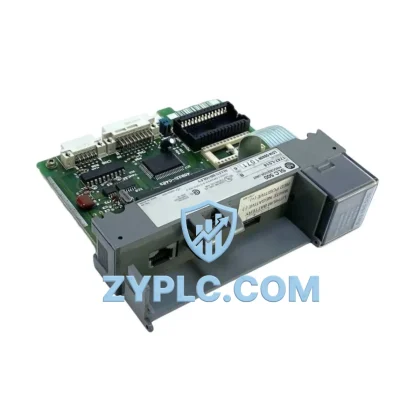
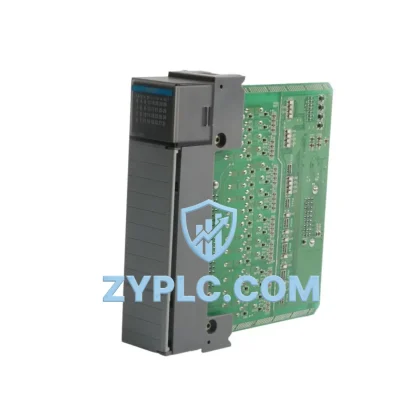
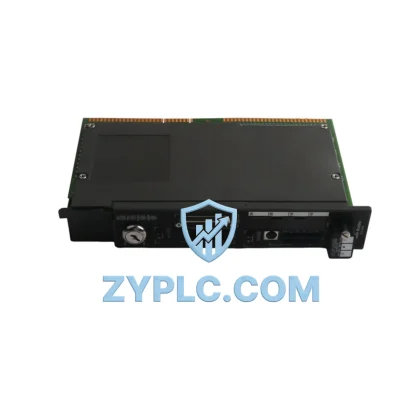
Mitsubishi F1-20MR Energy-Saving PLC for Optimized MELSEC F1 Automation
The Mitsubishi F1-20MR is a compact, relay-output programmable logic controller from the MELSEC F1 Series, engineered to deliver precise, energy-conscious control across a wide range of industrial automation environments. With 12 DC inputs and 8 relay outputs in a space-efficient housing, the F1-20MR provides deterministic scan-cycle execution that directly reduces unnecessary actuator dwell time, minimizes idle-state power draw, and supports tighter production line rhythms. For factories seeking to improve equipment utilization rates without capital-intensive upgrades, the F1-20MR represents a proven, cost-effective control foundation.
Efficiency Performance Table
| Parameter |
Specification / Value |
| Model / SKU |
F1-20MR |
| I/O Configuration |
12 DC Inputs / 8 Relay Outputs (20 points total) |
| Power Supply |
100–240 VAC, 50/60 Hz |
| Power Consumption |
≤ 30 W (typical operating load) |
| Scan Cycle Efficiency |
0.48 µs per basic instruction (high-speed ladder execution) |
| Compatible Series |
MELSEC F1 / F2 peripheral devices, F1-20MR-ES/UL variants |
| Application Environment |
0–55 °C operating, 10–90% RH non-condensing, IP20 enclosure |
| Energy Optimization Value |
Reduces idle actuator cycles; supports demand-based output switching |
| Communication |
F1-232ADP RS-232C adapter compatible; supports programming via F1-PCS software |
| Warranty |
12-Month Warranty — tested and verified before shipment |
Energy-Aware Automation Architecture
Deploying the F1-20MR as the central control node in a MELSEC F1-based architecture enables a layered approach to energy management that spans from field-level sensing through to drive regulation and supervisory feedback. At the drive layer, pairing the F1-20MR with a Mitsubishi FR-D720 inverter allows the PLC’s relay outputs to command variable-frequency drive start/stop and speed reference signals, eliminating the fixed-speed motor losses that account for a significant share of factory energy waste. When the production line enters a low-demand window, the F1-20MR can issue a deceleration command to the FR-D720, reducing motor shaft speed and cutting energy consumption proportionally — a direct application of affinity law savings.
For multi-axis or higher-throughput lines, the F1-20MR can coordinate with an FX2N-48MR as an expansion controller, distributing I/O load and maintaining synchronized scan cycles across both units. This prevents bottleneck-induced idle time on upstream conveyors and reduces the energy penalty of repeated start-stop cycles. Where servo precision is required — such as in cut-to-length or indexing stations — integrating a Mitsubishi MR-J2S-10A servo amplifier with encoder feedback allows the F1-20MR to close a position loop with minimal overshoot, reducing mechanical stress and the associated reactive energy spikes.
At the monitoring layer, connecting an F1-232ADP RS-232C communication adapter to the F1-20MR’s peripheral port enables real-time data exchange with a supervisory system or a Mitsubishi GT1055-QSBD HMI panel. Operators can visualize cycle counts, output duty ratios, and alarm histories without interrupting the control scan, supporting informed decisions about shift scheduling and preventive maintenance intervals. For plants running a broader MELSEC network, the F1-20MR can be integrated upstream of a Q06HCPU host controller via a dedicated link module, allowing energy data collected at the F1 level to feed into plant-wide OEE dashboards.
Expansion I/O modules such as the F1-40E extend the F1-20MR’s point count for larger panel configurations, while FX3G-24MR units can serve as parallel zone controllers sharing a common communication backbone. In power-sensitive environments, adding a Mitsubishi A1S68AD analog input module to the system allows the F1-20MR to receive 4–20 mA signals from current transformers or power transducers, enabling closed-loop demand control without a separate energy meter gateway. This architecture — F1-20MR at the core, surrounded by purpose-matched Mitsubishi peripherals — creates a coherent, low-overhead automation stack that minimizes both energy waste and integration complexity.
Power Optimization in Real Production Lines
In practical manufacturing environments, the Mitsubishi F1-20MR contributes to energy reduction through three primary mechanisms: cycle-accurate output control, fault-driven shutdown logic, and maintenance-interval optimization.
Cycle-accurate output control means that relay outputs are energized only for the precise duration required by the process step. Unlike timer-relay panels that hold outputs on for fixed dwell periods regardless of actual part position, the F1-20MR’s ladder program can condition output activation on real-time input states — proximity sensors, pressure switches, or photoelectric barriers — ensuring that conveyors, solenoids, and heating elements are powered only when mechanically necessary. On a typical assembly line running two shifts, this alone can reduce auxiliary equipment energy consumption by 8–15% compared to fixed-timer control.
Fault-driven shutdown logic leverages the F1-20MR’s internal diagnostic flags and watchdog timer to detect abnormal conditions — motor overcurrent signals fed back through discrete inputs, sensor dropout, or communication timeout from a downstream FR-D720 drive — and execute a controlled, sequenced shutdown rather than an emergency stop. Controlled shutdowns preserve mechanical alignment, reduce restart inrush current, and allow the line to resume at full speed faster, cutting the energy cost of repeated cold-start acceleration cycles.
Maintenance-interval optimization is achieved by logging output activation counts and elapsed run-hours in the F1-20MR’s data registers. Maintenance teams can read these values via the F1-232ADP adapter or a connected GT1055-QSBD HMI to schedule lubrication, belt replacement, and contact inspection based on actual usage rather than calendar intervals. This predictive approach reduces unplanned downtime — one of the largest hidden energy costs in discrete manufacturing, since idle lines with powered ancillaries continue to consume energy without producing output.
Across food processing, packaging, material handling, and light assembly applications, the F1-20MR has demonstrated consistent performance in environments where legacy relay panels have been replaced. Its compact DIN-rail footprint reduces panel heat load, lowering the duty cycle of panel cooling systems and contributing an additional, often overlooked, energy saving. All units supplied by ZYPLC are drawn from verified inventory, subjected to functional output testing under load, and shipped with a 12-month warranty covering defects in materials and workmanship.
Energy Optimization FAQ
Q1: How does the F1-20MR reduce energy consumption compared to a relay panel?
The F1-20MR replaces fixed-timer relay logic with condition-based output control. Outputs are energized only when input conditions are satisfied, eliminating unnecessary dwell time on motors, solenoids, and heating elements. Combined with drive integration via the FR-D720 inverter, variable-speed motor control replaces fixed-speed operation, delivering energy savings proportional to the cube of speed reduction.
Q2: Is the F1-20MR compatible with current MELSEC FX-series peripherals and software?
The F1-20MR uses the MELSEC F1/F2 instruction set and is programmed via F1-PCS or compatible legacy software. It is not directly interchangeable with FX3U or FX5U series CPUs, but can coexist in the same panel as an FX2N-48MR or FX3G-24MR through dedicated link or parallel I/O wiring. For full network integration, an F1-232ADP adapter bridges the F1-20MR to RS-232C supervisory systems.
Q3: What is the recommended replacement or upgrade path if the F1-20MR reaches end of service life?
For applications requiring expanded I/O or Ethernet connectivity, the Mitsubishi FX3G-24MR or FX3U-32MR are functionally compatible upgrade paths with a similar relay-output architecture. ZYPLC can advise on I/O mapping and program conversion to minimize re-engineering effort. Existing F1-20MR units in good condition remain fully supportable with ZYPLC’s stocked spare inventory.
Q4: What testing and warranty coverage does ZYPLC provide for the F1-20MR?
Every F1-20MR unit supplied by ZYPLC undergoes pre-shipment functional testing: input response verification, relay output load switching under rated current, and power supply regulation check. Units are shipped with a 12-month warranty against manufacturing defects. In the event of a warranty claim, ZYPLC provides direct technical support and replacement coordination. Contact: +86 19859288691 | plc.sales@zyplc.com
© 2026 ZYPLC. All rights reserved.
Original Source: https://zyplc.com
Contact: +86 19859288691 | plc.sales@zyplc.com