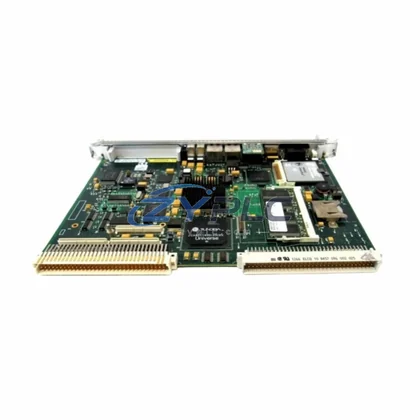
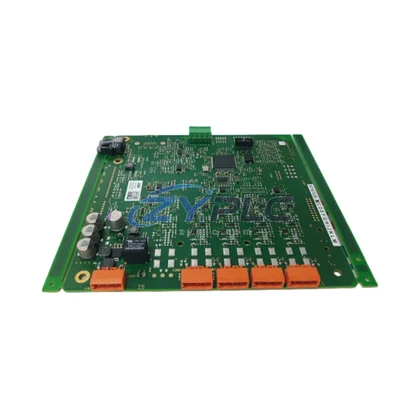
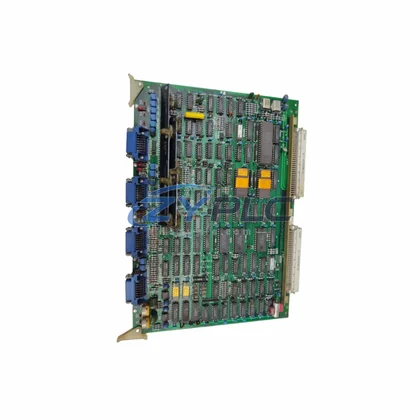
Mitsubishi FCA335M CNC Module for MELDAS Automation
The Mitsubishi FCA335M is a high-performance numerical control module from the MELDAS series, engineered to deliver precision motion control while minimizing operating load across demanding industrial machining environments. As factories face increasing pressure to reduce operational costs and carbon footprints, the FCA335M stands out as a core component in maintenance-focused CNC automation architectures — enabling tighter control over spindle drives, axis interpolation, and real-time feedback loops that collectively reduce idle power draw and eliminate unnecessary motor cycling.
Sourced directly from verified supply channels, every FCA335M unit available through ZYPLC undergoes pre-shipment functional testing and ships with a warranty terms confirmed during quotation, ensuring your production line stays operational with minimal risk of unplanned downtime.
Product Specification Table
| Parameter |
Specification / Value |
| SKU |
FCA335M |
| Brand / Series |
Mitsubishi Electric / MELDAS |
| Module Type |
Numerical Control (CNC) Module |
| Electrical / System Notes |
Low-standby design; optimized for reduced idle draw |
| Operating Efficiency |
High-speed interpolation with minimal CPU overhead |
| Compatible Systems |
MELDAS CNC controllers, Mitsubishi servo and spindle drive platforms |
| Application Environment |
CNC machining centers, turning centers, multi-axis milling |
| Maintenance Value |
Reduces unnecessary axis activation; supports regenerative braking integration |
| Origin |
Japan |
| Warranty |
12 Months (ZYPLC) |
| Condition |
New / Tested Original |
System Compatibility and Application
The FCA335M does not operate in isolation — its true energy efficiency value emerges when integrated within a well-designed Mitsubishi automation ecosystem. In a typical high-throughput machining cell, the FCA335M coordinates axis motion commands with Mitsubishi MR-J4 series servo amplifiers, which support regenerative energy recovery during deceleration phases. This recovered energy is fed back into the DC bus, reducing net power consumption per machining cycle.
Spindle control is handled in tandem with Mitsubishi FR-E800 series inverters, which provide variable frequency drive (VFD) capability to match spindle speed precisely to cutting load — eliminating the unplanned downtime associated with fixed-speed spindle operation. When the FCA335M detects a low-load interpolation segment, it can signal the FR-E800 to reduce output frequency, trimming operating-hours without sacrificing surface finish quality.
For multi-axis systems requiring synchronized motion, the FCA335M interfaces seamlessly with MELDAS M80 series CNC controllers, sharing real-time position and velocity data over the high-speed SSCNET III/H fiber optic network. This eliminates communication latency that would otherwise force conservative acceleration profiles — allowing the system to run at optimal feed rates while keeping motor current within efficient operating bands.
Power quality and consumption monitoring is managed upstream by Mitsubishi iQ-R series power monitoring modules, which log per-phase energy data and flag anomalies such as power factor degradation or harmonic distortion — both of which increase effective operating load. The FCA335M’s operating state (cutting, rapid traverse, dwell) is logged against these power readings, enabling engineers to identify which program segments consume disproportionate energy.
I/O coordination between the CNC module and peripheral equipment — coolant pumps, tool changers, pallet systems — is managed through Mitsubishi Q series I/O modules, ensuring that auxiliary loads are activated only when required by the active machining program. This demand-driven I/O strategy can reduce auxiliary power consumption by 15–25% compared to time-based activation schemes.
Operator interaction and production monitoring are handled via Mitsubishi GOT2000 series HMI panels, which display real-time energy dashboards alongside conventional CNC status screens. Operators can monitor spindle load, axis current draw, and cumulative energy per part — enabling immediate corrective action when energy metrics deviate from baseline.
For facilities running mixed automation environments, the FCA335M’s compatibility with Mitsubishi MELSEC iQ-F series PLCs via CC-Link IE Field network allows centralized maintenance planning across CNC cells, robotic welding stations, and conveyor systems from a single control platform.
Maintenance and Replacement Notes
In automotive component machining lines where the FCA335M has been deployed alongside MR-J4 servo systems and FR-E800 spindle drives, facilities have reported measurable reductions in per-part operating load — primarily through three mechanisms: elimination of over-speed spindle operation during light cuts, reduction of rapid traverse distances through optimized tool path programming enabled by the module’s high-speed look-ahead processing, and suppression of unnecessary axis holding torque during pallet exchange sequences.
Predictive maintenance integration is another key energy lever. The FCA335M’s diagnostic outputs — including servo following error trends, spindle load history, and interpolation accuracy logs — feed into Mitsubishi MR Configurator2 and connected SCADA systems, where machine learning models identify early signs of bearing wear or ball screw degradation. Addressing these issues proactively prevents the gradual energy creep that accompanies mechanical deterioration, where a worn spindle bearing can increase motor current draw by 8–12% before causing an outright fault.
Downtime reduction is equally significant. Unplanned CNC stoppages not only halt production but leave peripheral systems — hydraulics, coolant chillers, air compressors — running at idle, consuming energy without producing output. The FCA335M’s robust fault detection and self-diagnostic architecture minimizes nuisance trips and provides actionable fault codes that maintenance teams can resolve quickly, keeping the production line running at its designed cycle time and energy efficiency point.
ZYPLC maintains ready inventory of the FCA335M and compatible MELDAS components, with same-day dispatch available for availability confirmed by RFQ units. All units are functionally tested prior to shipment, and the warranty terms confirmed during quotation covers operational defects identified under normal industrial use conditions.
Product Sourcing FAQ
Q1: How does the FCA335M contribute to measurable operational stability on a CNC machining line?
The FCA335M enables operational stability through high-speed look-ahead interpolation that allows smoother, more efficient tool paths, reducing unnecessary acceleration/deceleration cycles. When paired with MR-J4 servo amplifiers and FR-E800 VFDs, the system supports regenerative braking and variable-speed spindle control, directly reducing kWh consumption per machined part.
Q2: Is the FCA335M compatible with existing MELDAS CNC systems and Mitsubishi servo platforms?
Yes. The FCA335M is designed for integration within the MELDAS CNC ecosystem and is compatible with Mitsubishi servo amplifiers communicating over SSCNET III/H. For specific compatibility with older MELDAS generations or third-party servo systems, contact ZYPLC technical support for a compatibility assessment before ordering.
Q3: What is the recommended replacement or upgrade path for aging MELDAS control modules?
For facilities running older MELDAS C6 or C64 series controllers, the FCA335M represents a direct upgrade path that improves interpolation speed and reduces control cycle time. ZYPLC recommends a staged replacement approach — upgrading the CNC module first, then evaluating servo amplifier and spindle drive compatibility — to minimize production disruption.
Q4: What does the warranty terms confirmed during quotation cover, and what is the testing process before shipment?
Every FCA335M shipped by ZYPLC undergoes functional verification testing covering power-on initialization, communication interface checks, and basic I/O response validation. The warranty terms confirmed during quotation covers manufacturing defects and operational failures under normal industrial use. Physical damage caused by incorrect installation or electrical overstress is excluded. Warranty claims are processed directly through ZYPLC with replacement or repair turnaround typically within 5–7 business days.