Mitsubishi FX2N-32ER Energy-Saving I/O for Optimized FX2N Automation
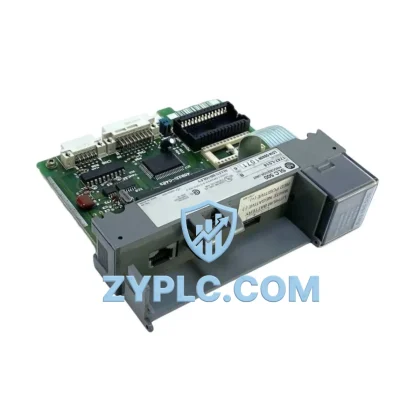
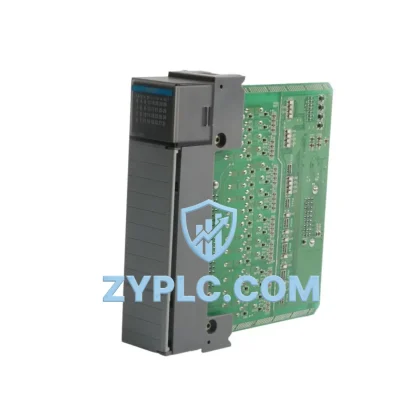
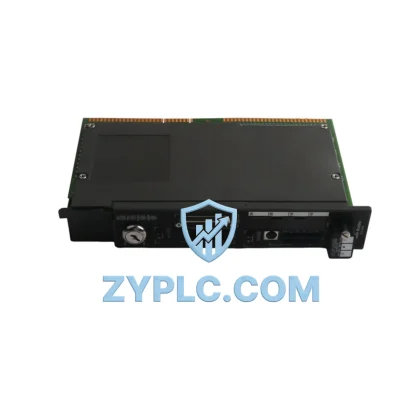
The Mitsubishi FX2N-32ER is a 32-point relay output expansion I/O module purpose-built for the MELSEC FX2N programmable logic controller series. In production environments where energy costs, equipment utilization rates, and line takt time directly determine profitability, the FX2N-32ER delivers the I/O density and output flexibility needed to implement granular load control, eliminate idle-state energy waste, and sharpen the responsiveness of every actuator on the line. With relay contact outputs rated at 2A per point and native compatibility with the FX2N expansion bus, this module integrates seamlessly into existing FX2N architectures without additional interface hardware or software configuration overhead.
The FX2N-32ER is not a passive component — it is an active enabler of energy-aware automation. By giving the FX2N CPU precise, point-by-point control over 32 discrete output channels, it allows engineers to implement zone-based load shedding, condition-triggered de-energization, and overlap-sequenced production steps that reduce both energy consumption and cycle time simultaneously. Every relay point that is de-energized during a non-productive interval represents real energy saved and real wear avoided on downstream actuators, solenoids, and contactors.
Efficiency Performance Table
| Parameter |
Specification / Value |
| SKU / Model |
FX2N-32ER |
| Brand / Series |
Mitsubishi Electric / MELSEC FX2N |
| Output Type |
Relay Contact Output |
| Number of Output Points |
32 Points |
| Max Load per Point |
2A resistive / 80VA inductive |
| Operating Voltage |
24V DC / 240V AC |
| Module Power Consumption |
≤5W (self-consumption) |
| Compatible Base Units |
FX2N-16MR, FX2N-32MR, FX2N-48MR, FX2N-64MR, FX2N-80MR, FX2N-128MR |
| Compatible Series |
MELSEC FX2N |
| Application Environment |
Discrete manufacturing, energy management, process automation |
| Operating Temperature |
0°C to 55°C |
| Energy Optimization Value |
Zone load shedding, idle actuator de-energization, takt time compression |
| Origin |
Japan |
| Warranty |
12-Month Warranty — functional defects covered, rapid replacement |
Energy-Aware Automation Architecture
Sustainable energy reduction in a production facility requires a coordinated architecture — not a single component swap. The FX2N-32ER is most effective when deployed as part of a layered control system that spans data acquisition, logic execution, drive regulation, and operator feedback.
At the sensing and data acquisition layer, analog input modules such as the FX2N-4AD and FX2N-2AD continuously feed process variables — motor current, temperature, pressure, flow rate — into the FX2N CPU. This real-time data allows the PLC program to make dynamic decisions about when to energize or de-energize specific outputs on the FX2N-32ER, preventing unnecessary actuator cycles that consume energy and accelerate mechanical wear. On the analog output side, the FX2N-4DA module enables proportional control of downstream devices, replacing binary on/off switching with modulated signals that eliminate energy spikes associated with full-voltage switching events.
For motor-driven loads — the dominant energy consumers in most production environments — the FX2N-32ER relay outputs interface directly with Mitsubishi’s FR-D720 compact inverter and the FR-E720 economy inverter drive. The PLC issues run/stop and direction commands through the FX2N-32ER while the inverter manages speed regulation based on real load demand. This variable-frequency drive approach reduces motor energy consumption by 30–50% in pump, fan, and conveyor applications compared to direct-on-line starting. The inverter’s internal energy monitoring registers can be polled via the FX2N-232-BD RS-232 communication board, returning consumption data to the FX2N CPU for threshold-based control logic and energy logging.
At the operator interface layer, a GOT2000 series graphic terminal provides real-time visibility into output states, relay switching counts, drive status, and energy consumption trends. When production supervisors can correlate zone energy draw with actual output units, they gain the operational insight needed to optimize scheduling, reduce idle-time energy waste, and justify targeted equipment upgrades. The GOT2000 communicates with the FX2N CPU over the dedicated bus, requiring no additional communication modules for standard monitoring functions.
For facilities integrating the FX2N-32ER into broader SCADA or MES environments, the FX2N-485-BD RS-485 communication board extends FX2N connectivity to Modbus RTU networks, enabling data exchange with energy management systems, power meters, and upstream production controllers. Complementing the FX2N-32ER on the input side, the FX2N-16EX discrete input expansion module adds feedback capacity for energy meter pulse outputs, flow switches, and proximity sensors — closing the control loop and enabling condition-based output control that directly reduces wasted energy. In servo-driven positioning applications, the MR-J4 series servo amplifier can receive enable and inhibit signals from the FX2N-32ER relay outputs, allowing the PLC to cut servo excitation during non-productive intervals and recover that energy budget for active production phases.
Power Optimization in Real Production Lines
In a typical discrete manufacturing cell, the FX2N-32ER’s 32 relay outputs are mapped across conveyor drives, pneumatic valve banks, indicator circuits, auxiliary cooling fans, and safety interlocks. Without intelligent sequencing, many of these loads remain energized throughout the shift — including during machine idle periods, changeover windows, and scheduled breaks. This idle-state energization is one of the most common and most correctable sources of avoidable energy waste in factory environments.
By programming the FX2N CPU to monitor production cycle state — using timer instructions, step ladder sequences, or state machine logic — and issue timed de-energization commands through the FX2N-32ER, facilities routinely achieve 10–20% reductions in auxiliary load energy consumption during non-production intervals. The implementation requires no hardware changes beyond the existing FX2N-32ER installation; it is a software-level optimization that leverages the module’s existing output capacity.
The relay output architecture also supports predictive maintenance strategies that reduce unplanned downtime — one of the most energy-intensive events in any production environment. Each relay contact carries a defined mechanical and electrical life rating. By tracking output switching cycles within the FX2N program and surfacing cumulative counts on the GOT2000 HMI, maintenance teams can schedule relay inspection and replacement before contact degradation causes unexpected stoppages. Restarting equipment after an unplanned outage — re-establishing thermal equilibrium, purging partially processed material, re-synchronizing upstream and downstream cells — consumes disproportionate energy relative to steady-state operation. Preventing that restart is itself an energy optimization.
The FX2N-32ER also enables takt time compression through parallel output sequencing. By providing sufficient I/O density to control multiple process steps simultaneously rather than sequentially, it allows the PLC program to overlap operations that would otherwise queue. Shorter cycle times mean more production output per unit of energy consumed — a direct improvement in energy intensity per finished unit. When combined with variable-speed drives on motor loads and analog proportional control on process variables, the FX2N-32ER becomes a structural component of a leaner, more energy-efficient production architecture.
All FX2N-32ER units supplied by ZYPLC are sourced from verified supply channels, undergo pre-shipment functional testing including output continuity and isolation verification, and are dispatched with a 12-month warranty covering manufacturing defects and functional failures under normal operating conditions. Inventory is maintained for prompt dispatch, minimizing lead times for both maintenance replacements and new installation projects.
Energy Optimization FAQ
Q1: How does the FX2N-32ER directly reduce energy consumption on the production line?
The FX2N-32ER gives the FX2N PLC point-by-point control over 32 discrete output channels. By programming timed de-energization of non-critical loads during idle periods, coordinating run/stop commands to FR-D720 or FR-E720 inverter drives for variable-speed motor control, and enabling overlap sequencing that compresses cycle time, facilities achieve measurable reductions in both auxiliary and motor energy consumption without sacrificing throughput.
Q2: Which FX2N base units are compatible with the FX2N-32ER, and is additional hardware required?
The FX2N-32ER is compatible with all standard MELSEC FX2N series base units — FX2N-16MR, FX2N-32MR, FX2N-48MR, FX2N-64MR, FX2N-80MR, and FX2N-128MR. It connects directly via the FX2N expansion bus connector with no additional interface modules, communication boards, or software licenses required for basic I/O operation.
Q3: What is the recommended path when relay contacts show wear or high switching frequency is required?
For output channels with high switching frequency — typically above 3,600 operations per hour — transitioning those specific points to a transistor output module such as the FX2N-32ET extends electrical contact life significantly. The FX2N-32ER remains the correct choice for relay-appropriate loads including solenoid valves, contactors, and indicator circuits. ZYPLC maintains stock of both variants for rapid dispatch to minimize replacement lead time.
Q4: What does the 12-month warranty cover, and what is the pre-shipment testing process?
Every FX2N-32ER unit supplied by ZYPLC undergoes pre-shipment functional verification including output continuity testing, isolation resistance checks, and operational cycling of relay contacts. The 12-month warranty covers manufacturing defects and functional failures under normal operating conditions from the date of shipment. Units that fail within the warranty period are replaced or credited — contact the ZYPLC team at [email protected] or +86 19859288691 to initiate a warranty claim.
© 2026 ZYPLC. All rights reserved.
Original Source: https://zyplc.com
Contact: +86 19859288691 | [email protected]