Mitsubishi GB250H-3F: Battery Backup Integration in MELSEC Control System Architecture
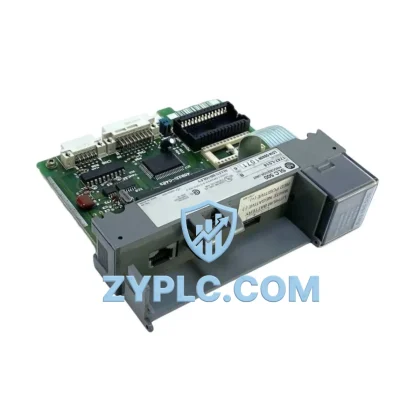
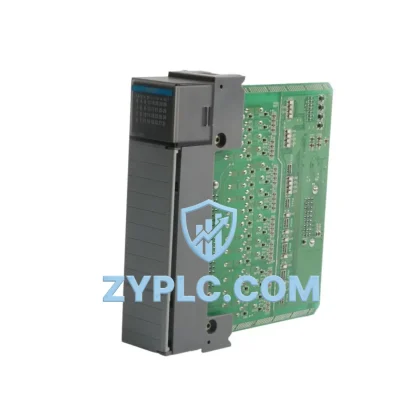
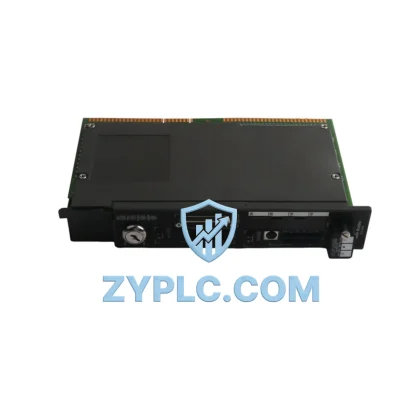
The Mitsubishi GB250H-3F is a dedicated battery backup module engineered for seamless integration within the MELSEC-Q series programmable logic controller (PLC) architecture. In any layered industrial automation system, maintaining data integrity during power interruptions is not optional — it is a fundamental requirement for operational continuity. The GB250H-3F serves this critical role by providing reliable memory retention for CPU modules, ensuring that program data, device memory, and system parameters remain intact through unexpected power loss events, planned shutdowns, and maintenance windows.
Within a complete MELSEC-Q control system, the GB250H-3F operates in direct coordination with the CPU module — such as the Q06UDEHCPU or Q03UDECPU — mounted on the main base unit. The battery module connects to the CPU’s dedicated battery connector, supplying backup voltage to SRAM and other volatile memory areas. This architectural approach means that even during extended outages, critical recipe data, accumulated counters, and real-time process variables are preserved without requiring a full system re-initialization upon restart.
Architecture Specification Table
| Parameter |
Specification |
| Model Number |
GB250H-3F |
| Manufacturer |
Mitsubishi Electric |
| Series |
MELSEC-Q |
| System Role |
Battery Backup / Memory Retention Module |
| Compatible CPUs |
MELSEC-Q Series (Q06UDEHCPU, Q03UDECPU, Q13UDEHCPU, etc.) |
| Battery Type |
Lithium (ER6V equivalent) |
| Nominal Voltage |
3.6V DC |
| Mounting |
Direct CPU connector on Q-series base unit |
| Operating Temperature |
0°C to 55°C |
| Storage Temperature |
-20°C to 75°C |
| Expected Battery Life |
Approximately 5 years (ambient 25°C, continuous backup) |
| Warranty |
12-Month Warranty |
Coordinated Control System Design
No industrial control module operates in isolation. The GB250H-3F finds its architectural significance when considered alongside the broader MELSEC-Q platform ecosystem. In a typical system rack, the Q61P power supply module delivers regulated DC power to the backplane, energizing the CPU, I/O modules, and communication interfaces. When this primary power source is interrupted, the GB250H-3F immediately assumes responsibility for memory preservation within the CPU.
Consider a mid-scale manufacturing line controlled by a Q06UDEHCPU processor mounted on a Q38B base unit. The I/O layer might include digital input modules such as the QX42 and digital output modules like the QY42P, handling field-level signals from proximity sensors, limit switches, solenoid valves, and motor contactors. Analog process variables — temperature, pressure, flow — are managed through modules like the Q64AD analog input card. On the communication layer, a QJ71E71-100 Ethernet module provides connectivity to SCADA systems and upper-level MES platforms, while a QJ61BT11N CC-Link master module coordinates distributed I/O stations across the plant floor.
In this architecture, the GB250H-3F protects not just static program code but also dynamic operational data — PID tuning parameters accumulated over weeks of process optimization, production batch counters critical for traceability, and fault history logs essential for predictive maintenance strategies. Without reliable battery backup, a single power event could erase hours of calibration work and force costly re-commissioning procedures.
For systems requiring enhanced reliability, engineers often deploy redundant CPU configurations using modules such as the QD51 tracking cable alongside dual CPU setups. In these redundant architectures, each CPU requires its own GB250H-3F battery module to ensure that both the active and standby processors maintain synchronized memory states. This dual-battery approach is standard practice in critical infrastructure applications where failover must be seamless and data-consistent.
Application in Layered Automation Systems
Manufacturing and Assembly Lines: In automotive body shops and electronics assembly facilities, the MELSEC-Q system manages complex sequencing logic, robot coordination, and quality inspection routines. The GB250H-3F ensures that production counters, shift data, and recipe parameters survive power fluctuations common in heavy industrial environments where large motor starts and welding operations create transient disturbances on the supply network.
Power Generation and Distribution: Turbine control systems and substation automation platforms built on MELSEC-Q architecture rely on accumulated operational data for efficiency optimization and regulatory compliance logging. Battery backup integrity directly impacts the ability to maintain continuous historical records required by grid operators and safety authorities.
Water and Wastewater Treatment: Process control in treatment plants involves long-duration PID loops for chemical dosing, flow regulation, and aeration control. The GB250H-3F preserves tuned PID parameters and totalizer values that represent months of process optimization, preventing the need for manual re-tuning after power restoration.
Petrochemical and Refining: In hazardous area applications, MELSEC-Q systems manage safety interlocks and emergency shutdown sequences. Memory retention through the GB250H-3F ensures that safety-critical parameters and alarm setpoints are never lost, maintaining compliance with IEC 61511 and related functional safety standards.
Mining and Metallurgy: Conveyor control systems, crusher sequencing, and furnace temperature management in remote mining operations face frequent power quality issues. The GB250H-3F provides a critical safety net for operational data in environments where technical support response times may be measured in hours rather than minutes.
Architecture Engineering FAQ
Q1: Is the GB250H-3F compatible with all MELSEC-Q series CPU modules?
The GB250H-3F is designed for MELSEC-Q series CPUs featuring a battery connector, including the Q06UDEHCPU, Q03UDECPU, Q13UDEHCPU, and related Universal model CPUs. Always verify compatibility with the specific CPU hardware manual. For MELSEC iQ-R series systems, consult the iQ-R battery module specifications as connector formats differ between generations.
Q2: How does the GB250H-3F integrate into a redundant control system architecture?
In redundant MELSEC-Q configurations, each CPU in the active-standby pair requires its own dedicated GB250H-3F module. The battery modules operate independently, ensuring that both processors retain memory contents during power loss. Combined with tracking cables and redundant power supplies such as dual Q61P modules on separate feeds, the GB250H-3F contributes to a comprehensive high-availability architecture suitable for continuous process industries.
Q3: What maintenance schedule is recommended, and what warranty coverage applies?
Mitsubishi Electric recommends proactive battery replacement based on the CPU’s low-battery warning indicator, typically before the 5-year expected life at 25°C ambient. Higher operating temperatures reduce battery life proportionally. All GB250H-3F modules supplied by ZYPLC include a 12-Month Warranty covering manufacturing defects and premature capacity loss. For long-term maintenance planning, stocking a spare GB250H-3F alongside critical spare parts such as backup CPU modules and power supplies is considered best practice in mission-critical installations.
© 2026 ZYPLC. All rights reserved.
Original Source: https://zyplc.com
Contact: +86 19859288691 | plc.sales@zyplc.com