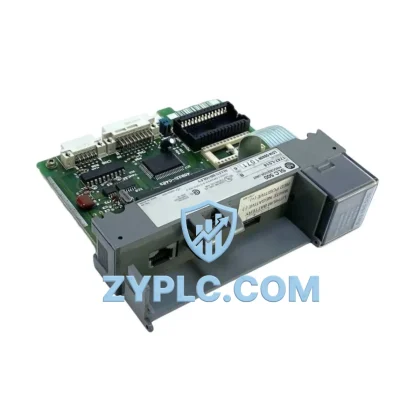
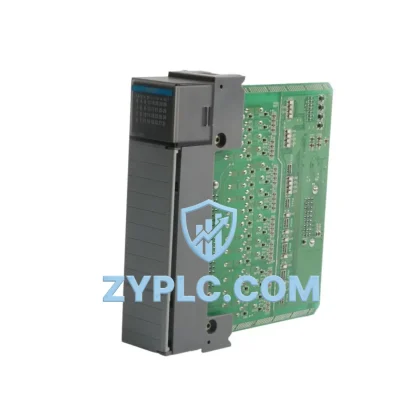
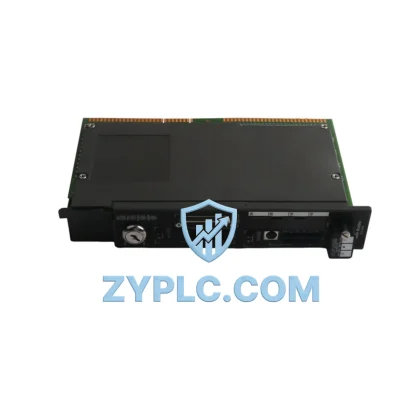
Mitsubishi GX41N Energy-Saving PLC Input Module | MELSEC-A: Precision Input Control for Optimized Automation Efficiency
The Mitsubishi GX41N is a DC input module engineered for the MELSEC-A series programmable logic controller platform — one of Mitsubishi Electric’s most widely deployed legacy automation architectures in discrete manufacturing, process control, and energy-intensive production environments. In facilities where every millisecond of scan cycle and every watt of consumed power matters, the GX41N delivers the signal integrity and input response consistency that modern energy-aware automation demands.
Unlike generic replacement modules, the GX41N is designed to integrate seamlessly into existing MELSEC-A backplane configurations, preserving the deterministic I/O behavior that production engineers rely on for tight cycle control. When paired with Mitsubishi’s broader automation ecosystem — including the A1SJ71QBR11 bus interface unit and A1SD61 positioning module — the GX41N enables a cohesive control architecture that minimizes unnecessary polling overhead and reduces idle-state power draw across the I/O bus.
Efficiency Performance Table
| Parameter |
Specification |
| Module Type |
DC Input Module |
| Series Compatibility |
MELSEC-A (Mitsubishi Electric) |
| Input Points |
32 Points (DC 24V) |
| Input Voltage |
DC 24V ±10% |
| Input Current per Point |
Approx. 7 mA (at DC 24V) |
| Response Time (ON) |
≤ 10 ms (standard filter) |
| Operating Temperature |
0°C to 55°C |
| Compatible Systems |
MELSEC-A Series CPU, A1S, A2S, A3 backplanes |
| Application Environment |
Discrete manufacturing, process automation, energy monitoring panels |
| Energy Optimization Value |
Reduces unnecessary I/O scan overhead; supports lean signal architecture |
| Warranty |
12-Month Warranty | Outgoing inspection tested before shipment |
Energy-Aware Automation Architecture
Effective energy optimization in industrial automation is not achieved by a single component — it is the result of a well-coordinated control architecture where every layer, from field signal acquisition to drive actuation, operates with minimal waste. The GX41N occupies the critical first layer of this architecture: reliable, low-latency digital input acquisition.
In a typical MELSEC-A based energy-conscious production cell, the GX41N works alongside the A2USCPU central processing unit, which executes the ladder logic responsible for motor start/stop sequencing and load-shedding routines. Accurate and fast input signals from the GX41N allow the CPU to make real-time decisions — such as disabling conveyor drives during detected idle periods — without relying on software timeouts that waste energy through delayed response.
On the drive side, Mitsubishi’s FR-A740 inverter series is commonly deployed in the same production lines as MELSEC-A controllers. The FR-A740’s built-in energy-saving mode responds directly to PLC output commands; when the GX41N accurately captures sensor feedback indicating reduced load demand, the CPU can instruct the FR-A740 to reduce motor frequency, cutting energy consumption proportionally to the speed reduction squared — a significant efficiency gain in variable-load applications such as fans, pumps, and conveyors.
For servo-driven axes requiring precise positioning with minimal energy overshoot, the MR-J4-B servo amplifier integrates with MELSEC-A systems via SSCNET III/H fiber communication. The GX41N’s input data feeds into positioning trigger logic, ensuring that servo motion is initiated only when mechanical preconditions are confirmed — eliminating wasted servo holding torque during unnecessary standby states.
Power quality monitoring is equally important in energy-optimized facilities. The A1S68AD analog input module, when deployed alongside the GX41N in the same backplane, enables real-time acquisition of current transformer and voltage transducer signals. This combination allows the MELSEC-A system to function as a distributed power monitoring node, identifying high-consumption equipment and flagging anomalies before they escalate into costly failures.
For facilities requiring network-level energy data aggregation, the A1SJ71QE71N3-T Ethernet interface module enables the MELSEC-A rack to communicate with SCADA systems and energy management platforms over TCP/IP. Combined with the GX41N’s field input data, this creates a closed-loop energy feedback path from sensor to enterprise dashboard — enabling data-driven decisions on shift scheduling, equipment cycling, and demand response.
On the output side, the A1SY41P transistor output module complements the GX41N by providing the switching signals that control contactors, solenoid valves, and variable-speed drive enable lines. Together, the GX41N and A1SY41P form the fundamental I/O pair for energy-aware machine sequencing — capturing the state of the production environment and responding with precisely timed actuation commands.
Operator visibility is maintained through Mitsubishi’s GOT2000 series HMI (such as the GT2710-VTBA), which connects to the MELSEC-A CPU via RS-422 or Ethernet. Energy KPIs — including real-time power consumption per production zone, cycle efficiency ratios, and motor runtime hours — can be displayed on the GOT2000 touchscreen, giving line operators immediate feedback on energy performance without requiring separate monitoring hardware.
Power Optimization in Real Production Lines
In automotive stamping lines, food processing facilities, and electronics assembly plants, the GX41N has proven its value not just as a signal acquisition device, but as a foundational element of energy-efficient machine control. Consider a stamping press line where 24 servo axes and 12 conveyor drives operate in coordinated sequence. Without accurate, low-latency input data, the PLC cannot reliably detect part-present signals, causing drives to remain energized during unnecessary dwell periods. The GX41N’s ≤10 ms response time ensures that the A2USCPU receives confirmed input states within one scan cycle, enabling immediate drive de-energization commands that reduce idle power consumption across the line.
In pump and fan applications — among the highest energy consumers in industrial facilities — the GX41N captures flow switch, pressure switch, and temperature sensor signals that feed into the FR-A740 inverter’s speed reference logic. By accurately detecting when process demand drops below threshold, the MELSEC-A system can reduce motor speed from 50 Hz to 35 Hz, achieving up to 34% energy savings based on the affinity laws governing centrifugal loads. This is not theoretical — it is measurable, repeatable, and directly attributable to the quality of input signal acquisition that the GX41N provides.
Predictive maintenance is another dimension where the GX41N contributes to long-term energy efficiency. By monitoring the state of limit switches, proximity sensors, and safety interlocks over time, the MELSEC-A system can detect drift in sensor response patterns — an early indicator of mechanical wear or misalignment. Addressing these issues proactively prevents the energy waste associated with equipment operating outside its optimal mechanical condition, such as motors drawing excess current due to increased friction or misaligned drive trains.
Every GX41N unit supplied by ZYPLC undergoes outgoing inspection testing prior to shipment, verifying input response, isolation integrity, and backplane communication before the module reaches your facility. This pre-shipment validation reduces the risk of installation failures that cause unplanned downtime — downtime that not only halts production but also generates energy waste through uncontrolled restart sequences and extended warm-up periods.
Energy Optimization FAQ
Q1: How does the GX41N contribute to measurable energy savings in a MELSEC-A system?
The GX41N enables the MELSEC-A CPU to receive accurate, low-latency field signals that drive precise control decisions — including motor de-energization during idle periods, speed reduction commands to FR-A740 inverters, and servo standby sequencing for MR-J4 amplifiers. The energy savings are realized through faster, more accurate control responses rather than through the module’s own power consumption.
Q2: Is the GX41N compatible with current MELSEC-A backplane configurations, and can it replace older A-series input modules?
Yes. The GX41N is designed for direct installation into MELSEC-A series backplanes including A1S, A2S, and A3 configurations. It is a direct functional replacement for compatible A-series DC input modules. We recommend verifying the backplane slot count and power supply capacity (such as the A1S61P or A1S62P power supply units) before installation to ensure adequate bus power allocation.
Q3: What is the testing and inspection process before shipment?
All GX41N modules supplied by ZYPLC undergo outgoing functional testing that verifies input channel response, optical isolation integrity, and backplane communication protocol compliance. Test records are available upon request. Modules are shipped in anti-static packaging with inspection documentation included.
Q4: What warranty coverage is provided, and what does it include?
Every GX41N is covered by a 12-month warranty from the date of shipment. The warranty covers manufacturing defects and functional failures under normal operating conditions. ZYPLC provides replacement or repair support within the warranty period. For applications requiring extended coverage or spare inventory planning, contact our technical sales team to discuss stocking arrangements.
© 2026 ZYPLC. All rights reserved.
Original Source: https://zyplc.com
Contact: +86 19859288691 | plc.sales@zyplc.com