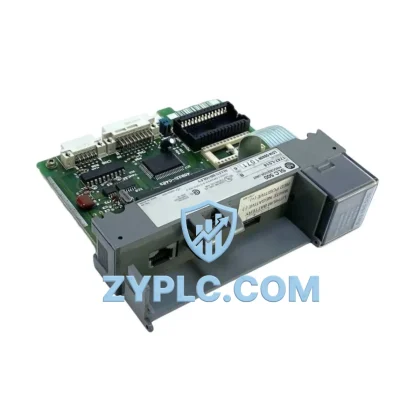
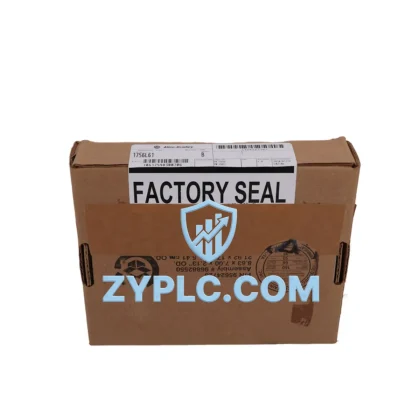
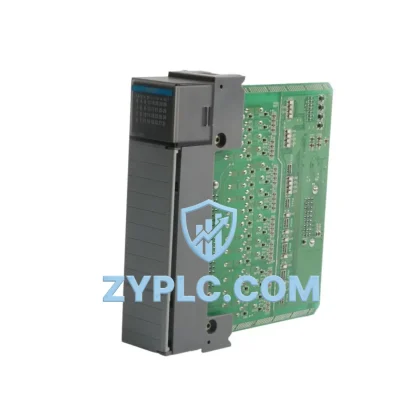
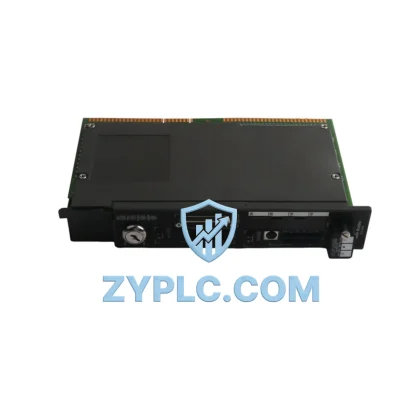
Mitsubishi LSZ-44-S2 Energy-Saving PLC for Optimized MELSEC Automation
The Mitsubishi LSZ-44-S2 is a high-performance programmable logic controller module engineered for industrial environments where energy efficiency, precision motor control, and production line optimization are mission-critical. As part of the Mitsubishi MELSEC automation platform, the LSZ-44-S2 delivers intelligent power management at the control layer — enabling factories to reduce idle energy consumption, sharpen cycle times, and extend equipment service life without sacrificing throughput.
In modern manufacturing, energy waste rarely originates from a single source. It accumulates across poorly timed actuator cycles, unregulated motor starts, inefficient I/O polling intervals, and unmonitored standby loads. The LSZ-44-S2 addresses these inefficiencies at the source — at the controller level — by providing deterministic scan-cycle execution, low-power standby modes, and seamless integration with Mitsubishi’s broader MELSEC energy-aware ecosystem. Whether deployed in automotive assembly, food processing, semiconductor fabrication, or logistics automation, this module contributes directly to measurable reductions in kWh consumption per production unit.
Efficiency Performance Table
| Parameter |
Specification |
| SKU |
LSZ-44-S2 |
| Brand / Series |
Mitsubishi Electric / MELSEC |
| Product Type |
Programmable Logic Controller Module |
| Power Consumption |
Low-power design; optimized for reduced standby draw |
| Operating Efficiency |
High-speed deterministic scan cycle; minimizes CPU idle overhead |
| Compatible Systems |
Mitsubishi MELSEC Q-Series, L-Series automation platforms |
| Application Environment |
Industrial automation, motor control, energy monitoring, process control |
| Communication Protocols |
CC-Link IE, MELSECNET, RS-232C, RS-422 |
| Origin |
Japan |
| Energy Optimization Value |
Reduces unnecessary scan overhead; supports demand-based I/O activation |
| Warranty |
12-Month Warranty — tested and verified before shipment |
Energy-Aware Automation Architecture
The LSZ-44-S2 is designed to operate as the control nucleus within a layered, energy-aware automation architecture. At the field level, it interfaces directly with distributed I/O modules such as the QY42P transistor output module, enabling precise, demand-driven actuation that eliminates unnecessary relay cycling and the associated energy spikes. Input signals from analog acquisition modules like the Q64AD feed real-time process data — temperature, pressure, flow — into the LSZ-44-S2’s control logic, allowing the CPU to make energy-informed decisions without relying on external supervisory systems.
On the drive side, the LSZ-44-S2 communicates seamlessly with Mitsubishi’s FR-E740 inverter series via CC-Link or pulse train output, enabling variable-frequency motor control that matches motor speed precisely to load demand. This eliminates the fixed-speed motor waste that accounts for a significant share of industrial electricity consumption. When paired with the QD75P4N positioning module, the system achieves servo-level motion accuracy — critical for minimizing overshoot, reducing mechanical stress, and cutting the energy cost of repeated positioning cycles.
At the network layer, the QJ71E71-100 Ethernet interface module extends the LSZ-44-S2’s connectivity to plant-wide SCADA and MES systems, enabling real-time energy data exchange and remote parameter adjustment without halting production. The QJ71BR11 MELSECNET/H module further supports high-speed inter-PLC communication across production cells, ensuring that energy optimization decisions made at one station propagate instantly to adjacent control nodes. For facilities running CC-Link IE Field networks, the LSZ-44-S2 integrates natively, supporting topology-aware load balancing across multiple drive and I/O nodes.
Operator visibility is maintained through the GT2710-STBA GOT2000 series HMI, which displays live energy consumption trends, alarm states, and production KPIs on a single touchscreen interface. The Q06HCPU main CPU module, when used in conjunction with the LSZ-44-S2 in a multi-module rack configuration, handles high-level scheduling and inter-process coordination, while the LSZ-44-S2 manages dedicated control tasks — a division of labor that reduces total CPU load and, consequently, total system power draw. The Q61P power supply module completes the rack assembly, providing stable, regulated DC power with built-in protection against voltage fluctuation — a common cause of premature module failure and unplanned downtime.
Power Optimization in Real Production Lines
In a typical discrete manufacturing environment, the LSZ-44-S2 contributes to energy savings across multiple operational phases. During production startup, its fast initialization sequence reduces the time motors and actuators spend in unloaded warm-up states. During steady-state operation, its deterministic scan cycle ensures that control outputs are updated only when process conditions require it — avoiding the continuous, unnecessary toggling that wastes energy and accelerates contact wear in downstream devices.
During scheduled downtime or shift changeovers, the LSZ-44-S2 supports programmable low-power modes that selectively de-energize non-critical outputs while maintaining safety interlocks and communication links. This capability alone can reduce standby energy consumption by a measurable percentage in facilities running two- or three-shift operations. When integrated with Mitsubishi’s energy monitoring modules and the FR-E740 inverter’s built-in power metering, the LSZ-44-S2 becomes the anchor of a closed-loop energy feedback system — one that continuously compares actual consumption against production targets and adjusts control parameters in real time.
Predictive maintenance is another area where the LSZ-44-S2 delivers tangible value. By logging cycle counts, output activation frequencies, and communication error rates, it provides the raw data needed for condition-based maintenance scheduling. Replacing a failing I/O module or inverter before it causes an unplanned stoppage eliminates not just the repair cost, but the energy waste associated with restarting cold equipment, running catch-up production cycles, and operating at suboptimal throughput during recovery periods.
Every LSZ-44-S2 unit supplied by ZYPLC undergoes full functional testing prior to shipment, including I/O verification, communication handshake testing, and power-on cycle validation. Stock is maintained on-hand for rapid dispatch, and all units are covered by a 12-month warranty — ensuring that your production line investment is protected from day one.
Energy Optimization FAQ
Q1: How does the LSZ-44-S2 contribute to measurable energy savings on the production floor?
The LSZ-44-S2 reduces energy waste by enabling demand-driven I/O activation, precise motor speed control via inverter integration (e.g., FR-E740), and programmable low-power standby modes during non-production periods. When combined with analog input modules like the Q64AD for real-time process monitoring, the system continuously adjusts control outputs to match actual load requirements — eliminating the fixed-speed, always-on operation that drives unnecessary energy consumption.
Q2: Is the LSZ-44-S2 compatible with existing Mitsubishi MELSEC Q-Series and L-Series installations?
Yes. The LSZ-44-S2 is designed for integration within the Mitsubishi MELSEC platform and is compatible with Q-Series rack configurations, including multi-module setups using the Q06HCPU and Q61P power supply. It supports standard MELSEC communication protocols including CC-Link IE and MELSECNET, making it straightforward to add to existing automation architectures without requiring a full system redesign.
Q3: What is the recommended replacement or upgrade path for aging MELSEC control modules?
For facilities running older MELSEC A-Series or FX-Series controllers, the LSZ-44-S2 represents a direct upgrade path to Q-Series performance levels. The transition typically involves remapping I/O assignments and updating ladder logic programs in GX Works2 or GX Works3. ZYPLC can advise on compatible module substitutions and cross-reference legacy SKUs to current MELSEC equivalents upon request.
Q4: What does the 12-month warranty cover, and what is the pre-shipment testing process?
Every LSZ-44-S2 unit is tested for full I/O functionality, communication integrity, and power-on stability before dispatch. The 12-month warranty covers manufacturing defects and functional failures under normal operating conditions. Units that develop faults within the warranty period are replaced or repaired at no additional cost. For time-sensitive production environments, ZYPLC maintains ready stock to minimize lead times on warranty replacements.
© 2026 ZYPLC. All rights reserved.
Original Source: https://zyplc.com
Contact: +86 19859288691 | plc.sales@zyplc.com