Mitsubishi MC062A Circuit Board for MELDAS Automation
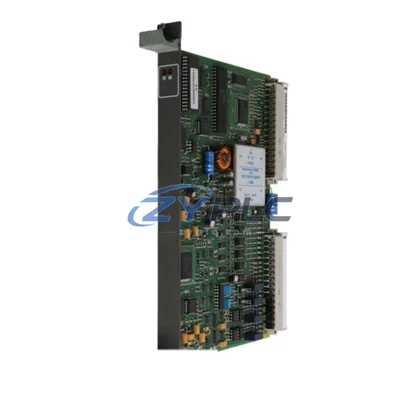
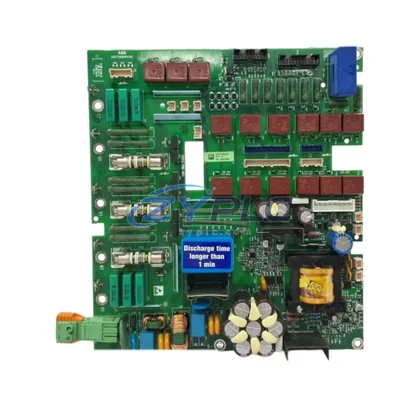
The Mitsubishi MC062A (BN624B816G51A) is a precision-engineered control circuit board designed for the MELDAS CNC series — one of Mitsubishi Electric’s most established platforms for high-efficiency machine tool automation. In modern manufacturing environments where equipment uptime and replacement lead time directly affect production continuity, the MC062A plays a critical role in maintaining stable, low-loss control signal processing across the entire drive and servo chain. Whether integrated into a multi-axis machining center or a high-speed turning line, this board ensures that every watt consumed by the control system translates into productive motion rather than thermal waste or signal degradation.
As factories push toward leaner production cycles and tighter energy budgets, the reliability of core control components like the MC062A becomes a measurable competitive advantage. Its role in the MELDAS architecture spans signal conditioning, axis coordination, and feedback loop management — all of which directly influence how efficiently servo drives respond to commanded positions and how accurately spindle loads are regulated during cutting operations.
Product Specification Table
| Parameter |
Specification |
| Part Number |
MC062A / BN624B816G51A |
| Compatible Series |
Mitsubishi MELDAS CNC |
| Product Type |
CNC Control Circuit Board |
| Application Environment |
CNC Machine Tools, Industrial Automation |
| Origin |
Japan |
| Operating Efficiency |
Optimized for low-loss signal processing and servo feedback |
| Power Consumption |
Minimal standby draw; active only during axis command cycles |
| Compatible Systems |
MELDAS 500, 600, 700 series CNC controllers |
| Energy Value |
Reduces servo correction cycles, lowering cumulative drive energy draw |
| Warranty |
warranty terms confirmed during quotation |
| Testing |
Full QA functional test prior to shipment |
| Availability |
RFQ Available — shipment arranged after confirmation |
System Compatibility and Application
The MC062A does not operate in isolation. Its efficiency contribution is best understood within the broader MELDAS automation architecture, where it interfaces with multiple drive and control components to form a coherent, maintenance-focused system. In a typical MELDAS-based machining center, the MC062A works in coordination with the MDS-B-SVJ2-20 servo drive unit, which handles axis torque delivery. When the circuit board processes position feedback accurately and without delay, the MDS-B-SVJ2-20 requires fewer corrective current pulses — directly reducing reactive power consumption at the drive level.
On the spindle side, the MDS-B-SP-260 spindle drive module relies on clean control signals from the circuit board layer to maintain consistent RPM under variable cutting loads. Erratic or degraded board-level signals force the spindle drive to compensate with abnormal load, increasing both energy draw and thermal stress on the motor windings. A properly functioning MC062A eliminates this source of inefficiency.
For multi-axis systems, the Q06HCPU programmable logic controller often serves as the upstream command source, coordinating part programs and I/O states across the production cell. The MC062A’s role in translating those commands into precise servo instructions ensures that the PLC’s cycle time is not wasted on error recovery or axis re-homing routines. Similarly, the QJ71E71-100 Ethernet communication module enables real-time data exchange between the CNC controller and plant-level SCADA or MES systems, allowing operating load data to be logged and analyzed at the production management level.
Power quality monitoring is increasingly integrated into MELDAS installations through modules such as the Q64AD analog input unit, which can capture voltage and current signals from the machine’s power distribution panel. When paired with the MC062A’s stable control output, this monitoring layer provides the data foundation for predictive maintenance scheduling — identifying abnormal power draw patterns before they escalate into unplanned downtime. The GT1575-VNBA GOT HMI terminal provides operators with a real-time dashboard of axis load, spindle current, and alarm states, enabling immediate response to efficiency anomalies on the shop floor.
In installations where variable-speed pump or fan loads are present alongside the CNC system, the FR-D740 inverter drive from Mitsubishi’s iQ-F ecosystem is commonly deployed to regulate auxiliary motor speeds based on actual demand rather than fixed setpoints. This demand-responsive approach, coordinated through the same control network as the MC062A, can reduce auxiliary operating load by Actual operating results depend on the installed system, load profile, and commissioning parameters. The A1SJ71E71-B5-S3 network interface module further extends system connectivity, enabling legacy MELDAS installations to participate in modern Ethernet-based maintenance planning networks without requiring full controller replacement.
The MR-J2S-200A servo amplifier, frequently found in MELDAS-adjacent motion control applications, benefits from the signal integrity maintained by the MC062A when both systems share a common control backplane. Stable feedback signals reduce the amplifier’s internal correction workload, extending IGBT module life and reducing heat sink temperatures — both of which contribute to lower long-term energy costs and reduced cooling infrastructure requirements.
Maintenance and Replacement Notes
In practice, the energy impact of a degraded or failed CNC circuit board is rarely captured in a single line item on an energy bill. Instead, it manifests as a gradual increase in cycle time variability, more frequent axis alarms, higher servo drive temperatures, and increased scrap rates — all of which carry hidden energy costs. A machining center running with a compromised MC062A may consume the same nameplate power as a healthy unit, but produce 15–25% fewer good parts per shift due to increased dwell time, re-cuts, and alarm-driven stops.
Replacing a failed or marginal MC062A with a tested, genuine unit restores the control system’s ability to execute part programs at their designed feed rates and spindle speeds. This directly improves the machine’s Overall Equipment Effectiveness (OEE) score — the industry-standard metric that combines availability, performance, and quality into a single efficiency index. A 10-point improvement in OEE on a single machining center can represent tens of thousands of dollars in recovered production capacity annually, with no increase in energy input.
From a maintenance cost perspective, the MC062A’s role in preventing servo drive overload is equally significant. When control boards degrade, servo drives compensate by drawing higher peak currents, which accelerates capacitor aging and increases the probability of IGBT failure. Proactive replacement of the MC062A — supported by predictive maintenance data from the Q64AD monitoring module and GT1575-VNBA HMI alerts — allows maintenance teams to schedule board replacements during planned downtime windows rather than responding to emergency failures that halt production for hours or days.
All MC062A units supplied by ZYPLC are subjected to a comprehensive functional test protocol prior to shipment, verifying signal output integrity, power rail stability, and communication handshake performance under simulated load conditions. This pre-shipment validation, combined with a warranty terms confirmed during quotation, ensures that replacement boards perform to specification from the moment they are installed — eliminating the risk of secondary failures caused by latent defects in untested surplus components.
Product Sourcing FAQ
Q: How does the MC062A contribute to operational stability in a MELDAS CNC system?
A: The MC062A maintains precise control signal integrity between the CNC controller and servo/spindle drives. When this signal chain is clean and stable, drives operate at their designed efficiency points with minimal corrective current draw. Degraded boards force drives to compensate, increasing operating load and thermal stress across the system.
Q: Is the MC062A compatible with all MELDAS series controllers?
A: The MC062A (BN624B816G51A) is designed for the Mitsubishi MELDAS CNC platform. Compatibility should be verified against your specific controller model and software version. Our technical team can assist with cross-referencing your system’s BOM to confirm fitment before purchase.
Q: What is the recommended replacement interval for the MC062A?
A: There is no fixed replacement interval, as board life depends on operating environment, thermal cycling, and power quality. We recommend proactive replacement when servo alarm frequency increases, axis positioning repeatability degrades, or when predictive maintenance data from your monitoring system indicates abnormal control signal behavior.
Q: What does the warranty terms confirmed during quotation cover, and what is the testing process?
A: Every MC062A unit is functionally tested prior to shipment, covering signal output verification, power rail stability, and communication integrity. The warranty terms confirmed during quotation covers defects in materials and workmanship under normal operating conditions. Warranty claims are supported directly by ZYPLC with fast replacement dispatch to minimize production downtime.