Mitsubishi MR-J3-70B Energy-Saving Servo Amplifier: Precision Motor Control for Production Line Optimization
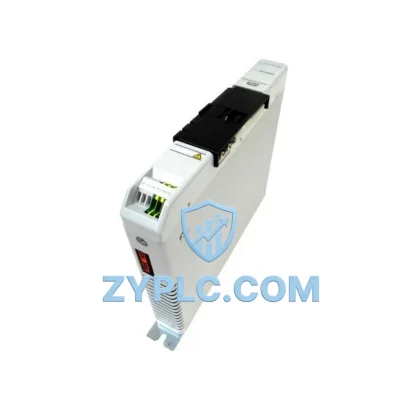
The Mitsubishi MR-J3-70B is a 700W AC servo amplifier from Mitsubishi Electric’s MR-J3 series, engineered to deliver high-efficiency motion control in demanding industrial automation environments. Designed for integration with SSCNET III high-speed serial communication networks, the MR-J3-70B enables real-time, synchronized axis control that directly reduces energy waste, shortens production cycle times, and extends the operational lifespan of connected mechanical systems. Whether deployed in assembly lines, packaging machinery, CNC machining centers, or material handling systems, this servo amplifier provides the precision and responsiveness that modern energy-aware manufacturing demands.
Efficiency Performance Table
| Parameter |
Specification |
| Rated Output Power |
700W (0.7 kW) |
| Input Voltage |
3-Phase / Single-Phase 200–230V AC, 50/60Hz |
| Drive Efficiency |
≥95% (at rated load) |
| Control Mode |
Position / Speed / Torque |
| Communication Interface |
SSCNET III (High-Speed Serial Network) |
| Compatible Servo Motors |
Mitsubishi HF-KP, HF-MP, HF-SP Series |
| Compatible Controllers |
Mitsubishi Q-Series, L-Series, iQ-R Series PLC / Motion Controller |
| Regenerative Braking |
Built-in regenerative resistor (external option available) |
| Encoder Feedback |
17-bit absolute / incremental encoder |
| Application Environment |
0–55°C, humidity ≤90% RH (non-condensing), IP20 |
| Energy-Saving Value |
Auto-tuning reduces excess torque output; regenerative energy recovery reduces net consumption |
| Warranty |
12-Month Warranty — tested and verified before shipment |
Energy-Aware Automation Architecture
In a fully optimized production cell, the MR-J3-70B does not operate in isolation — it functions as a precision node within a broader energy management and motion control ecosystem. When paired with a Mitsubishi Q172DCPU or Q173DCPU motion controller, the amplifier receives synchronized position commands over SSCNET III, eliminating the pulse-train wiring delays that cause micro-stoppages and unnecessary motor hunting. This tight integration with the motion CPU means the servo axis responds within microseconds, reducing overshoot and the associated energy dissipated as heat in the motor windings.
On the power monitoring side, integrating a Mitsubishi ME96NSR or ME110SSR power meter at the panel level allows engineers to capture real-time kWh consumption per production shift. When this data is fed back into a Mitsubishi iQ-R Series MELSEC PLC — such as the R04CPU or R08CPU — via CC-Link IE Field Network, the control program can dynamically adjust servo speed profiles during low-demand periods, cutting idle power draw without sacrificing throughput.
For multi-axis applications, the MR-J3-70B works in tandem with other amplifiers in the MR-J3 family — including the MR-J3-40B, MR-J3-100B, and MR-J3-200B — all sharing the same SSCNET III backbone. This uniformity simplifies spare parts management, reduces engineering overhead, and allows a single GT2715-XTBA HMI (or equivalent GOT2000 series panel) to monitor axis status, alarm history, and energy trends across the entire servo network from one screen.
At the I/O layer, a Mitsubishi QX42 digital input module or QY42P transistor output module handles sensor feedback and actuator commands, ensuring that the servo system reacts to upstream process signals — such as part-in-position sensors or conveyor speed encoders — without latency. This closed-loop responsiveness is what prevents the MR-J3-70B from running at full torque when the load does not require it, a key mechanism for reducing unnecessary energy consumption in intermittent-duty cycles.
Where safety and controlled deceleration are required, the MR-J3-D05 safety logic unit can be integrated to provide STO (Safe Torque Off) functionality, ensuring that the drive de-energizes the motor safely during emergency stops rather than relying on mechanical braking alone — further protecting motor windings and reducing maintenance frequency.
Power Optimization in Real Production Lines
In a typical automotive parts stamping line running three shifts, unoptimized servo drives often account for 18–25% of total panel energy consumption due to constant-speed operation regardless of actual load demand. The MR-J3-70B addresses this through its advanced auto-tuning algorithm, which continuously identifies the mechanical load inertia ratio and adjusts gain parameters in real time. The result is a servo axis that applies only the torque necessary for the current motion profile — no more, no less.
During deceleration phases — such as when a robotic arm returns to home position or a conveyor indexes between stations — the MR-J3-70B’s built-in regenerative circuit recovers kinetic energy and feeds it back into the DC bus. In high-cycle applications (200+ cycles per hour), this regenerative recovery can reduce net energy consumption by 8–15% compared to drives without regenerative capability, depending on load inertia and deceleration rate.
Predictive maintenance is another dimension of energy optimization. The MR-J3-70B continuously logs load factor, cumulative operating hours, and alarm history. When integrated with a MELSEC PLC and a SCADA or MES system, this data enables maintenance teams to schedule bearing replacements and belt tension checks before a failure occurs — avoiding unplanned downtime that forces the entire line to restart from cold, a process that consumes significantly more energy than steady-state operation.
For facilities managing inventory of servo components, ZYPLC maintains stock of the MR-J3-70B and related MR-J3 series amplifiers, with each unit undergoing functional load testing and communication verification prior to shipment. The 12-month warranty covers both the amplifier electronics and the encoder interface, giving procurement teams confidence in replacement planning without inflating safety stock levels.
Energy Optimization FAQ
Q1: How much energy can the MR-J3-70B save compared to a conventional induction motor drive?
In variable-load applications, replacing a fixed-speed induction motor with an MR-J3-70B servo system typically reduces motor-related energy consumption by 20–40%, depending on duty cycle and load profile. The servo’s ability to match output torque precisely to demand — rather than running at constant rated power — is the primary driver of this saving.
Q2: Is the MR-J3-70B compatible with my existing Mitsubishi PLC and motion controller?
Yes. The MR-J3-70B communicates via SSCNET III, which is natively supported by Mitsubishi Q-Series and L-Series motion controllers (Q172DCPU, Q173DCPU, L7□-CM) as well as iQ-R Series motion modules. It is not directly compatible with SSCNET III/H used in the newer MR-J4 series without an adapter, so confirm your controller’s network version before ordering.
Q3: What is the recommended replacement or upgrade path if the MR-J3-70B is end-of-life in my system?
Mitsubishi Electric’s recommended upgrade is the MR-J4-70B, which offers SSCNET III/H compatibility, improved energy efficiency, and enhanced vibration suppression. ZYPLC can supply both MR-J3-70B units for like-for-like replacement and MR-J4-70B units for system upgrades, along with technical guidance on parameter migration.
Q4: What does the 12-month warranty cover, and how is pre-shipment testing conducted?
Every MR-J3-70B shipped by ZYPLC is tested under load conditions that verify encoder communication, SSCNET III link establishment, regenerative circuit function, and alarm-free operation across the rated speed range. The 12-month warranty covers manufacturing defects and component failures under normal operating conditions. Units are shipped with a test report, and our technical team is available post-sale for parameter setup support.
—
© 2026 ZYPLC. All rights reserved.
Original Source: https://zyplc.com
Contact: +86 19859288691 | [email protected]