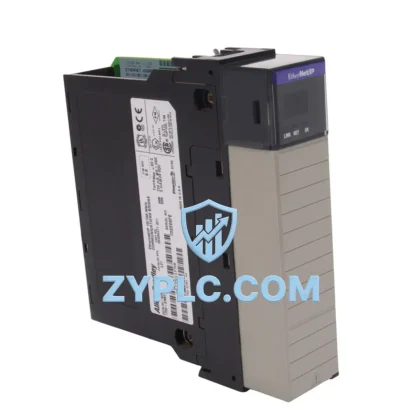
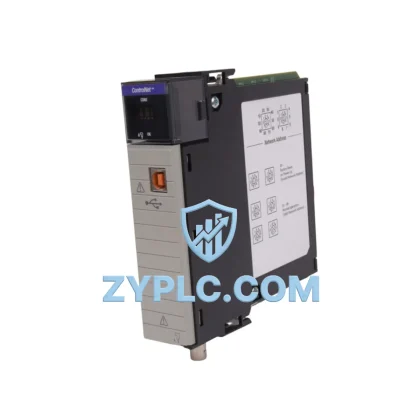
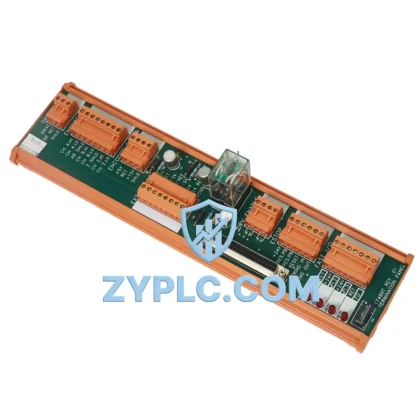
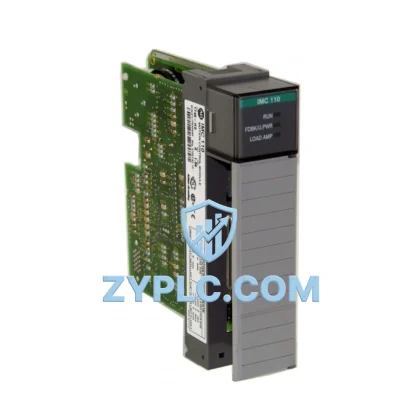
Mitsubishi MW414 System-Ready Circuit Board Module for MELSEC Architecture
In modern industrial automation, the reliability of a control system is never determined by a single component — it is defined by the coherence of the entire architecture. The Mitsubishi MW414 circuit board module occupies a critical position within the MELSEC control platform, serving as a foundational hardware element that ensures signal integrity, processing continuity, and seamless Contextual Integration across control layers. Whether deployed in a greenfield automation project or integrated into an existing MELSEC Q-series or A-series infrastructure, the MW414 delivers the board-level stability that system engineers depend on for long-term operational confidence.
Understanding the MW414 requires viewing it not in isolation, but as part of a layered automation hierarchy. From the control layer down through I/O acquisition, network communication, power distribution, human-machine interface, and field-level execution, every tier of the system depends on the consistent performance of its core circuit components. The MW414 is engineered to meet those demands, providing the electrical and logical foundation upon which broader system architectures are built.
Architecture Specification Table
| Parameter |
Specification |
| System Role |
Circuit Board Module — Control Layer Hardware |
| Compatible Platform |
Mitsubishi MELSEC Series (Q-series / A-series) |
| Module Type |
Internal Circuit Board / Replacement PCB |
| Electrical Interface |
Board-level connector interface, compatible with MELSEC backplane architecture |
| Operating Voltage |
Consistent with MELSEC system bus voltage standards (5 VDC logic, 24 VDC I/O) |
| Operating Temperature |
0°C to 55°C (standard industrial range) |
| Storage Temperature |
-25°C to 75°C |
| Communication Capability |
Supports MELSEC bus protocol; compatible with CC-Link and MELSECNET/H architectures |
| Installation Environment |
Control cabinet / DIN rail enclosure; IP20 internal module |
| Vibration Resistance |
Compliant with IEC 61131-2 mechanical standards |
| Warranty |
12-Month Warranty — Tested, verified, and ready for system deployment |
| Origin |
Japan |
Coordinated Control System Design
The MW414 does not operate in a vacuum. Its value is realized when it functions as part of a coherent, multi-layer control architecture. In a typical MELSEC Q-series deployment, the MW414 circuit board interfaces with the Q06HCPU — Mitsubishi’s high-performance process CPU — which handles ladder logic execution, structured text processing, and real-time scan cycle management. The CPU module relies on stable board-level components like the MW414 to maintain uninterrupted data bus communication across the backplane.
Power integrity is managed by the Q61P power supply module, which delivers regulated DC voltage to all modules mounted on the Q35B base unit. The base unit’s backplane architecture depends on consistent circuit board performance to prevent voltage fluctuation from propagating into the I/O layer. Digital input acquisition is handled by the QX42 64-point DC input module, while the QY42P transistor output module drives field devices including solenoids, relays, and variable-speed drives.
For network-layer communication, the QJ71E71-100 Ethernet interface module enables TCP/IP and UDP-based data exchange with SCADA systems, MES platforms, and remote engineering workstations. In facilities requiring fieldbus connectivity, the QJ61BT11N CC-Link master module coordinates distributed I/O across remote stations, reducing wiring complexity while maintaining deterministic scan performance. Legacy integration is supported through the A1SJ71UC24-R4 serial communication module, which bridges older RS-232C and RS-422 devices into the modern MELSEC architecture.
At the human-machine interface layer, the GOT2000 series HMI provides operators with real-time visualization of process variables, alarm management, and trend logging — all synchronized with the CPU’s data registers. Redundancy-critical applications may incorporate the QC30R2 redundant CPU connection cable, enabling hot-standby CPU configurations that ensure zero-downtime failover in the event of a primary CPU fault. Together, these components form a complete, validated MELSEC control architecture in which the MW414 circuit board plays an indispensable supporting role.
Application in Layered Automation Systems
The Mitsubishi MW414 circuit board module finds application across a broad spectrum of industrial sectors where MELSEC-based control systems are the platform of choice. In manufacturing and assembly automation, the MW414 supports high-speed discrete control architectures managing conveyor systems, robotic welding cells, and precision stamping lines. Its board-level reliability ensures that CPU scan cycles remain consistent even under high I/O polling loads.
In electric power generation and distribution, MELSEC systems equipped with MW414 circuit boards are deployed in substation automation, transformer monitoring, and grid-tie protection relay coordination. The module’s compatibility with MELSECNET/H and CC-Link communication protocols allows it to participate in distributed control architectures spanning multiple switchgear panels and remote terminal units.
The petrochemical and refining sector relies on MELSEC Q-series platforms for continuous process control, including reactor temperature regulation, pressure vessel management, and distillation column sequencing. In these environments, the MW414’s thermal stability and vibration resistance ensure reliable operation within control cabinets mounted in classified hazardous areas.
Water treatment and wastewater management facilities use MELSEC-based PLCs to automate pump sequencing, chemical dosing, and filtration cycle management. The MW414 supports the long operational lifecycles typical of municipal infrastructure projects, where replacement components must remain available and compatible over decades of system operation.
In mining and metallurgical processing, the MW414 is integrated into conveyor drive control systems, ore crusher sequencing panels, and smelter process automation platforms. The module’s robust construction tolerates the high-vibration, high-dust environments characteristic of mineral processing facilities. Similarly, in packaging and material handling applications, the MW414 supports high-cycle-rate control architectures managing form-fill-seal machines, palletizers, and automated storage and retrieval systems.
Architecture Engineering FAQ
Q1: Is the Mitsubishi MW414 compatible with both Q-series and A-series MELSEC platforms?
The MW414 is a circuit board module designed for use within the Mitsubishi MELSEC control ecosystem. Compatibility depends on the specific chassis, CPU, and backplane configuration of the target system. Engineers should verify the module’s connector interface and bus voltage requirements against the host system’s technical documentation prior to installation. Our technical team can assist with compatibility verification as part of the pre-sale process, and all units are covered by a 12-Month Warranty from the date of shipment.
Q2: How does the MW414 contribute to system redundancy and long-term maintainability?
In redundant MELSEC architectures — such as those using dual Q06HCPU modules with QC30R2 interconnect cables — the MW414 ensures that board-level signal paths remain stable during CPU switchover events. From a maintenance perspective, having verified replacement circuit boards in inventory significantly reduces mean time to repair (MTTR) when a primary board fails. Contextual Integration of the MW414 into a spare parts management program allows maintenance teams to restore system operation without waiting for extended lead times on new components.
Q3: What testing and quality assurance processes are applied to MW414 units before shipment?
Each MW414 unit undergoes functional verification testing prior to dispatch, including power-on self-test, bus interface continuity checks, and signal path validation. Units are inspected for physical integrity, connector condition, and component-level anomalies. All tested units are shipped with documentation confirming their verified status and are backed by a 12-Month Warranty covering manufacturing defects and functional failures under normal operating conditions. For system-critical applications, we recommend requesting a certificate of test results at the time of order.
© 2026 ZYPLC. All rights reserved.
Original Source: https://zyplc.com
Contact: +86 19859288691 | [email protected]