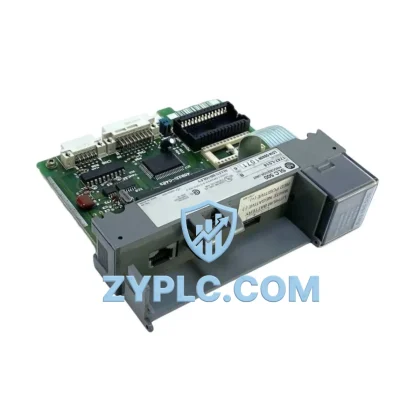
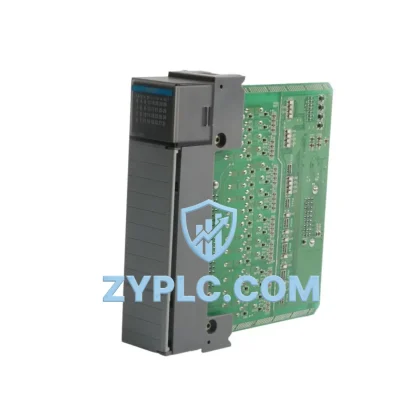
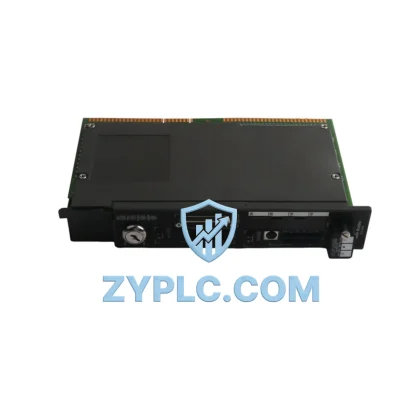
Mitsubishi Q61B System-Ready Base Unit for MELSEC-Q Architecture
The Mitsubishi Electric Q61B is a 6-slot base unit engineered as a foundational structural component within the MELSEC-Q series programmable logic controller platform. Rather than functioning as a standalone device, the Q61B defines the physical and electrical backbone of the entire control system architecture — accommodating CPU modules, power supply modules, I/O modules, and intelligent function modules within a single unified rack. In layered automation environments spanning manufacturing, power distribution, petrochemical processing, water treatment, mining, metallurgy, and packaging lines, the Q61B provides the structural consistency that enables engineers to design, commission, and maintain complex multi-tier control systems with confidence.
At the control layer, the Q61B is designed to host Mitsubishi MELSEC-Q series CPU modules such as the Q02HCPU, Q06HCPU, and Q13HCPU, which serve as the computational core of the automation system. These CPUs communicate directly with I/O modules and intelligent function modules mounted in adjacent slots, leveraging the Q61B’s internal bus architecture to achieve high-speed, deterministic data exchange. The base unit’s slot configuration supports mixed installations of digital input modules such as the QX41, digital output modules such as the QY41P, and analog I/O modules, enabling engineers to tailor the I/O layer precisely to the demands of the process being controlled.
At the network and communication layer, the Q61B accommodates intelligent communication modules including the QJ71E71-100 Ethernet interface module and the QJ61BT11N CC-Link master/local module. These modules integrate seamlessly into the base unit’s backplane, allowing the MELSEC-Q system to participate in plant-wide Ethernet networks, SCADA systems, and field-level CC-Link device networks without requiring external communication gateways. This Contextual Integration capability ensures that the Q61B-based rack can exchange real-time data with upstream MES platforms, downstream field devices, and peer PLC stations simultaneously, maintaining system-wide data coherence across all automation layers.
At the power layer, the Q61B is paired with dedicated MELSEC-Q series power supply modules such as the Q61P, which provides regulated 5 VDC internal bus power to all modules installed in the base unit. The Q61P’s power distribution architecture ensures stable operation across the full slot complement, even when high-density I/O modules and intelligent function modules are installed simultaneously. For applications requiring enhanced power redundancy, the Q61B can be integrated into multi-rack configurations using extension base units and extension cables, distributing the system load across multiple physical racks while maintaining a single logical control domain under the host CPU.
At the human-machine interface layer, the Q61B-based control system connects to GOT2000 series HMI panels via Ethernet or RS-422 serial links, providing operators with real-time visibility into process variables, alarm states, and system diagnostics. The GOT2000’s direct connection capability to MELSEC-Q CPUs eliminates the need for intermediate communication converters, reducing system complexity and improving diagnostic response times during commissioning and fault investigation.
From a system redundancy perspective, the Q61B supports integration into hot-standby redundant CPU configurations when paired with redundant CPU modules and the Q6BAT battery backup unit. In redundant architectures, two Q61B racks operate in parallel, with the standby CPU continuously tracking the active CPU’s program execution state. In the event of a primary CPU fault, the standby system assumes control within milliseconds, ensuring uninterrupted process operation in critical applications such as power generation, chemical processing, and continuous casting lines.
For long-term maintenance and lifecycle management, the Q61B’s modular architecture allows individual modules to be replaced without disturbing adjacent slots or disconnecting field wiring. Terminal block modules and connector-type I/O modules installed in the Q61B can be swapped during scheduled maintenance windows, reducing mean time to repair and minimizing production downtime. ZYPLC maintains verified stock of Q61B base units and compatible MELSEC-Q series components, supported by a 12-Month Warranty covering manufacturing defects and operational failures under normal industrial service conditions.
Architecture Specification Table
| Parameter |
Specification |
| System Role |
6-Slot Main Base Unit — MELSEC-Q Series |
| Compatible CPU Modules |
Q02HCPU, Q06HCPU, Q13HCPU, Q25HCPU and other MELSEC-Q CPUs |
| Number of Slots |
6 (excluding power supply slot) |
| Internal Bus |
MELSEC-Q high-speed backplane bus |
| Power Supply Slot |
Dedicated slot for Q61P or Q62P power supply module |
| Compatible I/O Modules |
QX41, QY41P, QX81, QY81P and MELSEC-Q series I/O modules |
| Compatible Comm Modules |
QJ71E71-100 (Ethernet), QJ61BT11N (CC-Link) |
| Installation Environment |
DIN rail or panel mount; IP20 enclosure rating |
| Operating Temperature |
0°C to 55°C |
| Operating Humidity |
10% to 90% RH (non-condensing) |
| Communication Capability |
Ethernet, CC-Link, MELSECNET/H via intelligent modules |
| Warranty |
12-Month Warranty — manufacturing defects and operational failures |
Coordinated Control System Design
The Q61B achieves its full architectural value when deployed as part of a coordinated MELSEC-Q system. A typical system configuration begins with the Q61P power supply module occupying the dedicated power slot, delivering stable internal bus voltage to all installed modules. The Q02HCPU or Q06HCPU CPU module occupies the CPU slot, executing the ladder or structured text control program at scan cycle speeds appropriate for the application. Digital input modules such as the QX41 collect field signals from proximity sensors, limit switches, and process transmitters, while digital output modules such as the QY41P drive solenoid valves, motor contactors, and indicator lamps.
For process control applications requiring analog signal handling, analog input and output modules are installed in the remaining slots, enabling the CPU to read 4–20 mA process signals and generate analog setpoint outputs to variable frequency drives and control valves. The QJ71E71-100 Ethernet module enables the Q61B rack to communicate with SCADA servers and MES platforms over standard TCP/IP networks, while the QJ61BT11N CC-Link module connects the rack to remote I/O stations and intelligent field devices distributed across the plant floor. The Q6BAT battery backup unit preserves the CPU’s program memory and retentive data registers during power interruptions, ensuring rapid system recovery without manual program reloading.
Application in Layered Automation Systems
In manufacturing and assembly line automation, the Q61B serves as the central control rack coordinating robot controllers, conveyor drives, vision inspection systems, and barcode readers through a unified MELSEC-Q control platform. In power distribution and substation automation, the Q61B hosts protection relay interface modules and communication modules that aggregate status data from circuit breakers, transformers, and bus sections, transmitting real-time data to energy management systems via Ethernet. In petrochemical and refinery process control, the Q61B supports continuous process monitoring and regulatory control loops, with redundant CPU configurations ensuring uninterrupted operation of critical separation, reaction, and compression processes. In water and wastewater treatment facilities, the Q61B coordinates pump sequencing, chemical dosing, and filtration control across distributed remote I/O stations connected via CC-Link. In mining and metallurgical applications, the Q61B manages conveyor belt systems, crusher controls, and ore processing equipment in high-vibration, high-dust environments, leveraging its robust industrial design and modular replacement capability to minimize maintenance downtime.
Architecture Engineering FAQ
Q1: Is the Q61B compatible with both basic and high-performance MELSEC-Q CPU modules?
Yes. The Q61B is compatible with the full range of MELSEC-Q series CPU modules, including the Q02CPU, Q02HCPU, Q06HCPU, Q13HCPU, and Q25HCPU. The base unit’s backplane bus architecture supports both standard and high-speed CPU variants without hardware modification. Engineers should verify the specific CPU module’s slot assignment requirements in the MELSEC-Q system configuration manual prior to installation.
Q2: Can the Q61B be used in a redundant CPU architecture, and what additional components are required?
The Q61B can be integrated into a hot-standby redundant system when paired with compatible redundant CPU modules and a redundant power supply configuration. The redundant architecture requires two Q61B racks — one for the active CPU and one for the standby CPU — connected via a dedicated redundant tracking cable. The Q6BAT battery backup unit is recommended for both racks to preserve retentive data during switchover events. ZYPLC can supply complete redundant system configurations with 12-Month Warranty coverage on all components.
Q3: What is covered under the 12-Month Warranty, and how does ZYPLC support long-term maintenance?
The 12-Month Warranty covers manufacturing defects and operational failures occurring under normal industrial service conditions, including internal bus faults, connector failures, and module slot integrity issues. ZYPLC maintains verified stock of Q61B base units and compatible MELSEC-Q series modules to support rapid replacement during warranty claims and post-warranty maintenance. For long-term lifecycle support, ZYPLC provides technical consultation on module compatibility, system expansion planning, and migration strategies for aging MELSEC-Q installations. Contact our technical team at [email protected] or +86 19859288691 for system-specific support.
© 2026 ZYPLC. All rights reserved.
Original Source: https://zyplc.com
Contact: +86 19859288691 | [email protected]