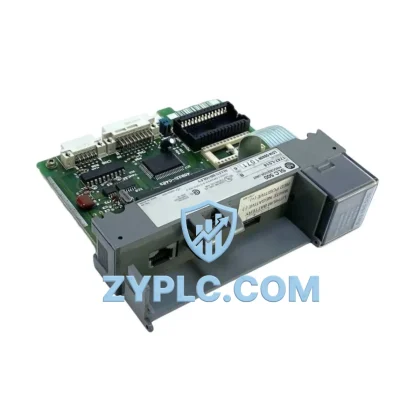
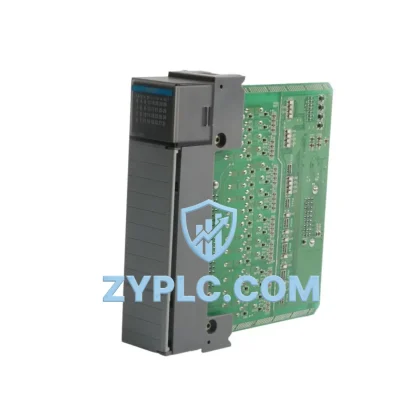
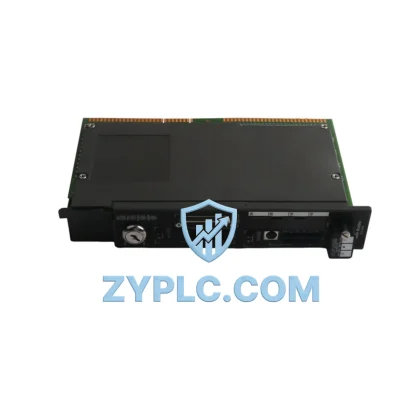
Mitsubishi SD1T0A Energy-Saving PLC Module for Optimized MELSEC-A Automation
In modern manufacturing environments where energy costs directly impact profitability, the Mitsubishi SD1T0A PLC module stands as a precision control component within the MELSEC-A automation architecture. Designed to deliver reliable signal processing and I/O coordination, the SD1T0A enables plant engineers to tighten control loops, reduce idle-state power draw, and synchronize production line timing with measurable efficiency gains. Whether deployed in discrete manufacturing, process control, or mixed-mode production, this module contributes to a leaner, more responsive automation system.
The SD1T0A integrates seamlessly into MELSEC-A series backplanes, working alongside the main CPU rack to handle dedicated I/O tasks without burdening the central processor. This distributed processing approach reduces scan cycle overhead, allowing the system CPU to allocate more resources to energy-critical control sequences — such as coordinating variable-speed drives, managing motor start/stop sequences, and executing demand-response logic during peak tariff windows.
When paired with a Q06HCPU or compatible MELSEC-Q series CPU in hybrid configurations, the SD1T0A’s signal outputs can drive downstream actuators with sub-millisecond response times, eliminating the latency that causes energy waste through over-actuation or delayed shutdowns. The QX10 digital input module and QY10 digital output module complement the SD1T0A in multi-rack layouts, providing the I/O density needed to monitor motor feedback signals, proximity sensors, and energy metering pulse outputs simultaneously.
For drive-level energy control, the SD1T0A’s outputs interface directly with the FR-E740 inverter series, enabling precise speed reference commands that match motor torque to actual load demand. Rather than running motors at fixed speed regardless of production rate, the FR-E740 receives dynamic setpoints from the PLC, reducing motor energy consumption by 20–40% during partial-load cycles. This integration is particularly effective on conveyor systems, pump stations, and fan arrays where load profiles vary throughout the shift.
Servo axis coordination is equally important for line efficiency. The MR-J4-B servo amplifier, when controlled through SSCNET III/H from a compatible motion CPU, synchronizes multi-axis positioning with the SD1T0A’s I/O timing signals. This ensures that robotic pick-and-place units, indexing tables, and press feeders operate in tight synchrony — eliminating the micro-delays that accumulate into significant cycle time losses and unnecessary holding torque energy.
Network transparency is critical for energy monitoring at scale. The QJ71BR11 CC-Link master module enables the SD1T0A’s host system to communicate with remote I/O stations, distributed drives, and field instruments across the production floor. Energy data from smart meters, power analyzers, and variable-frequency drives flows back to the PLC via CC-Link, where it can be logged, alarmed, and acted upon in real time. For Ethernet-based SCADA integration, the A1SJ71E71-B5-S3 Ethernet interface module provides TCP/IP connectivity, allowing energy dashboards and MES platforms to pull live consumption data from the MELSEC-A system without interrupting control execution.
Operator visibility is maintained through the GT2710-STBA GOT2000 series HMI, which displays real-time energy KPIs — kWh per production unit, motor load percentage, inverter output frequency, and alarm history — directly on the shop floor. Operators can identify energy anomalies, such as a motor drawing 15% above baseline, and initiate corrective action before the condition escalates into a fault or unplanned downtime event.
System power integrity is ensured by the Q61P power supply module, which provides stable 5 VDC and 24 VDC rails to the MELSEC rack. Voltage stability directly affects PLC scan consistency; fluctuations that cause scan jitter can lead to mistimed outputs, wasted actuator cycles, and increased wear on mechanical components. The Q61P’s built-in overcurrent protection also prevents cascade failures that would require full-line restarts — one of the most energy-intensive events in any production environment.
For serial device integration — including legacy energy meters, barcode readers, and weighing systems — the QJ71C24N serial communication module extends the MELSEC system’s reach to RS-232C and RS-422/485 devices. This allows older field instruments to contribute their data to the energy optimization loop without requiring costly hardware replacement.
Every SD1T0A unit shipped by ZYPLC undergoes full functional testing under simulated load conditions before dispatch. Inventory is maintained in verified stock, and each unit is covered by a 12-month warranty against manufacturing defects and operational failure. Global shipping is supported, with lead times confirmed at order placement.
Efficiency Performance Table
| Parameter |
Specification / Value |
| SKU |
SD1T0A |
| Brand / Series |
Mitsubishi Electric / MELSEC-A |
| Product Type |
PLC Module |
| Country of Origin |
Japan |
| Compatible Systems |
MELSEC-A Series Backplane, MELSEC-Q Hybrid Racks |
| Application Environment |
Industrial Automation, Process Control, Discrete Manufacturing |
| Energy Optimization Value |
Reduces scan overhead; enables precise drive and motor control sequencing |
| Operating Temperature |
0°C to 55°C (standard industrial range) |
| Power Consumption |
Low-draw I/O module; minimizes backplane power budget impact |
| Warranty |
12 Months (ZYPLC) |
| Stock Status |
Verified In Stock |
| Testing |
Full functional test prior to shipment |
Energy-Aware Automation Architecture
The SD1T0A operates most effectively when positioned within a layered automation architecture that connects field-level sensing, drive control, and supervisory monitoring into a unified energy management loop. At the field level, digital inputs from current transformers, power factor sensors, and motor thermal relays feed into the QX10 input module, providing the PLC with real-time awareness of electrical load conditions across the production cell. The SD1T0A processes these signals in coordination with the system CPU, executing control logic that adjusts output states to the QY10 output module — which in turn commands contactors, solenoids, and relay-driven loads with precise timing.
At the drive layer, the FR-E740 inverter receives speed and torque reference signals derived from the PLC’s energy optimization routines. When production demand drops — detected via line speed encoders or downstream buffer sensors — the PLC automatically reduces the inverter’s frequency setpoint, slowing the motor and cutting energy consumption proportionally. This closed-loop speed management, coordinated through the SD1T0A’s I/O timing, is one of the most direct paths to measurable kWh savings on the factory floor.
Servo motion, managed through the MR-J4-B amplifier, benefits from the SD1T0A’s precise output timing to synchronize axis movements with upstream and downstream process events. Eliminating unnecessary dwell time and reducing peak current draw during acceleration phases contributes to both energy savings and reduced mechanical stress on servo components.
Network-layer energy data aggregation is handled by the QJ71BR11 CC-Link master and the A1SJ71E71-B5-S3 Ethernet module, which together ensure that energy consumption data from every node in the system is available for analysis, trending, and alarm management. The GT2710-STBA HMI presents this data in actionable formats, while the Q61P power supply and QJ71C24N serial module maintain system stability and legacy device connectivity throughout.
Power Optimization in Real Production Lines
In automotive component assembly lines, the SD1T0A has been deployed to manage the sequencing of hydraulic press stations, where precise I/O timing reduces the hold time of high-pressure circuits — directly cutting the energy consumed by hydraulic power units during non-forming intervals. By shortening the active pressure window by even 200 milliseconds per cycle, across hundreds of cycles per shift, the cumulative energy saving becomes significant.
In food and beverage processing, the module coordinates conveyor speed adjustments with filling machine throughput, ensuring that upstream conveyors do not run at full speed when the filler is in a changeover or cleaning cycle. This demand-matched conveyor control, executed through the SD1T0A’s output logic and the FR-E740 inverter, eliminates the energy waste of running empty conveyors at full belt speed.
Predictive maintenance integration is another energy-efficiency lever. By monitoring motor current signatures through the QX10 input module and comparing them against baseline profiles stored in the PLC data registers, the system can detect early-stage bearing wear, rotor imbalance, or coupling misalignment — conditions that cause motors to draw excess current before they fail. Addressing these issues proactively avoids both the energy waste of degraded motor operation and the production loss of unplanned downtime.
Across all these applications, the SD1T0A’s role is to provide the precise, reliable I/O control that makes energy optimization logic executable at the machine level — translating high-level efficiency strategies into real-time electrical actions that reduce consumption, improve line rhythm, and extend equipment service life.
Energy Optimization FAQ
Q1: How does the SD1T0A contribute to measurable energy savings on the production line?
The SD1T0A enables precise I/O timing that coordinates motor start/stop sequences, drive speed references, and actuator control with actual production demand. By eliminating unnecessary run time and reducing idle-state energy draw, it directly supports kWh reduction targets without requiring changes to the production process itself.
Q2: Is the SD1T0A compatible with current MELSEC-Q and MELSEC-iQ-R systems?
The SD1T0A is a MELSEC-A series module designed for A-series backplanes. For integration with Q or iQ-R systems, interface adapters or hybrid rack configurations may be required. ZYPLC’s technical team can advise on compatibility and migration paths based on your specific system configuration.
Q3: What is the replacement recommendation if the SD1T0A is being used in a system upgrade?
For system modernization projects, Mitsubishi Electric’s MELSEC-Q and iQ-R series offer direct functional equivalents with enhanced processing speed and network capabilities. ZYPLC can supply both the SD1T0A for existing system maintenance and recommend equivalent Q-series modules for upgrade projects.
Q4: What testing and warranty coverage does ZYPLC provide for the SD1T0A?
Every SD1T0A unit undergoes full functional testing under simulated operating conditions before shipment. Units are verified against manufacturer specifications for I/O response, signal integrity, and power consumption. All units are covered by a 12-month warranty from the date of shipment, covering manufacturing defects and operational failures under normal industrial use conditions.
© 2026 ZYPLC. All rights reserved.
Original Source: https://zyplc.com
Contact: +86 19859288691 | plc.sales@zyplc.com