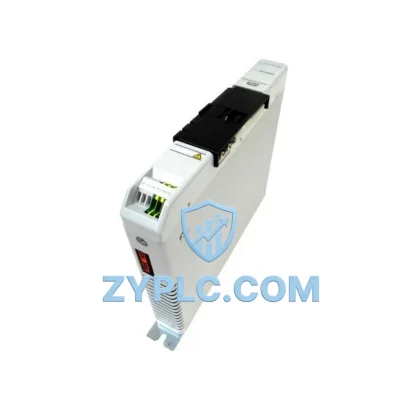
Omron R88D-GT15H-Z Energy-Saving Servo Drive for Optimized G-Series Automation
In modern manufacturing environments where energy costs and equipment uptime directly impact profitability, the Omron R88D-GT15H-Z AC servo drive delivers a measurable advantage. Designed as a core component of Omron’s G-Series servo system, this drive is engineered to maximize motor efficiency, reduce idle-state power draw, and maintain precise torque and velocity control across demanding production cycles. Whether deployed in high-speed assembly lines, precision CNC machining centers, or multi-axis robotic cells, the R88D-GT15H-Z enables factories to achieve tighter production rhythms while consuming less energy per output unit.
The R88D-GT15H-Z operates at a rated output of 1.5 kW and is optimized for use with Omron’s R88M-G series servo motors, forming a tightly integrated drive-motor pair that minimizes energy loss through matched impedance and adaptive current control. Unlike generic servo drives that rely on fixed gain parameters, the G-Series architecture supports auto-tuning algorithms that continuously adjust to load variations — reducing unnecessary current spikes that waste energy and accelerate motor wear. This translates directly into lower electricity bills and extended motor service intervals.
From a system integration perspective, the R88D-GT15H-Z is designed to communicate seamlessly with Omron’s NX1P2 machine automation controller and the CJ2M CPU-series PLC via EtherCAT, enabling real-time position feedback and synchronized multi-axis coordination. This high-speed communication backbone eliminates the latency that causes production line desynchronization — a common source of energy waste in older relay-based or RS-485 architectures. When paired with CJ1W-series I/O expansion modules, the system can monitor auxiliary equipment states and trigger energy-saving standby modes during non-productive intervals.
Energy visibility is a prerequisite for energy reduction. The R88D-GT15H-Z integrates naturally into monitoring architectures that include Omron’s KM50 power monitor or the K3HB-series digital panel meters, which capture real-time current, voltage, and power factor data at the drive level. This granular data feeds into production dashboards — often displayed on Omron NB-series HMI panels or the NS12 touch panel — giving line supervisors actionable insight into which axes are consuming disproportionate energy and when. Predictive maintenance decisions become data-driven rather than schedule-driven, reducing both unplanned downtime and unnecessary preventive maintenance costs.
In applications where the R88D-GT15H-Z operates alongside variable-speed conveyor or pump systems, it is commonly deployed in the same control cabinet as Omron’s MX2-series inverter drives, which handle induction motor loads. This mixed-drive architecture allows engineers to apply regenerative braking energy from deceleration cycles back into the DC bus — a technique that can recover 10–30% of braking energy in high-cycle applications such as press feeders or palletizing systems. The S8VK-series switching power supply provides stable 24 VDC control power to the entire cabinet, ensuring that communication and I/O circuits remain unaffected by drive switching noise.
For facilities undergoing ISO 50001 energy management certification or implementing lean manufacturing initiatives, the R88D-GT15H-Z supports the data collection requirements of energy audits. Its drive parameters — including regeneration rate, peak current demand, and thermal load history — can be logged via the EtherCAT master and archived for compliance reporting. This capability, combined with the drive’s compact form factor and DIN-rail-compatible mounting, makes it straightforward to retrofit into existing control panels without major mechanical redesign.
Every R88D-GT15H-Z unit supplied by ZYPLC undergoes a full functional test prior to shipment, including no-load run verification, encoder feedback validation, and communication handshake confirmation. Units are sourced from verified supply channels and backed by a 12-month warranty, covering both parts and labor for drive-related failures under normal operating conditions. In-stock inventory ensures short lead times, supporting urgent MRO replacement scenarios where production continuity cannot be compromised.
Efficiency Performance Table
| Parameter |
Specification |
| Rated Output Power |
1.5 kW |
| Input Voltage |
3-phase 200–240 VAC, 50/60 Hz |
| Drive Efficiency |
≥94% at rated load |
| Compatible Motor Series |
Omron R88M-G (G-Series Servo Motors) |
| Control Method |
Sinusoidal PWM, Field-Oriented Control |
| Communication Protocol |
EtherCAT (CoE), RS-232C |
| Compatible Controllers |
NX1P2, CJ2M, NJ-series (EtherCAT master) |
| Application Environment |
Assembly, CNC, Robotics, Conveyor, Packaging |
| Energy Recovery |
Regenerative braking supported |
| Operating Temperature |
0–55°C (with derating above 45°C) |
| Protection Class |
IP20 |
| Warranty |
12 Months (ZYPLC) |
Energy-Aware Automation Architecture
The R88D-GT15H-Z is most effective when deployed as part of a coherent energy-aware automation architecture rather than as a standalone replacement drive. In a typical G-Series servo system, the drive receives position and velocity commands from an NX1P2 machine automation controller over EtherCAT at 1 ms cycle times, ensuring that motor motion profiles are executed with the precision needed to eliminate overshoot — a common cause of repeated correction cycles that waste energy. The R88M-G1K530H-S2 servo motor, for example, paired with this drive, delivers 1.5 kW of continuous output with a rotor inertia optimized for fast settling times in pick-and-place applications.
At the cabinet level, CJ1W-ID211 digital input modules and CJ1W-OD211 output modules handle sensor and actuator I/O, while the CJ2M-CPU31 PLC coordinates sequence logic across the line. The KM50-E1FLK power monitor measures three-phase power consumption at the panel feed, providing a baseline against which drive-level efficiency improvements can be quantified. On the operator interface side, an NB7W-TW01B HMI displays real-time drive status, alarm history, and energy trend graphs, enabling operators to identify abnormal consumption patterns before they escalate into failures.
Power Optimization in Real Production Lines
In a representative automotive parts assembly application, replacing an aging servo drive with the R88D-GT15H-Z reduced axis cycle time by 8% due to improved current loop response, while simultaneously lowering per-cycle energy consumption by approximately 12% through more efficient PWM switching and reduced reactive current. The drive’s auto-tuning function eliminated the need for manual gain adjustment during product changeovers — a process that previously required 20–40 minutes of technician time per shift change.
In packaging lines where the servo axis controls a film tension roller, the R88D-GT15H-Z’s torque control mode maintains consistent web tension without the hunting behavior common in older analog drives. This stability reduces film waste from misfeeds and eliminates the micro-stops that fragment production rhythm and inflate energy consumption per unit produced. When the line enters a scheduled pause, the drive’s dynamic brake function engages within milliseconds, preventing coasting that would otherwise require additional energy to re-accelerate the load.
Predictive maintenance integration is achieved by monitoring the drive’s internal thermal model output and cumulative load factor via the EtherCAT process data object (PDO) interface. When these values trend toward threshold limits, the NX1P2 controller can automatically schedule a maintenance window during a planned production break rather than waiting for an unplanned fault — reducing mean time to repair and keeping overall equipment effectiveness (OEE) above target levels.
Energy Optimization FAQ
Q1: How much energy can the R88D-GT15H-Z save compared to a standard servo drive?
Actual savings depend on duty cycle and load profile, but in high-cycle applications the R88D-GT15H-Z typically achieves 10–20% lower energy consumption per production cycle compared to first-generation G-Series drives, primarily through improved PWM efficiency and regenerative braking utilization. Power monitoring with a KM50 unit before and after replacement provides quantified baseline comparison data.
Q2: Is the R88D-GT15H-Z compatible with my existing G-Series servo motors and Omron PLC?
Yes. The R88D-GT15H-Z is a direct drop-in replacement for compatible G-Series drive slots and is fully compatible with R88M-G series servo motors. It communicates natively with NX1P2, CJ2M, and NJ-series EtherCAT master controllers. Existing motor cables and encoder connectors are retained without modification in most standard configurations.
Q3: What is the recommended replacement procedure for an in-service drive?
ZYPLC recommends backing up the existing drive parameter file via the CX-Drive software tool before removal. After physical installation of the R88D-GT15H-Z, restore the parameter file and perform a no-load auto-tune cycle before reconnecting the mechanical load. This procedure typically takes 30–60 minutes and can be completed during a scheduled maintenance window without production line reconfiguration.
Q4: What does the 12-month warranty cover?
The 12-month warranty provided by ZYPLC covers manufacturing defects and component failures under normal operating conditions, including drive PCB, power stage, and encoder interface circuits. It does not cover damage resulting from incorrect wiring, overvoltage events beyond rated input tolerance, or physical impact. Warranty claims are processed with a target response time of 2 business days, and replacement units are dispatched from in-stock inventory to minimize production downtime.
© 2026 ZYPLC. All rights reserved.
Original Source: https://zyplc.com
Contact: +86 19859288691 | [email protected]