Panasonic MCDDT3520053 Energy-Saving Servo Driver for Optimized MINAS A4 Automation
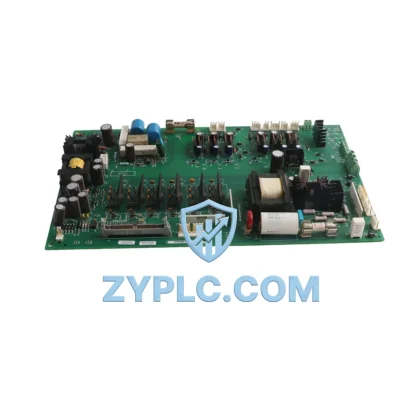
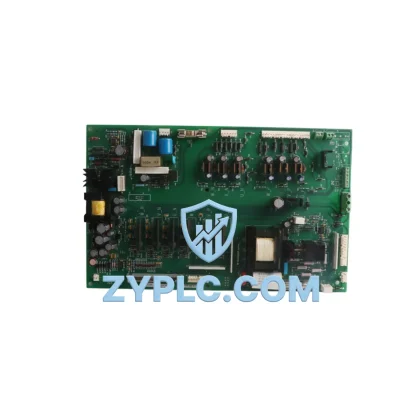
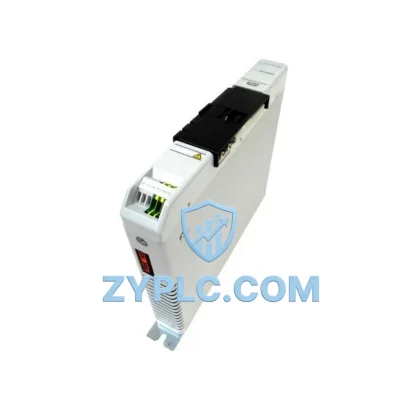
The Panasonic MCDDT3520053 is a high-performance AC servo driver from the MINAS A4 series, engineered to deliver precision motor control with measurable energy efficiency gains across demanding industrial automation environments. Designed for applications where cycle time, power consumption, and equipment uptime are critical KPIs, the MCDDT3520053 integrates seamlessly into modern production lines to reduce unnecessary energy draw, sharpen motion response, and extend the operational lifespan of connected servo systems.
At its core, the MCDDT3520053 operates as the execution layer of a closed-loop servo control architecture. When paired with compatible MINAS A4 servo motors such as the MSMD022G1U or MHMD042G1U, the driver continuously adjusts output torque and rotational speed in real time, eliminating the energy waste associated with fixed-speed motor operation. Unlike conventional motor starters, the MCDDT3520053 modulates power delivery based on actual load demand — a fundamental shift that directly reduces kWh consumption per production cycle.
Efficiency Performance Table
| Parameter |
Specification |
| Model |
MCDDT3520053 |
| Series |
MINAS A4 |
| Brand |
Panasonic |
| Product Type |
AC Servo Driver |
| Input Voltage |
200–230V AC, Single/Three Phase |
| Output Power |
750W (rated) |
| Control Mode |
Position / Speed / Torque |
| Encoder Compatibility |
17-bit Absolute / Incremental |
| Communication Protocol |
RS-232 / RS-485 / MECHATROLINK-II (optional) |
| Compatible Systems |
MINAS A4 Series, Panasonic FP-X / FP7 PLC Platforms |
| Application Environment |
CNC, Packaging, Conveyor, Robotics, Semiconductor |
| Energy Saving Value |
Demand-based torque modulation reduces idle power loss |
| Origin |
Japan |
| Warranty |
12-Month Warranty |
| Stock Status |
In Stock — Tested & Verified |
Energy-Aware Automation Architecture
Achieving genuine energy efficiency in a production environment requires more than a single high-efficiency component — it demands a coordinated architecture where every layer of the control system contributes to reducing waste. The MCDDT3520053 is designed to operate as a central node in exactly this kind of integrated system.
At the controller level, the Panasonic FP7 CPU provides the high-speed scan cycle and multi-axis coordination logic that allows the MCDDT3520053 to receive precise position commands without communication latency. For smaller cells or distributed I/O configurations, the FP-X C60T and FP0R-C32T compact PLCs offer a cost-effective control backbone that still delivers the pulse-train or analog command signals the MCDDT3520053 requires for accurate servo positioning.
Communication integrity is maintained through the AFPX-COM communication cassette, which enables RS-485 or MECHATROLINK-II connectivity between the PLC and the servo driver. This real-time data exchange allows the controller to monitor drive status, fault codes, and load feedback — enabling predictive maintenance routines that prevent unplanned downtime and the energy spikes associated with emergency restarts.
On the HMI side, the GT32-E operator panel provides production floor visibility into drive parameters, energy consumption trends, and alarm histories. Operators can monitor the MCDDT3520053’s regenerative braking activity and adjust deceleration ramp profiles directly from the panel, optimizing energy recovery during high-inertia stop cycles.
For multi-axis applications, the MCDDT3520053 can be deployed alongside the MCDDT3120 (400W variant) and MBDDT2210 (200W variant) within the same MINAS A4 drive cabinet, allowing engineers to right-size each axis for its actual load — a practice that eliminates the chronic over-specification that inflates energy bills in legacy servo installations. The MCDDT3520 (standard 750W model) serves as a direct reference platform for understanding the MCDDT3520053’s enhanced firmware capabilities.
Power quality at the input stage is managed through compatible line filters and reactor modules, which suppress harmonic distortion generated by the drive’s PWM switching. This protects upstream power distribution equipment and ensures that energy meters accurately reflect true consumption rather than inflated apparent power figures.
Power Optimization in Real Production Lines
In a typical packaging line running 16 hours per day, servo drives account for a significant share of total electrical consumption. The MCDDT3520053 addresses this through several mechanisms that compound over time to deliver measurable cost reductions.
First, the driver’s auto-tuning function identifies the mechanical resonance frequency of the connected load and adjusts gain parameters accordingly. This eliminates the vibration-induced energy losses that occur when a drive operates with mismatched gain settings — a common issue in lines where tooling or product weight changes between batches. Faster settling times mean shorter cycle intervals, which directly improves line throughput without increasing motor speed or power draw.
Second, the MCDDT3520053’s regenerative energy handling captures kinetic energy during deceleration phases and feeds it back into the DC bus. In applications with frequent start-stop cycles — such as indexing conveyors, pick-and-place robots, or CNC tool changers — this regenerative capability can reduce net energy consumption by a measurable percentage compared to drives that dissipate braking energy as heat through resistors.
Third, the drive’s standby power reduction mode automatically lowers excitation current to the connected servo motor during idle periods between production cycles. This is particularly valuable in assembly lines with variable takt times, where machines may sit at ready-state for extended intervals. The MSMD022G1U and MHMD042G1U motors paired with the MCDDT3520053 are optimized to respond to these excitation changes without position drift, maintaining accuracy while minimizing thermal load on both the motor and the drive.
From a maintenance perspective, the MCDDT3520053’s built-in load factor monitoring provides early warning of mechanical wear in bearings, couplings, and ball screws. When load torque trends upward over time without a corresponding change in production parameters, the drive flags the anomaly — allowing maintenance teams to schedule intervention during planned downtime rather than reacting to catastrophic failure. This predictive capability reduces both repair costs and the energy waste associated with running degraded mechanical systems.
All units supplied by ZYPLC are fully tested under load conditions prior to shipment, with functional verification of position control, speed regulation, and communication interfaces. Stock is maintained for immediate dispatch, supporting urgent replacement requirements without extended lead times.
Energy Optimization FAQ
Q1: How much energy can the MCDDT3520053 save compared to a standard induction motor drive?
In closed-loop servo applications, the MCDDT3520053 typically reduces energy consumption by 15–40% compared to open-loop induction motor systems operating at fixed speed. Actual savings depend on duty cycle, load variability, and the frequency of deceleration events where regenerative braking is active. Applications with high inertia loads and frequent stop-start cycles benefit most.
Q2: Is the MCDDT3520053 compatible with my existing Panasonic PLC and HMI infrastructure?
Yes. The MCDDT3520053 supports RS-232 and RS-485 communication natively, and is compatible with the full range of Panasonic FP-series and FP7-series PLCs. MECHATROLINK-II connectivity is available with the appropriate option card. The drive’s parameter structure is consistent with other MINAS A4 series units, so existing motion programs require minimal modification when replacing an older drive in the same series.
Q3: What is the recommended replacement or upgrade path if my current servo driver is failing?
The MCDDT3520053 is a direct functional replacement for other 750W MINAS A4 series drivers. If you are upgrading from an earlier MINAS A-series or MINAS E-series drive, parameter mapping tables are available to assist with configuration migration. ZYPLC’s technical team can advise on compatibility and assist with parameter backup and restore procedures prior to installation.
Q4: What does the 12-month warranty cover, and what is the testing process before shipment?
Every MCDDT3520053 unit supplied by ZYPLC undergoes functional testing including power-on verification, encoder signal integrity check, position and speed control loop validation, and communication port testing. The 12-month warranty covers manufacturing defects and functional failures under normal operating conditions. Units are shipped with test records available on request. Expedited replacement is available for critical production applications.
© 2026 ZYPLC. All rights reserved.
Original Source: https://zyplc.com
Contact: +86 19859288691 | [email protected]