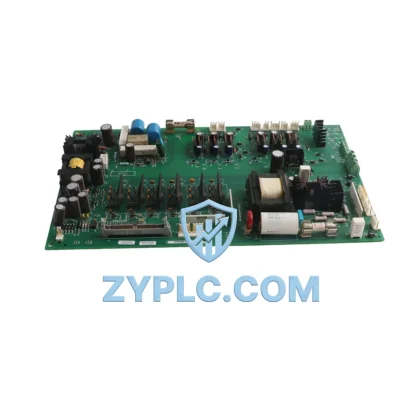
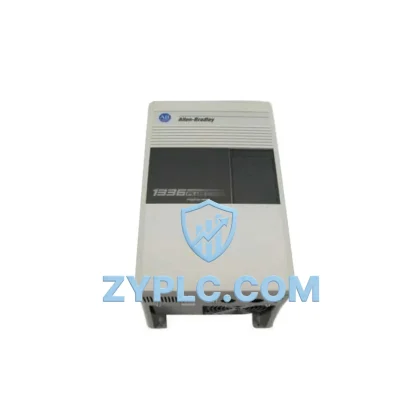
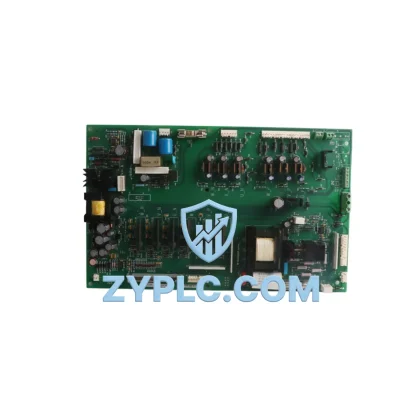
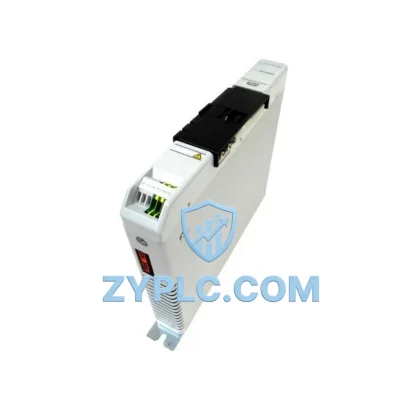
Parker CPX8541S/F4 Energy-Saving Servo Controller for Optimized Compax S Automation
The Parker CPX8541S/F4 is a high-performance servo controller from the Compax-S series, engineered to deliver precision motion control with measurable energy efficiency gains across demanding industrial automation environments. Designed for OEMs and system integrators seeking to reduce energy waste, improve drive utilization, and tighten production line cycle times, the CPX8541S/F4 represents a mature, field-proven solution for servo-driven machinery.
In modern manufacturing, energy consumption tied to motor control systems accounts for a significant share of total facility operating costs. The CPX8541S/F4 addresses this directly through its adaptive current regulation, regenerative braking capability, and closed-loop feedback architecture — all of which contribute to reduced idle-state power draw and more efficient torque delivery during acceleration and deceleration phases. When integrated into a coordinated motion system, this controller enables factories to achieve tighter equipment utilization rates while simultaneously lowering per-cycle energy expenditure.
Efficiency Performance Table
| Parameter |
Specification / Value |
| Model / Full SKU |
Parker CPX8541S/F4 (Compax-S Series) |
| Product Category |
Servo Controller / AC Servo Drive |
| Rated Output Current |
8.5 A (continuous) |
| Supply Voltage |
3-phase 400–480 VAC, 50/60 Hz |
| Drive Efficiency |
≥ 97% (typical, full load) |
| Control Mode |
Position / Velocity / Torque (closed-loop) |
| Feedback Interface |
Resolver / Encoder (F4 option) |
| Communication Protocol |
CANopen, RS-232/485, optional PROFIBUS |
| Compatible Systems |
Parker Compax-S, Aries, ETB servo motors; Parker PCD controllers |
| Application Environment |
Industrial automation, packaging, CNC, press, conveyor, robotics |
| Energy-Saving Value |
Regenerative braking, adaptive current control, low standby loss |
| Origin |
Germany (DE) |
| Warranty |
12-Month Warranty — tested before shipment |
Energy-Aware Automation Architecture
The CPX8541S/F4 does not operate in isolation — its energy efficiency is best realized when deployed as part of a coordinated automation architecture. In a typical high-efficiency servo system, the CPX8541S/F4 receives motion commands from a Parker PCD (Programmable Controller Drive) or a third-party PLC such as a Siemens S7-1500 or Allen-Bradley CompactLogix, translating high-level positioning commands into precise current waveforms delivered to the connected servo motor.
On the motor side, the CPX8541S/F4 is optimized for use with Parker ETB and EDB series servo motors, which are wound for low-loss operation and matched to the Compax-S drive’s current profile. The F4 feedback variant supports both resolver and incremental encoder inputs, enabling accurate rotor position tracking that minimizes torque ripple — a key contributor to unnecessary heat generation and energy waste in lesser-matched drive-motor pairs.
For energy monitoring at the system level, the CPX8541S/F4 can be paired with a Parker SSD power monitoring module or an external power quality analyzer to log real-time kWh consumption per axis. This data feeds into the plant’s energy management system, enabling engineers to identify axes with abnormal consumption patterns — often an early indicator of mechanical wear or misalignment — before they escalate into unplanned downtime.
Communication is handled via CANopen or optional PROFIBUS DP, allowing the CPX8541S/F4 to integrate seamlessly into distributed control architectures alongside Parker ACR motion controllers, I/O expansion modules, and HMI panels such as the Parker IPC (Industrial Panel Computer). This connectivity ensures that energy data, fault diagnostics, and motion status are all visible from a single supervisory layer, reducing the engineering overhead of multi-vendor integration.
In multi-axis systems, the CPX8541S/F4 can share a common DC bus with other Compax-S drives, enabling regenerative energy from decelerating axes to be consumed by accelerating axes on the same bus — a topology that can reduce net energy draw from the mains supply by 15–30% in coordinated motion profiles. This DC bus sharing architecture is particularly effective in gantry systems, winding machines, and multi-axis press lines where axes operate in complementary motion phases.
Power Optimization in Real Production Lines
On a packaging line running 24/7, the CPX8541S/F4’s adaptive velocity profiling reduces peak current demand during product changeovers, directly lowering the facility’s peak demand charge — often the largest single line item on an industrial electricity bill. By smoothing the acceleration ramp and optimizing the deceleration curve to recover kinetic energy, the drive reduces thermal stress on both the motor windings and the drive’s internal IGBT modules, extending mean time between failures (MTBF) and reducing the frequency of scheduled maintenance interventions.
In CNC and press applications, the CPX8541S/F4’s torque control mode enables force-controlled clamping and forming operations that consume only the energy required for the actual process load — eliminating the constant-speed, constant-current operation that wastes energy during dwell phases. Combined with the drive’s standby power reduction feature, which drops bus voltage during idle periods, a single CPX8541S/F4 axis can reduce its no-load energy consumption by up to 40% compared to conventional fixed-speed motor starters.
Predictive maintenance is further supported by the drive’s internal diagnostic registers, which log cumulative operating hours, thermal history, and fault event counts. When integrated with a SCADA or MES system via the drive’s serial interface, these registers provide the data foundation for condition-based maintenance scheduling — replacing time-based replacement intervals with evidence-based interventions that reduce both maintenance cost and unnecessary parts consumption.
All units supplied by ZYPLC are sourced from verified supply channels, subjected to functional load testing prior to dispatch, and covered by a 12-month warranty. Stock is maintained for rapid fulfillment, minimizing lead times for urgent replacement or project commissioning requirements.
Energy Optimization FAQ
Q1: How much energy can the Parker CPX8541S/F4 save compared to a conventional motor starter?
In variable-load applications, the CPX8541S/F4’s closed-loop torque control and regenerative braking can reduce axis-level energy consumption by 20–40% versus fixed-speed starters. Actual savings depend on duty cycle, load profile, and whether DC bus sharing is implemented across multiple axes.
Q2: Is the CPX8541S/F4 compatible with third-party PLCs and motion controllers?
Yes. The CPX8541S/F4 supports CANopen DS402 and optional PROFIBUS DP, making it compatible with a wide range of third-party controllers including Siemens, Beckhoff, and Mitsubishi platforms. Parker’s C3 ServoManager software is used for commissioning and parameter configuration regardless of the upstream controller.
Q3: What is the recommended replacement or upgrade path if the CPX8541S/F4 is discontinued?
Parker’s Compax3 series (e.g., C3S025V4) is the functional successor to the Compax-S platform, offering enhanced communication options and a more compact form factor. ZYPLC can advise on parameter migration and mechanical fitment for retrofit projects.
Q4: What does the 12-month warranty cover, and what testing is performed before shipment?
Every CPX8541S/F4 unit dispatched by ZYPLC undergoes a pre-shipment functional test covering power-on self-test, feedback signal verification, and basic motion command execution. The 12-month warranty covers manufacturing defects and component failures under normal operating conditions, with direct support from ZYPLC’s technical team.
© 2026 ZYPLC. All rights reserved.
Original Source: https://zyplc.com
Contact: +86 19859288691 | plc.sales@zyplc.com