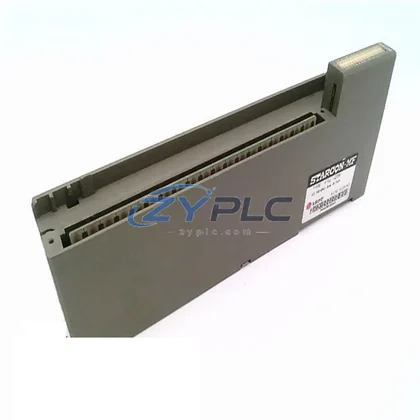
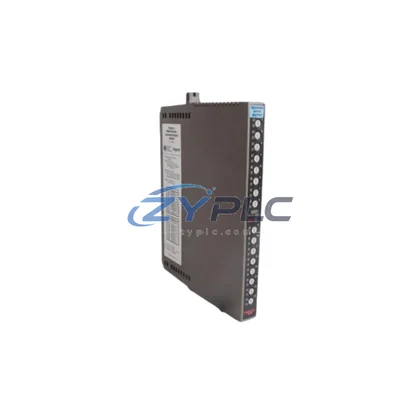
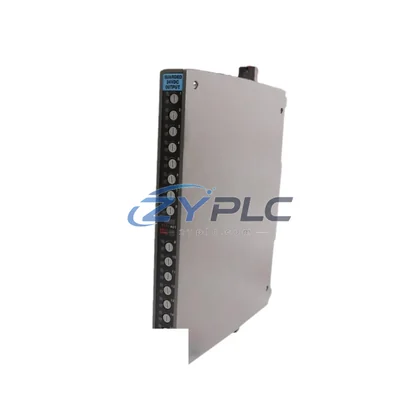
The Phoenix Contact 2981020 PSR-SCP-24DC/ESP4/2X1/1X2 is a high-performance safety relay engineered for demanding industrial environments where reliable signal acquisition, protocol-level communication, and real-time data integrity are non-negotiable. Operating at 24VDC with ESP4 safety logic, this unit serves as a critical node in the industrial data chain — bridging field-level safety devices with PLC controllers, SCADA platforms, and HMI systems across modern smart factory architectures.
In today’s connected manufacturing environment, safety relays are no longer passive switching components. The PSR-SCP series from Phoenix Contact is designed to participate actively in the industrial communication fabric, enabling transparent data flow from emergency stop circuits, light curtains, and two-hand control devices all the way up to supervisory control layers. Whether integrated into a Siemens S7-1500 PLC network, a Rockwell Automation ControlLogix system, or a Beckhoff TwinCAT-based control platform, the 2981020 delivers deterministic response times and diagnostic feedback that modern safety-over-network architectures demand.
Compatibility & Integration Notes
| Parameter |
Specification |
| SKU / Part Number |
PSR-SCP-24DC/ESP4/2X1/1X2 | 2981020 |
| Brand |
Phoenix Contact |
| Series |
PSR-SCP (Safety Relay Series) |
| Supply Voltage |
24VDC |
| Safety Logic |
ESP4 (Emergency Stop / Protective Door) |
| Output Contacts |
2x Safety (NO) + 1x Signaling (NC) |
| Safety Category |
Up to Category 4 / PLe / SIL 3 |
| Protocol Compatibility |
Compatible with PROFIsafe, Safety over EtherNet/IP, AS-Interface Safety at Work |
| Interface Type |
DIN Rail Mount, Spring-Cage Terminal |
| Network Compatibility |
PROFIBUS, PROFINET, EtherNet/IP, Modbus TCP (via gateway) |
| System Application |
SCADA, HMI, PLC Safety Networks, Remote I/O, Smart Factory |
| Origin |
Germany (DE) |
| Warranty |
warranty terms confirmed during quotation | availability subject to RFQ confirmation | Global Shipping |
Connected Automation Data Flow
Understanding the role of the PSR-SCP-24DC/ESP4/2X1/1X2 requires tracing the complete data path from field device to enterprise system. At the signal acquisition layer, safety sensors — such as Phoenix Contact’s PSENcode safety encoders or PSEN ml b 1.1 magnetic safety switches — feed status signals into the 2981020. The relay evaluates these inputs against its ESP4 logic matrix and generates a certified safe output within the required response time window.
This output state is then communicated upstream through a safety gateway — for example, the Phoenix Contact PSR-Gateway or a Pilz PNOZmulti 2 modular safety controller — which translates the relay’s contact status into a PROFINET or EtherNet/IP data packet. This packet travels across the plant network, where a Siemens SCALANCE X208 managed industrial Ethernet switch ensures deterministic, low-latency delivery to the PLC layer.
At the PLC level, a Siemens S7-1500F or Rockwell Automation GuardLogix 5580 safety controller receives the safety data, integrates it into the machine safety program, and triggers appropriate responses — halting a servo drive, activating a warning beacon, or logging an event to the SCADA historian. Simultaneously, an Advantech WISE-5231 edge gateway or Moxa MGate MB3170 protocol converter may be used to bridge legacy Modbus RTU devices on the same production line, ensuring that older field instruments remain visible within the unified data architecture.
HMI panels — such as the Phoenix Contact TP 3057T or a Weintek cMT3151X — display real-time safety relay status, trip history, and diagnostic codes, giving operators immediate visibility into safety circuit health without requiring physical inspection of the control cabinet. Remote diagnostic capability is further extended through integration with SCADA platforms like Ignition by Inductive Automation or Wonderware System Platform, where the 2981020’s operational data contributes to overall equipment effectiveness (OEE) dashboards and predictive maintenance workflows.
For distributed installations, the PSR-SCP relay pairs naturally with Phoenix Contact Inline remote I/O modules (IB IL 24 DO 16-PAC series) to extend safety signals across large factory floors without signal degradation, maintaining network integrity even in electrically noisy environments typical of heavy manufacturing, automotive assembly, and process industries.
Solving Data Isolation in Industrial Sites
One of the most persistent challenges in industrial automation is the fragmentation of safety data across incompatible protocols and isolated subsystems. A production line may simultaneously run PROFIBUS DP legacy devices, PROFINET-connected drives, and EtherNet/IP-based safety PLCs — each operating in its own communication silo. The Phoenix Contact 2981020 PSR-SCP addresses this by providing a standardized, certified safety output that can be read by any upstream gateway or safety controller regardless of the fieldbus topology in use.
Remote monitoring is another critical pain point. Without real-time safety relay status data flowing into the SCADA layer, maintenance teams must physically inspect control panels to diagnose trip events — a time-consuming process that extends mean time to repair (MTTR) and reduces production uptime. By integrating the PSR-SCP-24DC/ESP4/2X1/1X2 into a networked safety architecture, plant engineers gain remote diagnostic access to trip cause, contact wear status, and cycle count data, enabling condition-based maintenance strategies that reduce unplanned downtime.
Production line transparency is further enhanced when safety relay data is correlated with process variables from variable frequency drives (VFDs), temperature sensors, and vision systems within the SCADA historian. This holistic data view supports root cause analysis, regulatory compliance reporting, and continuous improvement initiatives — all foundational requirements of Industry 4.0 and smart factory transformation programs.
System scalability is built into the PSR-SCP architecture. As production lines expand, additional PSR-SCP modules can be added to the DIN rail without reconfiguring the upstream network, and the modular gateway approach ensures that new safety zones integrate seamlessly into the existing SCADA and PLC infrastructure.
Industrial Connectivity FAQ
Q1: What is the communication latency of the PSR-SCP-24DC/ESP4/2X1/1X2 in a PROFINET safety network?
The PSR-SCP series is designed for deterministic response times compliant with IEC 62061 and ISO 13849-1. When integrated via a PROFIsafe-capable gateway into a PROFINET network, safety data cycle times are typically configured between 4ms and 32ms depending on the controller’s safety program scan rate, well within the requirements for Category 4 / PLe applications.
Q2: Is the 2981020 compatible with both PROFIBUS and EtherNet/IP architectures?
Yes. While the PSR-SCP-24DC/ESP4/2X1/1X2 itself communicates via hardwired safety contacts, its output can be read by any fieldbus-compatible safety gateway — including Phoenix Contact PSR-Gateway modules supporting PROFIBUS DP, PROFINET, EtherNet/IP, and AS-Interface Safety at Work — making it protocol-agnostic at the network integration level.
Q3: How does the PSR-SCP series support network stability in high-EMI industrial environments?
Phoenix Contact’s PSR-SCP relays feature reinforced insulation, gold-plated contact surfaces, and EMC-optimized circuit design to maintain reliable operation in environments with significant electromagnetic interference from VFDs, welding equipment, and high-current motor starters. Spring-cage terminal connections eliminate contact resistance drift over time, ensuring long-term network signal integrity.
Q4: What warranty and pre-shipment testing does the 2981020 include?
Every Phoenix Contact 2981020 unit supplied by ZYPLC undergoes pre-shipment functional verification including contact continuity testing, coil energization checks, and safety logic validation. All units are covered by a warranty terms confirmed during quotation from the date of shipment. Availability is confirmed via RFQ for same-week dispatch with full traceability documentation. For volume orders or urgent requirements, contact our technical sales team directly.