ProSoft MVI69-PDPMV1 System-Ready PROFIBUS DP Master for CompactLogix Architecture: Control System Architecture and Upstream-Downstream Coordination
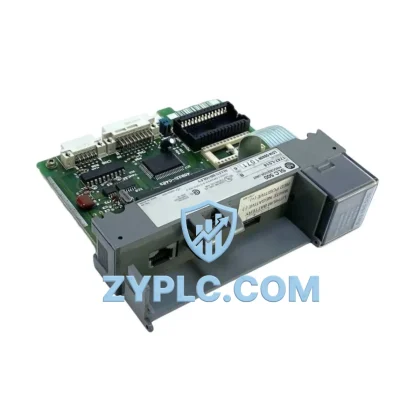
The ProSoft MVI69-PDPMV1 is a PROFIBUS DP Master communication module engineered for seamless integration within Allen-Bradley CompactLogix control system architectures. Designed to bridge the CompactLogix backplane with PROFIBUS DP field device networks, this module occupies a critical position in the I/O and network communication layer of layered industrial automation systems. Rather than functioning as a standalone device, the MVI69-PDPMV1 is most effectively deployed as a coordinating element that connects the control layer — anchored by processors such as the 1769-L30ER or 1769-L33ER CompactLogix CPUs — with distributed field instrumentation, variable frequency drives, remote I/O stations, and intelligent actuators operating on the PROFIBUS DP protocol.
In modern industrial control architectures, communication consistency between the controller and field devices is a primary determinant of system reliability. The MVI69-PDPMV1 addresses this requirement by acting as a Class 1 PROFIBUS DP Master, capable of managing up to 125 slave devices per segment at data rates up to 12 Mbps. This capability ensures that the CompactLogix platform can maintain deterministic, high-speed communication with PROFIBUS-compatible devices across the full automation hierarchy — from the process control layer down to the field execution layer — without requiring additional protocol converters or intermediate gateways that introduce latency and single points of failure.
System architects integrating the MVI69-PDPMV1 benefit from its direct backplane communication with the CompactLogix processor via the 1769 I/O bus, enabling low-latency data exchange between the PROFIBUS network and the controller’s data table. This architecture supports real-time process monitoring, closed-loop control, and coordinated sequencing across multi-zone production environments. The module’s configuration is managed through ProSoft Configuration Builder (PCB) software, which provides a structured environment for defining slave device GSD files, I/O mapping, and diagnostic data routing — reducing commissioning time and minimizing configuration errors during system startup.
Architecture Specification Table
| Parameter |
Specification |
| System Role |
PROFIBUS DP Class 1 Master — CompactLogix I/O Communication Layer |
| Compatible Platform |
Allen-Bradley CompactLogix 1769 Series (L20, L30, L32, L33, L35, L43, L45) |
| PROFIBUS DP Standard |
IEC 61158 / EN 50170 compliant |
| Max Slave Devices |
Up to 125 PROFIBUS DP slave devices per master port |
| Communication Speed |
9.6 Kbps to 12 Mbps (auto-negotiated) |
| Backplane Interface |
1769 CompactLogix I/O bus (direct backplane mount) |
| Data Exchange |
Cyclic and acyclic data exchange; DPV0 and DPV1 supported |
| Input/Output Data |
Up to 240 words input / 240 words output to controller data table |
| Power Consumption |
800 mA @ 5 VDC (from CompactLogix backplane) |
| Operating Temperature |
0°C to 60°C (32°F to 140°F) |
| Storage Temperature |
-40°C to 85°C |
| Relative Humidity |
5% to 95% non-condensing |
| Mounting |
DIN rail or panel mount via CompactLogix chassis |
| Certifications |
UL Listed, CE Marked, RoHS Compliant |
| Diagnostic Support |
Module status LEDs, RSLogix 5000 / Studio 5000 diagnostic tags |
| Warranty |
12-Month Warranty — Tested, verified, and ready for system deployment |
Coordinated Control System Design
The MVI69-PDPMV1 achieves its full architectural value when deployed within a coordinated CompactLogix control system. At the control layer, the module interfaces directly with CompactLogix processors such as the 1769-L30ER or 1769-L33ER, sharing the 1769 backplane and exchanging process data through the controller’s input/output data table at each program scan cycle. This tight integration eliminates the communication overhead associated with Ethernet-based gateway solutions and ensures that PROFIBUS field data is available to the ladder logic or function block programs with minimal latency.
At the power layer, the CompactLogix system relies on the 1769-PA2 or 1769-PB2 power supply modules to deliver stable 5 VDC and 24 VDC rails to the backplane. The MVI69-PDPMV1 draws its operating power directly from this backplane supply, making power budget planning an essential step during system design — particularly in high-density configurations where multiple specialty modules share the same chassis.
On the PROFIBUS DP network side, the MVI69-PDPMV1 communicates with a wide range of slave devices, including Siemens ET 200S distributed I/O stations, ABB ACS800 variable frequency drives, Pepperl+Fuchs DP/PA segment couplers for PROFIBUS PA instrument integration, and Phoenix Contact PROFIBUS repeaters for network segment extension. Each slave device is defined using its GSD (General Station Description) file within ProSoft Configuration Builder, ensuring that the master correctly maps each slave’s I/O data into the CompactLogix controller’s tag database.
For human-machine interface integration, the CompactLogix system typically connects to Allen-Bradley PanelView Plus 7 terminals via EtherNet/IP, allowing operators to monitor PROFIBUS network status, slave device diagnostics, and process variable trends in real time. The MVI69-PDPMV1 exposes diagnostic data — including slave device fault flags, communication error counters, and bus cycle times — as standard controller tags, making this information directly accessible to the HMI without additional programming overhead.
In redundancy-critical applications, system architects may deploy the MVI69-PDPMV1 alongside a ProSoft MVI69-PDPS (PROFIBUS DP Slave) module to create bidirectional PROFIBUS communication paths within the same CompactLogix chassis, supporting master-slave topology configurations where the CompactLogix system must simultaneously act as a DP master to field devices and a DP slave to a supervisory DCS platform. This dual-role architecture is common in hybrid automation environments where legacy DCS systems — such as Honeywell Experion or Emerson DeltaV — retain supervisory control while CompactLogix handles local sequencing and interlocking.
Terminal block modules such as the 1492-AIFM analog interface modules and 1769-IQ16 digital input modules complement the MVI69-PDPMV1 by handling hardwired I/O signals that fall outside the PROFIBUS network scope, ensuring that the overall CompactLogix system maintains complete signal coverage across both networked and hardwired field devices.
Application in Layered Automation Systems
The MVI69-PDPMV1 is deployed across a broad range of industrial sectors where PROFIBUS DP remains the dominant field communication standard. In manufacturing and assembly automation, the module enables CompactLogix controllers to manage PROFIBUS-connected robot controllers, servo drives, and vision system interfaces within high-speed production lines, supporting coordinated motion sequencing and quality inspection workflows.
In power generation and electrical distribution facilities, the MVI69-PDPMV1 integrates CompactLogix-based protection and control systems with PROFIBUS DP-enabled intelligent electronic devices (IEDs), motor protection relays, and switchgear controllers. This integration supports centralized monitoring of electrical parameters, automated fault isolation, and load management across medium-voltage distribution networks.
Within oil, gas, and petrochemical processing plants, the module facilitates communication between CompactLogix safety and process controllers and PROFIBUS PA field instruments — including pressure transmitters, flow meters, and control valves — via DP/PA segment couplers. This architecture supports both continuous process monitoring and emergency shutdown system (ESD) integration in compliance with IEC 61511 functional safety requirements.
In water and wastewater treatment facilities, the MVI69-PDPMV1 connects CompactLogix controllers with PROFIBUS-enabled pump drives, valve actuators, and analytical instruments distributed across large treatment plant footprints. The module’s support for long-distance PROFIBUS segments — up to 1,200 meters at 93.75 Kbps — makes it well-suited for geographically dispersed field device networks typical of water infrastructure projects.
For mining, metallurgy, and mineral processing applications, the module supports integration of CompactLogix control systems with PROFIBUS-connected conveyor drives, crusher controls, and process analyzers in harsh industrial environments. Its wide operating temperature range and DIN rail mounting compatibility ensure reliable operation within control panels exposed to vibration, dust, and temperature extremes common in mining facilities.
Architecture Engineering FAQ
Q1: Is the MVI69-PDPMV1 compatible with all CompactLogix processor generations, and what Studio 5000 version is required for full diagnostic tag support?
The MVI69-PDPMV1 is compatible with CompactLogix 1769-L20, L30, L32, L33, L35, L43, and L45 series processors. ProSoft recommends using RSLogix 5000 version 16 or later (Studio 5000 Logix Designer v21+) to take full advantage of the module’s Add-On Instruction (AOI) library and structured diagnostic tag mapping. The AOI package, available from ProSoft’s support portal, simplifies integration by pre-defining all module configuration and status tags within the controller project, reducing commissioning time significantly.
Q2: Can the MVI69-PDPMV1 support both DPV0 cyclic data exchange and DPV1 acyclic parameter access simultaneously, and how does this affect system architecture design?
Yes, the MVI69-PDPMV1 supports simultaneous DPV0 cyclic I/O data exchange and DPV1 acyclic parameter read/write operations. This dual-mode capability is essential in architectures where field devices — such as intelligent drives or process transmitters — require both real-time process data exchange (DPV0) and on-demand parameter configuration or diagnostic readback (DPV1). System architects should allocate sufficient controller task time and backplane bandwidth to accommodate both communication modes, particularly in high-density slave configurations approaching the 125-device limit.
Q3: What does the 12-Month Warranty cover, and what support is available for system integration and long-term maintenance?
The 12-Month Warranty covers manufacturing defects, component failures, and functional non-conformance under normal operating conditions as specified in the product datasheet. All units supplied by ZYPLC are tested and verified prior to shipment to ensure full operational readiness. For system integration support, ZYPLC provides pre-sales technical consultation on module configuration, GSD file compatibility, and backplane slot planning. Long-term maintenance support includes access to replacement units, firmware guidance, and ProSoft Configuration Builder software assistance to minimize system downtime during scheduled maintenance or unplanned fault recovery events.
© 2026 ZYPLC. All rights reserved.
Original Source: https://zyplc.com
Contact: +86 19859288691 | plc.sales@zyplc.com