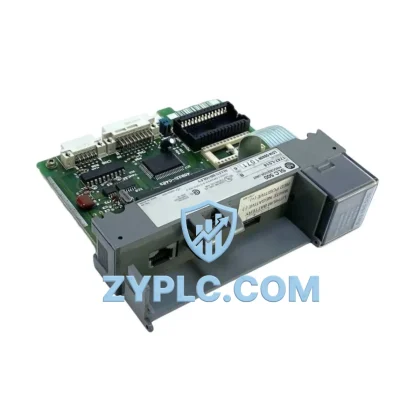
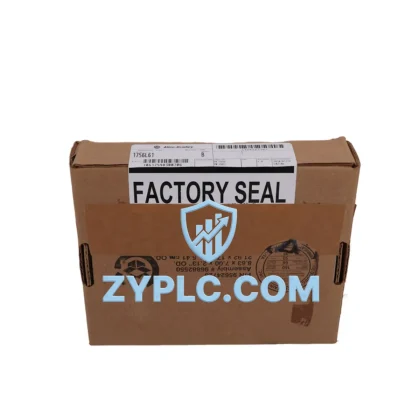
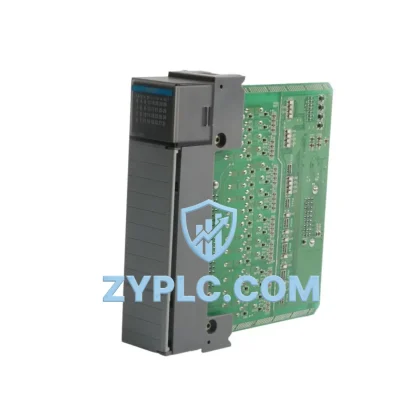
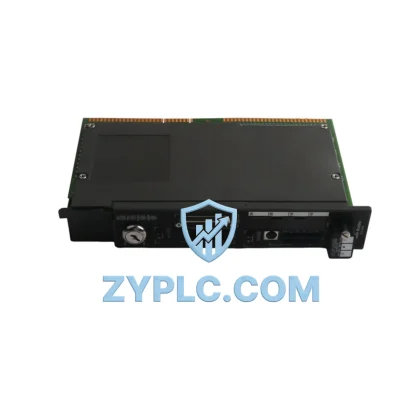
ProSoft MVI69E-MBS System-Ready Modbus Serial Module for CompactLogix Architecture
In modern industrial automation, the reliability of a control system depends not on any single component, but on the seamless coordination of every layer — from the CPU and power supply down through I/O modules, communication gateways, HMI interfaces, and field-level actuators. The ProSoft Technology MVI69E-MBS Modbus Serial Communication Module is engineered to occupy a critical position within this layered architecture, serving as the protocol bridge that connects legacy Modbus RTU/ASCII field devices to Allen-Bradley CompactLogix and MicroLogix 1500 controller platforms. For system integrators, OEM panel builders, and plant engineers managing multi-protocol environments, the MVI69E-MBS delivers the contextual integration capability that keeps distributed control systems coherent, scalable, and maintainable over the long term.
The MVI69E-MBS slots directly into the CompactLogix backplane alongside the processor, eliminating the need for external converters or standalone gateways. This backplane-native design ensures deterministic data exchange between the Modbus serial network and the ControlLogix/CompactLogix tag database, reducing scan-cycle latency and simplifying ladder logic development in Studio 5000 Logix Designer. Whether the system architecture calls for a single CompactLogix L30ER processor managing a compact machine cell or a distributed rack system with multiple 1769 I/O expansion modules, the MVI69E-MBS integrates without disrupting the existing rack topology.
From a signal flow perspective, the module operates as a Modbus Master or Slave, polling field instruments — including flow meters, temperature transmitters, variable frequency drives, and smart motor controllers — and mapping their register data directly into the CompactLogix controller tags. This bidirectional data path supports both read and write operations across up to two independent serial ports, enabling simultaneous communication with multiple Modbus device networks from a single module slot. The result is a leaner panel design, reduced wiring complexity, and a more maintainable system architecture that engineering teams can document, commission, and troubleshoot with confidence.
System architects designing for redundancy and long-term operational continuity will appreciate the MVI69E-MBS’s compatibility with ProSoft Technology’s broader MVI69E series ecosystem. When paired with a 1769-L33ER or 1769-L36ERM CompactLogix processor and supported by a 1769-PA4 or 1769-PB4 power supply module, the module participates in a fully coordinated control architecture where power, processing, and communication resources are balanced across the rack. For applications requiring higher availability, the MVI69E-MBS can be deployed in parallel rack configurations supported by ProSoft’s redundancy-aware firmware, ensuring that Modbus field data remains accessible even during planned maintenance windows or unexpected processor faults.
At the network layer, the MVI69E-MBS supports RS-232, RS-422, and RS-485 physical interfaces, accommodating point-to-point and multi-drop serial topologies that remain prevalent in power generation, water treatment, oil and gas, and heavy manufacturing environments. Its configurable baud rates, parity settings, and inter-message delay parameters allow engineers to fine-tune communication timing to match the response characteristics of legacy field devices — a capability that is essential when integrating older instrumentation into a modernized CompactLogix-based control platform. The module’s ProSoft Configuration Builder (PCB) software provides a structured configuration environment that integrates with the broader Rockwell Automation ecosystem, allowing configuration files to be version-controlled alongside PLC programs.
For panel builders and system integrators sourcing components for new installations or replacement projects, the MVI69E-MBS is available through ZYPLC with verified in-stock inventory and a 12-Month Warranty covering manufacturing defects and operational failures under normal industrial service conditions. ZYPLC’s supply chain infrastructure supports both single-unit procurement for emergency replacements and bulk orders for multi-site rollouts, with export documentation available for international project deliveries.
Architecture Specification Table
| Parameter |
Specification |
| System Role |
Modbus RTU/ASCII Master/Slave Communication Module |
| Compatible Platform |
Allen-Bradley CompactLogix, MicroLogix 1500 (1769 backplane) |
| Serial Ports |
2 × configurable RS-232 / RS-422 / RS-485 |
| Protocol Support |
Modbus RTU, Modbus ASCII (Master and Slave modes) |
| Baud Rate Range |
110 bps – 115,200 bps |
| Data Register Capacity |
Up to 5,000 registers (read/write) |
| Backplane Interface |
1769 CompactLogix backplane (side-mount) |
| Power Consumption |
800 mA @ 5 VDC (backplane supplied) |
| Operating Temperature |
0°C to +60°C (IEC 60068-2-1/2) |
| Relative Humidity |
5% – 95% non-condensing |
| Enclosure Rating |
Open type — requires installation in rated enclosure |
| Configuration Tool |
ProSoft Configuration Builder (PCB) |
| Communication Diagnostics |
LED status indicators, PCB diagnostic port |
| Warranty |
12-Month Warranty (manufacturing defects, normal service conditions) |
| Certifications |
UL Listed, CE Marked, RoHS Compliant |
Coordinated Control System Design
The MVI69E-MBS achieves its full value when considered as part of a coordinated CompactLogix system architecture rather than as a standalone communication adapter. In a typical mid-scale automation panel, the module occupies one slot in a 1769-A7 or 1769-A10 expansion chassis alongside a 1769-L33ER CompactLogix processor that serves as the system’s primary execution engine. The processor’s EtherNet/IP port connects upstream to a managed industrial switch and SCADA server, while the MVI69E-MBS handles the downstream Modbus serial network — creating a clean protocol boundary between the plant network layer and the field device layer.
Power distribution within the rack is managed by a 1769-PA4 AC power supply module, which provides regulated 5 VDC and 24 VDC backplane power to all installed modules including the MVI69E-MBS. For applications with higher I/O density, a 1769-IQ32 32-point digital input module and a 1769-OB32 32-point digital output module extend the system’s discrete I/O capacity, while a 1769-IF8 8-channel analog input module handles process variable signals from pressure transmitters and flow sensors that do not communicate over Modbus. This mixed I/O architecture — combining native 1769 I/O with Modbus-mapped data from the MVI69E-MBS — is a common design pattern in water treatment and chemical processing applications where instrumentation generations span multiple decades.
At the HMI layer, a PanelView Plus 7 terminal connected via EtherNet/IP to the CompactLogix processor provides operators with real-time visibility into both the native I/O data and the Modbus-sourced field device registers, all presented through a unified tag namespace. This unified data model — made possible by the MVI69E-MBS’s backplane integration — eliminates the need for OPC servers or middleware translation layers that would otherwise introduce latency and additional failure points into the system architecture.
For applications requiring serial network segmentation, the MVI69E-MBS’s dual-port architecture allows Port 1 to serve a Modbus RTU network of variable frequency drives (such as the PowerFlex 40 series configured for Modbus operation) while Port 2 simultaneously communicates with a separate network of Modbus-enabled smart meters or energy monitoring devices. This parallel serial network capability doubles the module’s effective field device coverage without consuming additional backplane slots, a significant advantage in space-constrained control panels. The ProSoft MVI69E-MNET (Modbus TCP/IP variant) can be deployed in adjacent slots for applications that require both serial and Ethernet Modbus connectivity within the same CompactLogix rack, providing a migration path as field device networks evolve toward Ethernet-based protocols.
Application in Layered Automation Systems
The MVI69E-MBS is deployed across a wide range of industrial sectors where Modbus serial communication remains the dominant field device protocol. In municipal water treatment and wastewater facilities, the module integrates Modbus RTU-enabled pump controllers, chlorination dosing systems, and level transmitters into CompactLogix-based SCADA architectures, providing plant operators with centralized monitoring and control without requiring field device replacement. The module’s RS-485 multi-drop capability supports daisy-chained instrument networks spanning hundreds of meters across large treatment plant sites.
In power generation and electrical substation applications, the MVI69E-MBS bridges Modbus RTU-communicating protective relays, power quality meters, and automatic transfer switches into the plant DCS or SCADA system. Its deterministic polling behavior and configurable inter-message timing ensure that critical protection status data is refreshed within defined scan intervals, supporting the real-time awareness requirements of power system operators. The module’s operating temperature range and vibration tolerance make it suitable for installation in substation control panels subject to environmental stress.
For oil and gas upstream and midstream operations, the MVI69E-MBS connects wellhead RTUs, flow computers, and pressure safety controllers to centralized CompactLogix-based control systems. Its ability to operate as a Modbus Master polling multiple slave devices simultaneously reduces the number of communication modules required per control panel, lowering both capital cost and panel footprint. In pipeline SCADA applications, the module’s data buffering capability ensures that field device register data is preserved across communication interruptions caused by radio link fading or network congestion.
In manufacturing and discrete production environments — including automotive assembly, food and beverage processing, and pharmaceutical packaging lines — the MVI69E-MBS integrates legacy Modbus-enabled barcode scanners, weighing systems, and serialization equipment into modern CompactLogix-based machine controllers. This integration capability extends the useful life of existing field instrumentation investments while allowing the control system architecture to be modernized incrementally, reducing the capital expenditure and production downtime associated with full system replacements.
Architecture Engineering FAQ
Q1: Is the MVI69E-MBS compatible with both CompactLogix L1x and L3x processor families, and does it require any special configuration for multi-rack systems?
The MVI69E-MBS is compatible with all CompactLogix processors that support the 1769 backplane, including the L16ER, L18ER, L30ER, L33ER, and L36ERM families. In multi-rack configurations using 1769-CRR1 or 1769-CRL1 right/left end caps and expansion cables, the module must be installed in the local rack containing the processor, as the MVI69E series communicates via the local backplane rather than over EtherNet/IP. For remote rack deployments, ProSoft’s MVI56E-MBS (ControlLogix platform) or a standalone ProLinx gateway should be evaluated as alternatives. Configuration is performed using ProSoft Configuration Builder, and the resulting .pcd file is downloaded directly to the module via the module’s RS-232 configuration port.
Q2: How does the MVI69E-MBS handle communication failures on the Modbus serial network, and what diagnostic data is available to the CompactLogix processor?
The MVI69E-MBS maintains a comprehensive diagnostic data block within the CompactLogix controller’s tag database, updated on every backplane scan cycle. This block includes per-port communication statistics (request count, error count, timeout count), current module status flags, and a rolling event log accessible via ProSoft Configuration Builder’s diagnostic interface. When a Modbus slave device fails to respond within the configured timeout period, the module sets a configurable error flag in the controller tag database, allowing the PLC program to implement fault handling logic — such as alarming, fallback control modes, or operator notifications via the PanelView HMI. The module’s onboard LED indicators provide immediate visual status for field technicians during commissioning and troubleshooting without requiring a laptop connection.
Q3: What does the 12-Month Warranty cover, and what is the process for warranty claims or advance replacement through ZYPLC?
The 12-Month Warranty provided by ZYPLC covers manufacturing defects and component failures occurring under normal industrial operating conditions within twelve months of the invoice date. The warranty does not cover damage resulting from incorrect installation, overvoltage events, physical impact, or operation outside the module’s specified environmental ratings. To initiate a warranty claim, contact ZYPLC at plc.sales@zyplc.com or +86 19859288691 with the original invoice number, module serial number, and a description of the observed fault. ZYPLC’s technical team will evaluate the claim and coordinate replacement or repair logistics, including export documentation for international project sites. Advance replacement units are available subject to stock confirmation at the time of the claim.
© 2026 ZYPLC. All rights reserved.
Original Source: https://zyplc.com
Contact: +86 19859288691 | plc.sales@zyplc.com