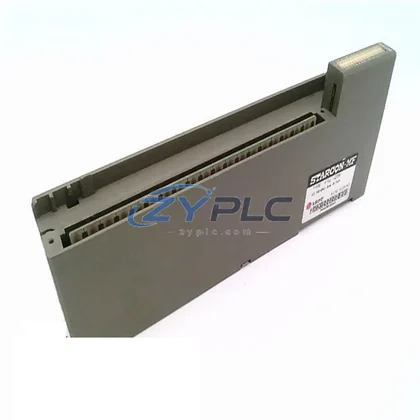
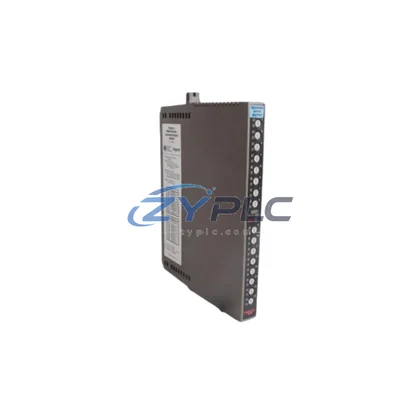
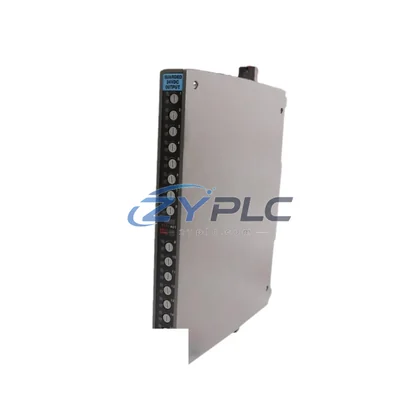
Reliance Electric S-D4007 Digital I/O for AutoMax
The Reliance Electric S-D4007 Digital I/O Module is a purpose-built field I/O component designed to operate within the AutoMax distributed control platform. Rather than functioning as a standalone device, the S-D4007 is engineered to serve as a critical node within a layered automation architecture — bridging the gap between field-level signal acquisition and the supervisory control layer. In modern industrial environments where system consistency, deterministic signal flow, and long-term maintainability are non-negotiable, the S-D4007 delivers the structural reliability that AutoMax-based control systems demand.
Within a complete AutoMax control hierarchy, the S-D4007 occupies the I/O layer, receiving discrete signals from field devices such as proximity sensors, limit switches, solenoid valves, and motor contactors, then transmitting those signals upstream to the AutoMax CPU module for processing. This signal path is fundamental to closed-loop control: without a reliable, rack-compatible I/O module like the S-D4007, the CPU cannot accurately reflect real-world process states or issue timely control outputs. The module’s compatibility with the AutoMax backplane ensures that signal latency is minimized and that the overall scan cycle of the controller remains predictable — a critical requirement in high-speed manufacturing and process control applications.
System architects integrating the S-D4007 into an AutoMax rack will typically pair it with the AutoMax CPU module (such as the 57C409 or 57C410 processor cards) to form the core of the control tier. Power distribution within the rack is managed by dedicated AutoMax power supply modules, ensuring that the S-D4007 and adjacent I/O cards receive stable, conditioned DC power regardless of field-side load fluctuations. For applications requiring analog signal handling alongside discrete I/O, the S-D4007 is commonly deployed in the same rack as AutoMax analog input modules and analog output modules, allowing a single backplane to serve both digital and analog process variables without additional communication overhead.
Network integration is another dimension where the S-D4007 contributes to overall system coherence. AutoMax systems frequently employ the AutoMax Network (a proprietary peer-to-peer communication protocol) to link multiple racks, remote I/O drops, and supervisory workstations. The S-D4007, when installed in a networked AutoMax rack, participates in this data exchange framework, making its I/O status visible to upstream SCADA systems, historian platforms, and HMI terminals. In facilities running Reliance Electric GV3000 or GV5000 AC drives, the S-D4007 often serves as the discrete command interface — issuing run/stop, direction, and fault-reset signals to the drive system while receiving status feedback for integration into the control logic.
Redundancy planning is a key consideration for any critical process application. In AutoMax architectures designed for high-availability operation — such as those found in continuous process industries including petrochemical refining, power generation, and water treatment — the S-D4007 is deployed in redundant rack configurations where a standby I/O module mirrors the primary module’s state. This approach ensures that a single module failure does not interrupt process control, and that maintenance personnel can hot-swap the S-D4007 without requiring a full system shutdown. The module’s robust construction and well-documented electrical specifications make it straightforward to validate replacement units against the original system design.
From an engineering commissioning perspective, the S-D4007 integrates cleanly into AutoMax programming environments. Field wiring connects to the module’s terminal interface, and I/O addressing is configured through the AutoMax system software, where each channel can be individually mapped to control logic variables. This structured addressing approach simplifies both initial commissioning and subsequent troubleshooting, as maintenance engineers can isolate individual I/O channels without disrupting adjacent modules. For facilities maintaining long-term AutoMax installations, having verified, tested S-D4007 modules in inventory is a proactive maintenance strategy that reduces mean time to repair (MTTR) and protects against extended production downtime caused by obsolete component lead times.
All S-D4007 modules supplied by ZYPLC are tested prior to shipment and covered by a warranty terms confirmed during quotation, providing engineering teams and procurement managers with the confidence needed to specify this module for both immediate replacement and strategic spare parts programs. Our inventory is sourced from verified channels, and each unit undergoes functional verification to confirm channel integrity, backplane communication, and electrical parameter compliance before dispatch.
Product Specification Table
| Parameter |
Specification |
| Part Number |
S-D4007 / S-D4007-E |
| Brand |
Reliance Electric |
| Series / Platform |
AutoMax Distributed Control System |
| Module Type |
Digital I/O Module |
| System Role |
Field-level discrete signal interface within AutoMax rack architecture |
| I/O Type |
Digital (Discrete) Input / Output |
| Backplane Compatibility |
AutoMax rack backplane (standard and extended rack) |
| Communication |
AutoMax Network (peer-to-peer), backplane data bus |
| Signal Voltage |
24V DC (typical field-side signal level) |
| Installation Environment |
Industrial control panel / AutoMax rack enclosure |
| Operating Temperature |
0°C to 60°C (standard industrial range) |
| Country of Origin |
United States |
| Warranty |
warranty terms confirmed during quotation (ZYPLC verified and tested) |
| system integration |
Full system integration within AutoMax control architecture |
System Compatibility Notes
A complete AutoMax-based control system integrating the S-D4007 typically includes the following coordinated components across multiple system layers:
At the control layer, the AutoMax CPU modules (57C409, 57C410) execute the control program and manage I/O scan cycles, with the S-D4007 providing the discrete field data that drives logic decisions. The AutoMax power supply module conditions incoming AC power and distributes regulated DC voltage across the rack, ensuring that the S-D4007 and co-installed modules such as AutoMax analog input modules and AutoMax analog output modules operate within their specified electrical envelopes.
At the network and communication layer, AutoMax network interface cards and communication gateway modules bridge the AutoMax proprietary network to Ethernet or Modbus TCP infrastructure, allowing the S-D4007’s I/O data to be consumed by plant-level SCADA and MES systems. At the drive and execution layer, Reliance Electric GV3000 and GV5000 variable frequency drives receive discrete command signals sourced from the S-D4007, enabling coordinated motor speed and direction control within the same control architecture. Reliance Electric AutoMax terminal modules and field wiring interface panels complete the signal chain, providing the physical connection point between the S-D4007’s I/O channels and field instrumentation.
Industrial Application Notes
The S-D4007 is deployed across a wide range of industrial sectors where AutoMax control platforms remain the backbone of process automation:
In manufacturing and assembly lines, the S-D4007 manages discrete signals from conveyor position sensors, part-present detectors, and pneumatic actuator feedback, enabling the AutoMax CPU to coordinate multi-station production sequences with deterministic timing. In power generation and electrical utilities, the module interfaces with switchgear status contacts, breaker position indicators, and protection relay outputs, providing the control system with real-time visibility of electrical distribution states. In petrochemical and refining facilities, the S-D4007 handles discrete valve position feedback and pump run/stop status within continuous process control loops, where signal integrity and module reliability directly impact process safety and regulatory compliance.
In water and wastewater treatment plants, the module supports pump station automation, where discrete I/O signals from level switches, flow switches, and motor starters are processed by the AutoMax controller to maintain basin levels and flow rates within setpoint bands. In mining and mineral processing, the S-D4007 is integrated into conveyor control systems and crusher automation panels, where robust discrete I/O handling is essential for managing high-inertia mechanical loads safely. In metals and metallurgical processing, the module supports furnace control systems and rolling mill automation, where precise discrete signal management contributes to product quality and energy efficiency.
Product Compatibility FAQ
Q1: Is the S-D4007 compatible with all AutoMax rack configurations, and can it be mixed with other AutoMax I/O modules in the same rack?
Yes. The S-D4007 is designed for standard AutoMax rack backplane compatibility and can be installed in any available slot within an AutoMax rack alongside other AutoMax I/O modules, including analog input, analog output, and specialty function modules. Slot addressing is configured through the AutoMax system software, and the module does not impose restrictions on adjacent module types. Engineers should verify rack power budget when populating high-density configurations to ensure the power supply module can support the combined current draw of all installed modules.
Q2: How does the S-D4007 support long-term maintenance in legacy AutoMax installations where original documentation may be incomplete?
The S-D4007 follows the standard AutoMax module form factor and backplane interface, meaning that replacement and re-commissioning follow the same procedure as any AutoMax I/O module. Channel addressing is re-established through the AutoMax programming environment by mapping the replacement module to the same rack slot and I/O address range as the original. ZYPLC provides technical support for integration queries, and all supplied modules include verified functional test documentation to assist maintenance engineers in confirming module performance before installation.
Q3: What does the warranty terms confirmed during quotation cover, and what is the process for warranty claims on the S-D4007?
The warranty terms confirmed during quotation covers functional defects in the S-D4007 module arising from component failure or manufacturing non-conformance under normal operating conditions consistent with the AutoMax system environment. Warranty claims are initiated by contacting ZYPLC directly. Upon receipt of the returned module, ZYPLC will perform diagnostic testing and, where the defect is confirmed as warranty-eligible, will provide a replacement unit or repair service at no additional cost. Warranty coverage begins from the date of shipment and applies to all S-D4007 modules supplied through ZYPLC’s verified inventory program.